
Norse Protection Symbols: What They Mean and How to Wear Them
The Vikings lived in a world full of seen and unseen dangers.
Harsh winters, unpredictable seas, rival clans, and the ever-present forces of chaos meant that protection wasn’t a luxury.
It was a necessity.
And the Norse people didn’t just rely on shields and swords.
They carried symbols of power, carved into wood, etched into metal, and inked into skin.
These protection symbols were more than decoration.
They were believed to channel real spiritual force, connecting the wearer to the gods, the runes, and the fabric of the cosmos itself.
Here are the most powerful Norse protection symbols, what they actually mean, and how people still use them today.
Helm of Awe (Ægishjálmur)
If there’s one Norse protection symbol that stands above the rest, it’s the Helm of Awe.
This is the heavy hitter.
In the Poetic Edda, the dragon Fafnir credits the Helm of Awe with making him invincible, saying: “I wore the Helm of Awe over all men, after I lay upon my brother’s inheritance.
I blew poison in every direction before me so that no man dared approach me.”
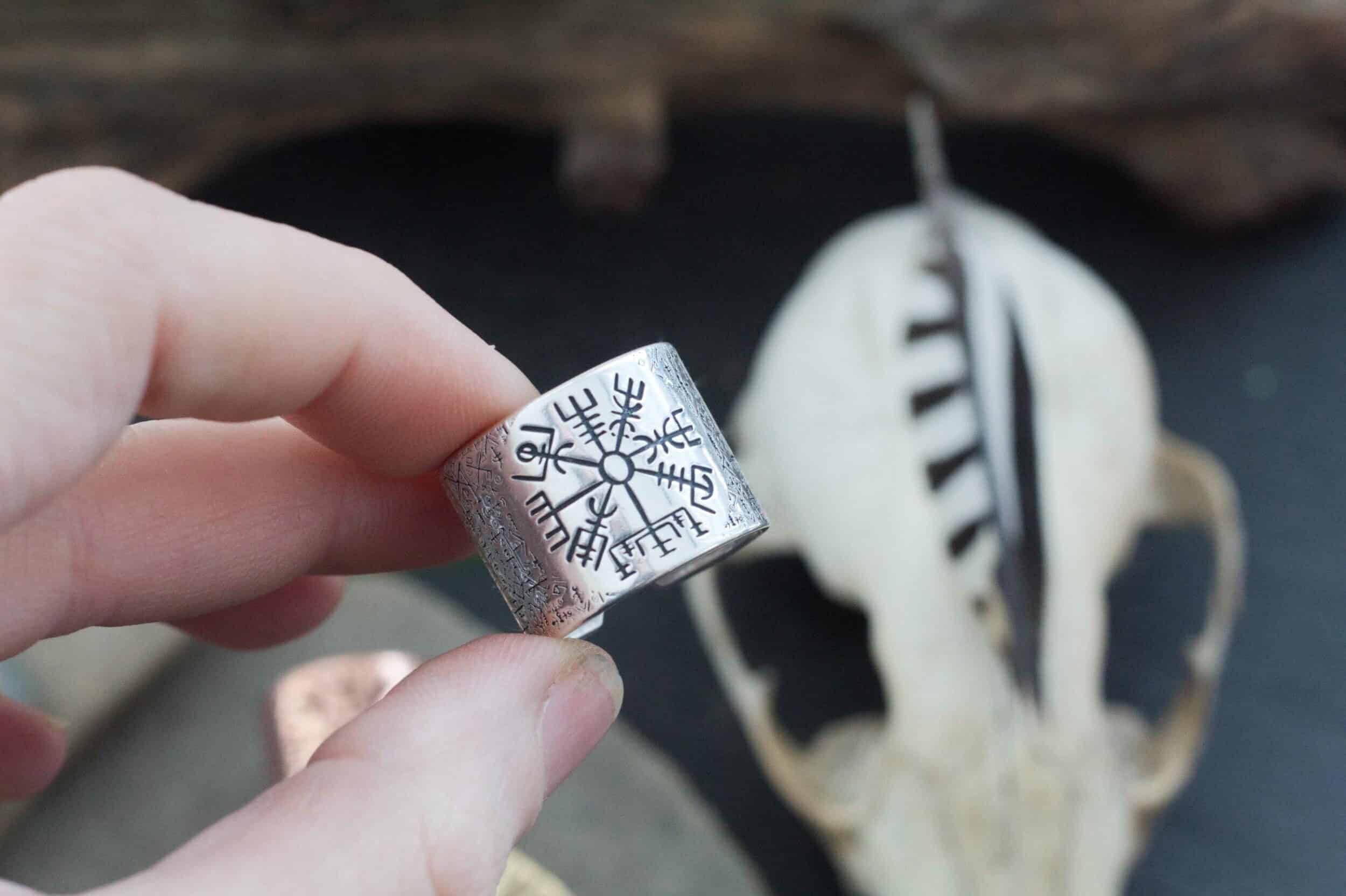
The symbol itself is eight tridents radiating from a central point, like a starburst of defensive energy pushing outward in all directions.
It wasn’t subtle.
It was meant to inspire fear in your enemies and unshakeable confidence in yourself.
What it protects against
- Psychological intimidation and fear
- Evil intentions directed at you
- Self-doubt and mental weakness
How the Norse used it
Warriors would press or paint the Helm of Awe symbol on their foreheads between their eyes before battle.
The idea was that it would project an aura of invincibility, making enemies lose their nerve before the first blow was struck.
Some Icelandic grimoires describe pressing it into a piece of lead and wearing it against the forehead.
Vegvisir (The Viking Compass)
The Vegvisir is probably the most recognized Norse symbol in modern culture (yes, even more than Thor’s hammer).
Its name literally translates to “wayfinder” or “signpost,” and its purpose is exactly what it sounds like: to ensure the bearer never loses their way.
The Huld Manuscript from 19th-century Iceland states: “If this sign is carried, one will never lose one’s way in storms or bad weather, even when the way is not known.”
Now, I should be honest here: the Vegvisir comes from Icelandic magical staves (galdrastafir), which are post-Viking Age.
So while it’s deeply rooted in Norse cultural tradition, it’s not something an 9th-century Viking would have recognized.
That doesn’t diminish its power or meaning for modern practitioners.
It just means its history is different from what some websites claim.
What it protects against
- Getting lost, physically or spiritually
- Confusion and indecision
- Losing your sense of purpose
How it was used
The Vegvisir was drawn on the body or carried as an amulet during travel.
Many modern Norse pagans get it tattooed or wear it as jewelry during transitions in life: new jobs, moves, spiritual shifts.
It’s a reminder that even when you can’t see the path, you’ll find your way.
Mjolnir (Thor’s Hammer)
Thor’s hammer is the ultimate symbol of protection in Norse mythology.
Thor himself was the protector of both Asgard (home of the gods) and Midgard (the human world), wielding Mjolnir against the giants and forces of chaos that constantly threatened to break through.
Unlike the more esoteric symbols on this list, Mjolnir was widely worn as an amulet throughout the Viking Age.
Archaeologists have found hundreds of Thor’s hammer pendants across Scandinavia, Britain, and beyond.
It was the Norse equivalent of wearing a cross, and when Christianity began spreading through Scandinavia, many people wore both a cross and a hammer pendant, just to cover their bases.
What it protects against
- Physical danger and harm
- Chaotic forces (the giants in Norse mythology represent chaos)
- Spiritual threats and negative energy
How the Norse used it
Mjolnir pendants were worn daily by men, women, and children.
Thor’s hammer was also used to consecrate important events: weddings were blessed by placing a hammer in the bride’s lap (a fertility blessing), and the dead were sometimes given hammer amulets for protection in the afterlife.
It was the most democratic of all Norse symbols, worn by farmers, traders, warriors, and rulers alike.
Troll Cross (Trollkors)
The Troll Cross is a bent piece of iron in a loop, resembling an Othala rune or a stylized figure-eight.
Its origins are debated.
Some claim it’s an ancient Scandinavian tradition, while others trace it to a specific Swedish blacksmith.
Regardless of its exact age, the function is clear: it protects against trolls, evil spirits, and dark magic.
In Scandinavian folklore, trolls weren’t just big dumb creatures hiding under bridges.
They were genuinely dangerous beings who could enchant, deceive, and harm humans.
Iron itself was considered protective against supernatural beings across many European folk traditions, so the combination of protective shape and protective material made the Troll Cross doubly powerful.
What it protects against
- Negative supernatural forces
- Deception and enchantment
- Bad luck and malevolent intentions
How it was used
Hung above doorways, worn around the neck, or placed in a pocket.
If you’ve ever felt like you needed a general-purpose “keep the bad stuff away” symbol, this is it.
Algiz (The Rune of Protection)
While the symbols above are complex staves and amulets, sometimes the most powerful protection comes from a single rune.
Algiz (ᛉ) is the Elder Futhark rune of protection, divine connection, and the sacred boundary between the human world and the realm of the gods.
The shape of Algiz looks like a person with their arms raised, and many scholars interpret it as a figure reaching toward the heavens, invoking divine protection.
Others see it as elk sedge, a sharp-edged plant that cuts anyone who tries to grab it.
Either way, the message is the same: don’t mess with what this rune guards.
What it protects against
- Spiritual intrusion
- Boundary violations (physical and energetic)
- Disconnection from the divine
How it was used
Algiz was carved onto shields, doorframes, and personal items.
In modern rune practice, many people trace the Algiz rune in the air as a quick protective gesture, similar to how someone might make the sign of the cross.
It’s also one of the most popular runes to wear as jewelry because of its universal protective qualities.
How to Choose Your Protection Symbol
If you’re wondering which Norse protection symbol is right for you, think about what you actually need protection from:
- Facing a big challenge or confrontation? Helm of Awe. It’s about projecting strength and conquering fear.
- Going through a life transition or feeling lost? Vegvisir. It’s about finding your path when everything feels uncertain.
- Need general, everyday protection? Mjolnir. It’s the most versatile and historically significant protective symbol.
- Dealing with negativity from specific people or places? Troll Cross. It’s about keeping dark energy at a distance.
- Want to strengthen your spiritual boundaries? Algiz. It’s about the sacred line between you and everything that isn’t you.
And honestly?
There’s no rule that says you can only choose one.
The Norse people certainly didn’t limit themselves to a single protective symbol.
✦ Shop the Meaning
Wear Your Protection
Carry the power of Norse protection with you every day. Each symbol is handcrafted in my studio with intention and care, just like the originals were meant to be worn.

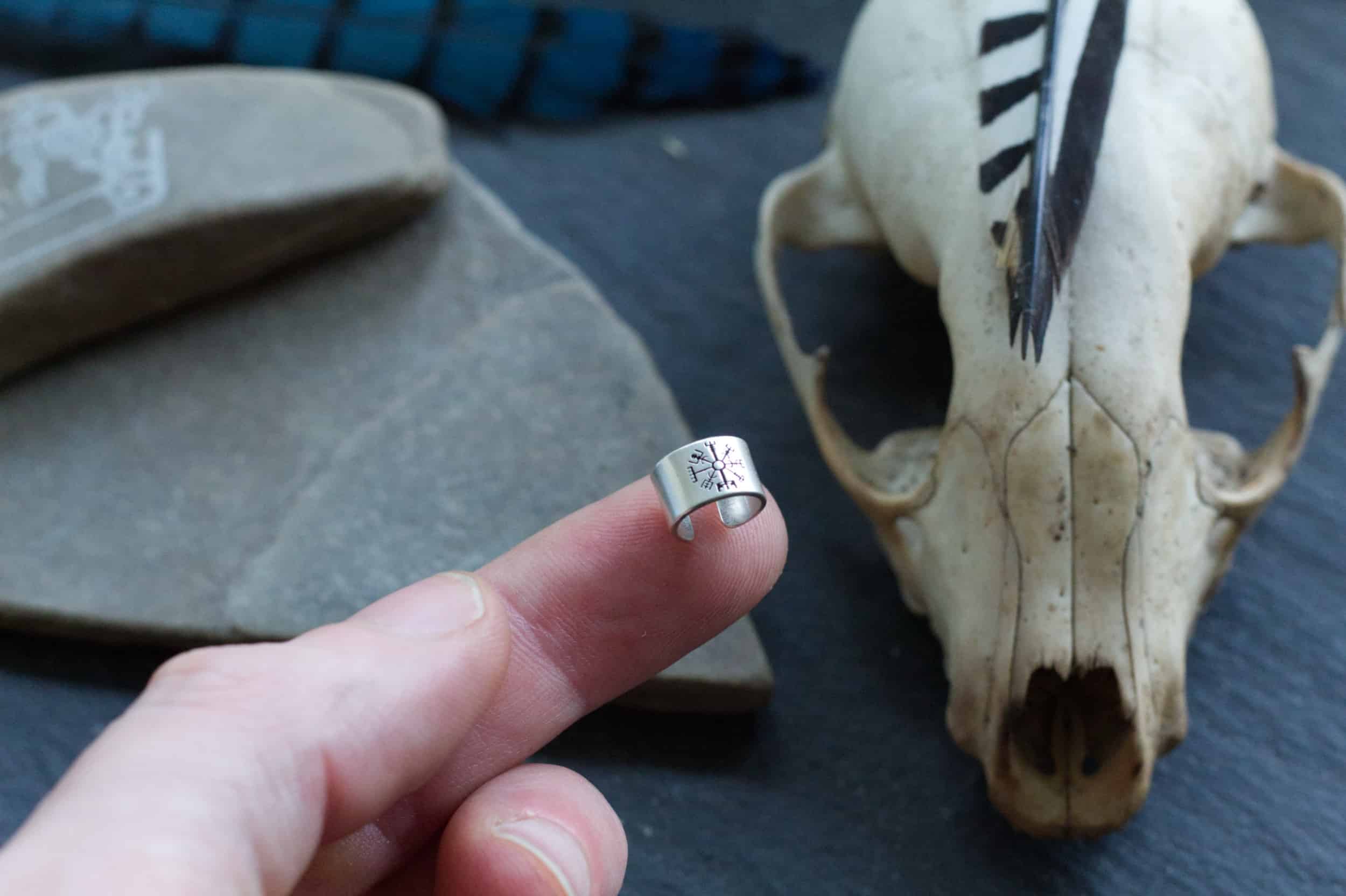

Every piece is handcrafted to order in my home studio. Browse all Viking Jewelry →
Protection as a Daily Practice
For the Norse people, protection wasn’t something you thought about once and forgot.
It was woven into daily life.
They carved runes into their tools, wore amulets every single day, and passed protection symbols down through generations.
That same approach works now.
Whether you wear a symbol, carve one into your doorframe, or simply trace it in the air before a difficult conversation, the act of connecting with these ancient protective forces is itself powerful.
It shifts your mindset from “I hope nothing bad happens” to “I am protected, and I know it.”
That’s not superstition.
That’s 1,000 years of spiritual technology, still working.