No products in the cart.
November 26, 2025 9:32 am

Free USA shipping on orders $35+
November 26, 2025 9:32 am
Greek mythology often leaves us in awe not just because of its heroes and monsters, but because of its unforgettable women.
Whether goddess or mortal, the women of Greek mythology are anything but background figures.
From fierce warriors to wise protectors, loving mothers to dangerous enchantresses, their roles shape the myths as much as any male god.
This article explores who these female characters were, why they mattered, and what they reveal about ancient Greek culture and values.
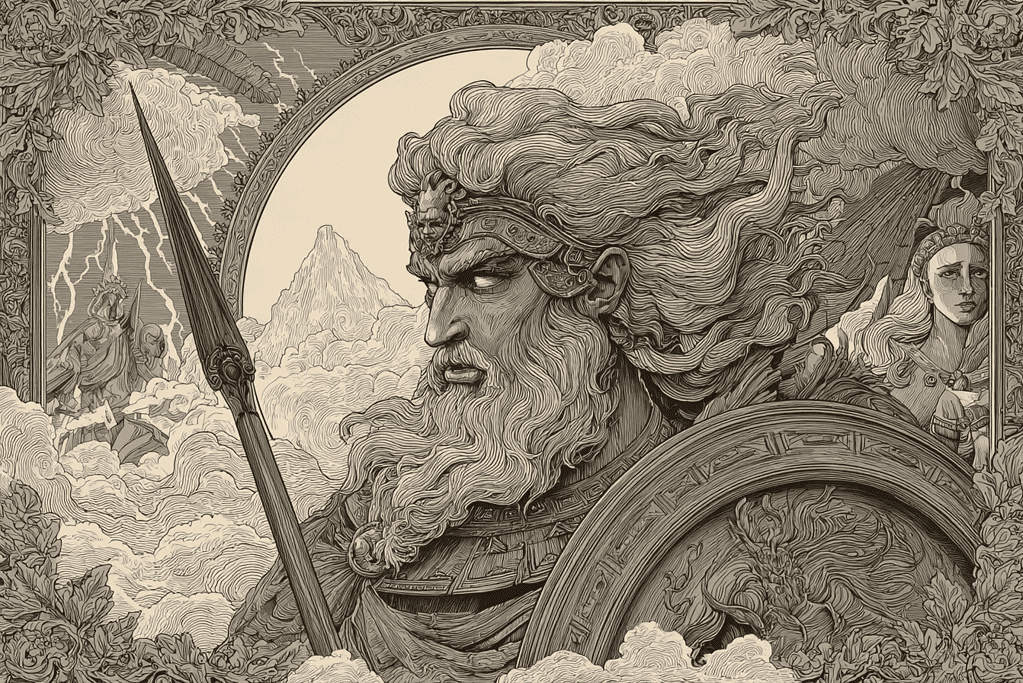
Women in Greek mythology were not passive observers. Whether as goddesses or mortals, they were active participants in divine and human affairs.
They embodied power, intellect, love, revenge, protection, and fertility.
These mythological characters reflected societal expectations of women in ancient Greece while also breaking them.
They taught lessons, enforced rules, and shaped the destiny of gods and mortals alike.
From the goddess Athena, who advised Odysseus, to Clytemnestra, who fought Agamemnon, female figures in Greek myth did not fit one mold.
They were complex, contradictory, and often central to the plot.
As strong women, their roles challenge the assumption that Greek mythology only glorifies male heroes.
Hera, the goddess of marriage and queen of the gods, represents one of the most paradoxical female figures in Greek mythology.
She is both powerful and often portrayed as resentful.
As wife of Zeus, the king of the gods, Hera suffers frequent humiliations due to his many affairs.
But she also wields tremendous authority in Olympus and beyond (Fernández Guerrero, 2021, p. 131).
Although Greek myth frequently casts her as jealous and vindictive, especially toward Zeus’s lovers and their children, this reflects deep cultural tensions about the role of women in Greek society.
Hera isn’t just the wife of Zeus; she’s a goddess in her own right, with older roots as a fertility deity before becoming the Olympian matron (Fernández Guerrero, 2021, p. 134).
She represents the goddess of marriage, but also the dangers and sacrifices expected of the wife in patriarchal culture.
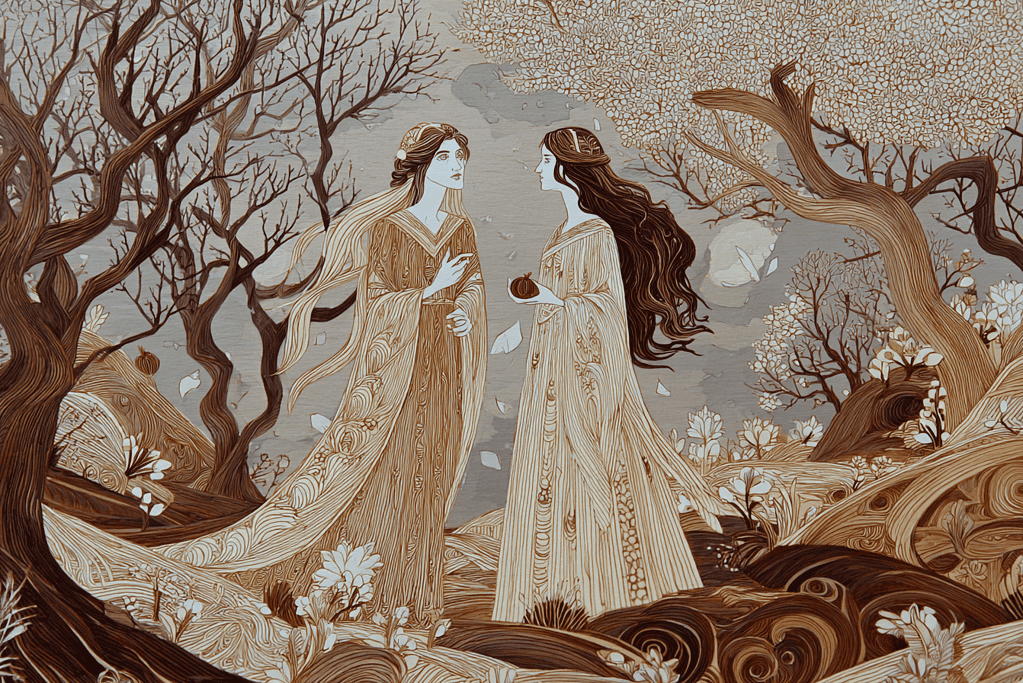
Athena is the goddess of wisdom, strategy, and war. Known as the daughter of Zeus, born fully armed from his head, she bridges intellect and power.
A virgin goddess and patron of Athens, she is the protector of heroes like Odysseus and Perseus (Britannica, 2025, para. 1).
Unlike Ares, the god of war who represents brute force, Athena’s warfare is calculated. She rewards cleverness and courage.
She’s a goddess of wisdom as much as a goddess of war.
The olive tree, which she offers the city of Athens, stands for peace and prosperity and is a perfect symbol of her role as both warrior and civilizer.
Artemis, the huntress and goddess of wild nature, is known for her fierce independence and vow to remain a virgin.
She protects young women and presides over childbirth, yet she is also a punisher of men who trespass her boundaries (Zolotnikova, 2017, p. 45).
In myth, Artemis punishes Actaeon for merely seeing her bathe, and Niobe for insulting her mother.
This makes her one of the most fearsome female characters in Greek mythology.
But Artemis also reflects the Greek respect for untouched nature, personal sovereignty, and the transition from girlhood to womanhood.
Yes, Aphrodite is the goddess of love, beauty, and desire, but her power extends far beyond appearance.
She causes wars, binds gods and mortals with desire, and commands respect across the divine world.
Her birth from sea foam or as daughter of Zeus and Dione signals her as both elemental and divine (Pironti, 2011, p. 2).
In Greek mythology, Aphrodite’s influence reaches from the bedroom to the battlefield.
She supports Paris in the Trojan War, manipulates mortal kings, and is revered as a patron goddess of sailors and cities.
She isn’t just about female beauty; she embodies the creative and destructive force of love.
Demeter, the goddess of agriculture, and her daughter Persephone form one of Greek mythology’s most poignant stories.
When Hades abducts Persephone, Demeter’s grief causes famine.
Their myth explains the seasons, but also the depth of maternal love (Mitropoulos, 2021, para. 6).
Through the Eleusinian Mysteries, Demeter becomes more than the goddess of grain, i.e., she is also a figure of hope, rebirth, and spiritual salvation.
Persephone, as queen of the underworld, symbolizes the boundary between life and death, growth and decay.
Together, they represent the eternal cycle of life and loss.

Hestia, often overlooked, is the goddess of the hearth, family, and domestic harmony.
Though she has no dramatic myths, she was arguably one of the most important deities in Greek religion. Every home and city-state honored her.
She was the first and last in all sacrifices.
Hestia reflects the value placed on stability, unity, and sacred space. In a world of war and chaos, she was the constant flame in the home and temple.
Indeed a symbol of enduring presence.
She chose to remain a virgin and refrained from the drama of Olympus, embodying peace in a world of noise.
Atalanta, the fastest runner and a famed huntress, challenged her suitors to outrun her and punished them when they failed.
Her independence and strength make her one of the most powerful women in Greek mythology. She even helped slay the Calydonian boar (Zolotnikova, 2017, p. 47).
The Amazons, especially Penthesilea, queen of the Amazons during the Trojan War, were warrior women who rivaled Greek heroes.
Penthesilea faced Achilles in battle and died honorably.
These mortal women in Greek stories show that strength, leadership, and autonomy were admired even when rare.

Clytemnestra and Medea are often painted as villains. Clytemnestra fights Agamemnon after he sacrifices their daughter; Medea kills her own children to punish Jason.
But both act out of betrayal and grief. Their stories force us to ask what justice looks like in Greek myth (Fernández Guerrero, 2021, p. 137).
Medea was a powerful sorceress and granddaughter of the sun god.
She helped Jason win the Golden Fleece, only to be abandoned.
Clytemnestra ruled Mycenae in Agamemnon’s absence.
Their stories critique societal expectations of women: loyalty, silence, and sacrifice.
When denied these, they exact punishment for men who wronged them.
From Penelope’s loyalty and devotion to Helen of Troy’s legendary beauty and blame, the women of Greek mythology continue to fascinate us.
They reveal how ancient Greeks understood power, justice, and human emotion.
The goddess and mortal women in these stories offer lessons in autonomy, strength, and consequence.
Greek mythology remains a window into ancient Greek society and its complicated views on gender.
Whether it’s the patron goddess of Athens or the queen of the underworld, these figures remind us that powerful women in Greek mythology have always shaped the world around them.

ᛉ 100% handcrafted artisan pagan , viking, witchcraft and shamanic inspired jewelry.
ᛉ Runes, Symbolism & European Folklore
Get 20% off👇🏻

Five witches dance around a blazing bonfire beneath a citrine cabochon in this Walpurgisnacht pendant....
Happy washing day 🙃
A few rings I’ve worked on the last couple days…
Freya’s cats rule and dogs drool?
Or was that the other way around? 🙃

Garm barely shows up in the old Norse stories.
Still… he leaves a mark.
A...

Leave a comment with your result ❤️
Bavarian Folklore says that you might just cross paths with a Wolpertinger in the alpine...

🐇🌲✨
He finally stepped out of the forest…
The Wolpertinger Pendant has arrived.
Inspired by...

I don’t often sell them, but love it when I do!
Vinca symbol bracelets ❤️...

Rooted in strength + guarded by ravens

The serpent waits 🖤
(Handcrafted Jörmungandr ring made to order in my shop)

Stay warm, everyone ❤️

😑😑😑🤮

I thought I had closed the book on the Alice in Wonderland rings…
But you...

Can this be over now, please?

In case you forgot 💜

Something I’ve been thinking about lately.
If there’s one thing I would’ve done differently early...

This year, we’re not buying things just to keep up.
If you need the reminder:...

My husband is from Bavaria (southern Germany) and I originally made this Krampus pendant for...

Some of the items I’m shipping out today ❤️
Please forgive my dirty nails 😂...

A few items shipping out today 🥰

This mornings rings shipping out ❤️

A few of the rjngs I’m shipping out this morning ❤️
How do you like...

Krampus is coming 🫶🏻

Getting ready to pack up these pretties and ship to their owners ❤️

Freya, cats and pentacles. Doesn’t get any better ❤️

You all got me going crazy making all these fairytale + storybook rings.
But I’ll...

Just launched these pretties ❤️
Size 9 amethyst ring + size 7.25 green kyanite

What would you trade to learn Baba Yaga’s secrets?

It *finally* looks, feels and smells like October!
And here are some items I’m packing...

This mornings pretties getting ready to ship :)

Getting ready to pack up these pretties and ship to their owners ❤️

You bet I’m hopping on this trend 😂
Thank you @shes_sinister for the prompt!

While I welcome the seasonal darkness…it sure is going to make my morning quick videos...

Finally finished the rings I’ve been working on in my stories ❤️
I think I...

Was going to post this update to my stories but it’s too long.

“How do you know I’m mad?” said Alice.
“You must be,” said the Cat, “or...

Some of this mornings orders getting ready to ship. Those little bats are so cute...

Here is the finished ring I was working on in my stories yesterday, along with...

A few of today’s orders shipping out this morning ❤️

The two silver raven rings I was working on in my stories yesterday.
…as well...

Eeeek! I’m so happy to add these to my shop ❤️
I’ve gotten so many...

I had 6 clamshells ready to ship this morning but I dropped and lost my...

Not the story you were told.
The girl didn’t run.
The wolf didn’t win.
This...

I love these raven rings so much 🖤
This mornings pretties shipping out.
All items...

Sleek + minimal Mjölnir ring ⚒️


About the author Jacqueline Fatica


