No products in the cart.
March 12, 2026 8:03 pm

Free USA shipping on orders $35+
March 12, 2026 8:03 pm
The wolpertinger stands among the most curious figures in german folklore, a mythical creature said to inhabit the alpine landscapes of southern Germany and Austria.
Often imagined as a strange rabbit with antlers and wings, it belongs to a broader tradition of composite beings that populate the imaginative world of rural storytelling.
This article is worth reading for anyone interested in how regional legends emerge, change, and acquire new meanings over time.
By examining scholarly research, it becomes possible to understand why the Wolpertinger continues to fascinate both locals and visitors today.
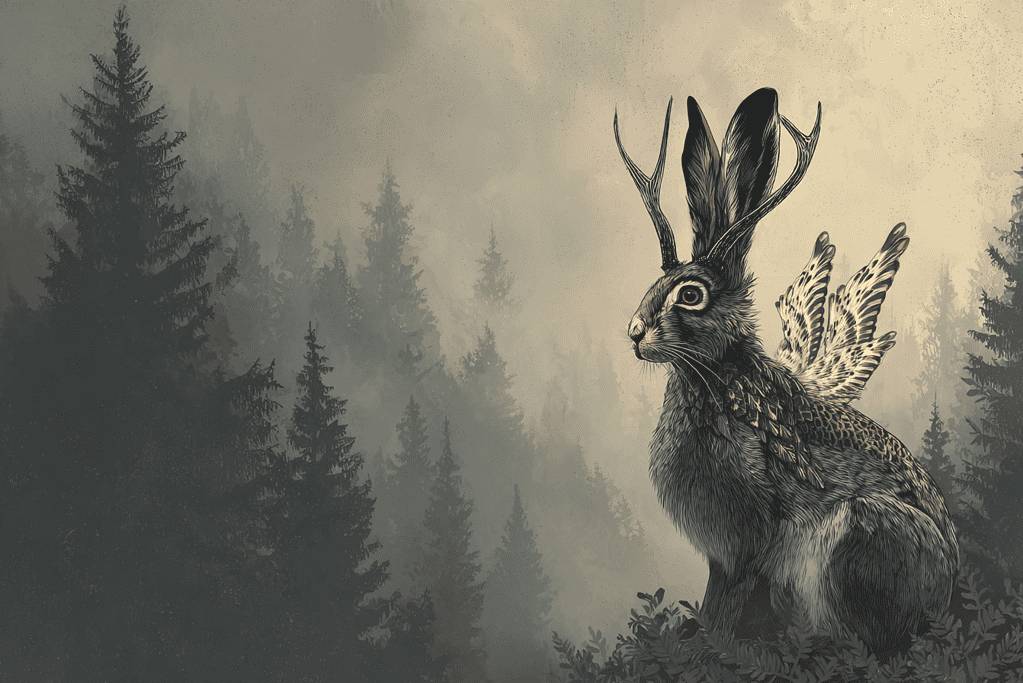
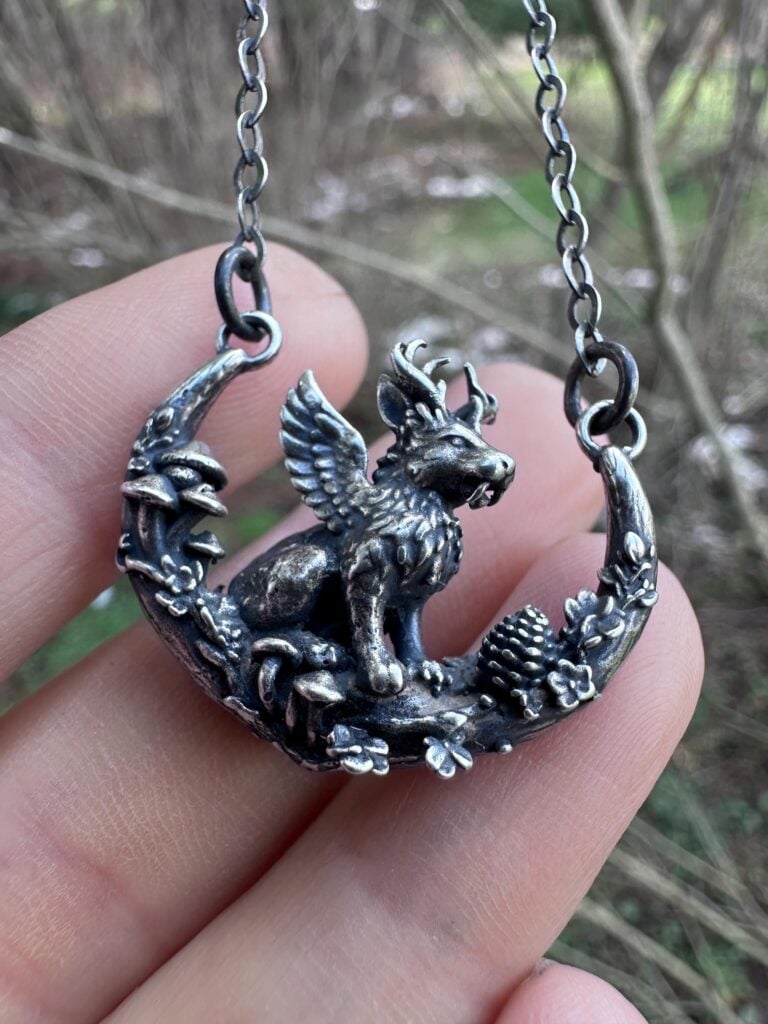
Check out my handcrafted (by me!) Wolpertinger pendant.
The Wolpertinger is usually described as a small mammal with the head of a rabbit, sometimes bearing the antlers of a deer.
In many depictions it combines features from several animals, such as a pheasant’s wings or the body of a squirrel, creating what scholars describe as a hybrid creature.
This composite nature forms the core of its identity as a mythical being rather than a zoological species.
Andrea Hartl’s folklore study refers to it as a humorous imaginary hunting animal assembled from different parts, reflecting playful rural imagination rather than belief in its physical existence (Hartl, 2005, p. 21).
The creature’s physical form is never entirely fixed. Some versions present a body of a hare, while others add fangs or feathers, suggesting a link to the diverse traditions of alpine storytelling.
Such variation allows Wolpertingers to shift across generations, retaining familiarity yet adapting to local narrative needs. In this sense, the legend illustrates how folklore operates as a living process shaped by humor, observation, and community interaction.
The wolpertinger made its way into German folklore through a mixture of hunting tales, regional humor, and popular storytelling. Scholars point out that such creatures often emerge in environments where rural communities share anecdotes about local wildlife.
These stories, sometimes referred to as Jägerlatein, blend exaggeration with experience in order to entertain listeners or test their credulity.
Over time, the legend became associated with specific Bavarian landscapes, particularly the forests of Bavaria and Baden-Württemberg (Swabia). This regional anchoring strengthened its cultural presence and allowed the creature to function as an emblem of southern German identity.
Florian Schäfer and colleagues include the Wolpertinger in a catalogue of German-language fairy tales and mythic beasts, placing it alongside more widely known legendary animals (Schäfer et al., 2023, p. 9).
Through such academic classification, the Wolpertinger gains recognition as part of the broader narrative tradition of mythical creatures of Europe.
Traditional descriptions place the Wolpertinger in the alpine forests of Bavaria, particularly in wooded upland regions near the alps.
These landscapes, marked by dense conifer stands and varied wildlife such as foxes and ducks or pine martens and pheasants, provide a believable ecological setting for a legendary animal.
In folklore, the creature is said to inhabit the alpine forests, blending seamlessly with the real animals observed by hunters.
Accounts often speak of the wolpertinger as a small mammal encountered at dusk, when the boundary between fact and imagination becomes less clear.
Stories encourage listeners to picture woodland paths where unusual tracks or fleeting glimpses could lead someone to claim they had glimpsed this elusive animal. Such narratives contribute to a shared sense of place rooted in the native regions of southern Germany.
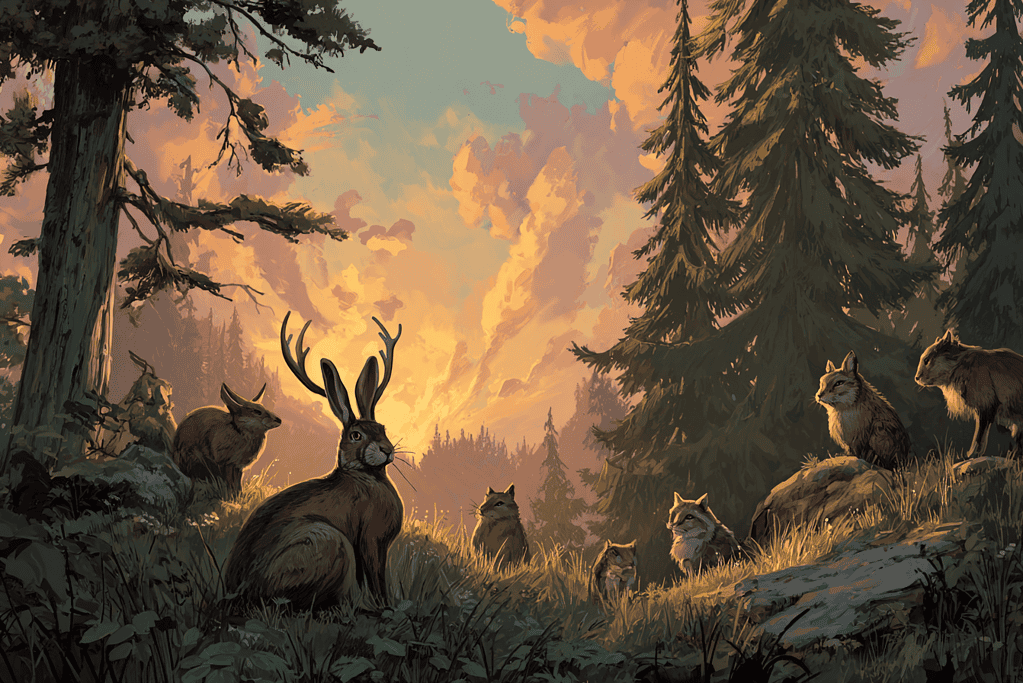
A recurring motif involves attempts to catch a Wolpertinger, often as a prank played on newcomers. Folklore recounts that an unsuspecting visitor might be sent into the woods with instructions involving salt on its tail or other humorous techniques.
These tales create social rituals that distinguish insiders from outsiders and reinforce community bonds.
Scholarly discussion frames this practice as part of a broader “tall tale” tradition.
Steve Siporin notes that the creature functions in a manner similar to the North American jackalope, serving as both a narrative curiosity and a tourist attraction (Siporin, 2000, p. 101).
Through such comparisons, the Wolpertinger becomes an example of how rural humor can evolve into a recognizable cultural motif.
The image most people associate with the Wolpertinger owes much to the work of the taxidermist.
During the nineteenth century, Bavarian taxidermists in the 1800s assembled mounted specimens composed of various animal parts, crafting displays that appeared convincingly lifelike.
These objects were often displayed in inns or sold to tourists as souvenirs, turning folklore into a tangible artifact.
Such creations reinforced the creature’s physical presence in everyday life. Visitors might encounter a mounted wolpertinger in a tavern and hear stories explaining its origin.
This blend of craftsmanship and narrative performance contributed to the legend’s persistence, linking it to both artisanal skill and local storytelling traditions.
Comparative folklore reveals striking parallels between Wolpertingers and other legendary animals. In southwestern Germany, the elwetritsch represents a similar hybrid bird-like figure, while in Sweden the skvader combines traits of hare and grouse.
Each of these beings demonstrates how communities invent composite animals that reflect regional wildlife and humor.
The wolpertinger is sometimes also called wolperdinger or appears under variant spellings such as woiperdinger or volpertinger due to regional Bavarian dialects of which there are several distinct differences.
Despite these differences, descriptions frequently resemble the wolpertinger as a horned hare with unusual anatomical features.
These parallels illustrate how imaginative storytelling transcends national boundaries, creating a shared repertoire of mythical animals across Europe.

Modern discussions often treat the Wolpertinger as a symbol of Bavarian identity.
Michaela Karl observes that the creature is described as a composite being representing mixture and diversity within the region’s cultural self-image (Karl, 2018, p. 4).
This interpretation transforms the legend from a humorous hunting tale into a metaphor for social and historical complexity.
Museum displays have contributed to this symbolic role. Specimens can be viewed at institutions such as the German hunting and fishing museum, where they are presented as part of regional heritage.
Through exhibitions and public discourse, the Wolpertinger becomes an informal emblem of southern Germany’s unique traditions and storytelling culture.
Yes, the creature occupies a distinctive place in rural narrative practice.
Hunters recount encounters with animals resembling a hare and a roebuck, blending observation with embellishment. These stories situate the wolpertinger among woodland creatures, alongside familiar species such as deer, fox, or pine martens.
Folklore scholars emphasize that such tales function less as literal belief and more as entertainment.
They encourage creative exaggeration, reinforcing communal bonds among Bavarians who share knowledge of the local landscape. Through repetition, these anecdotes help maintain the legend’s presence in collective memory.
Tourism has played a decisive role in shaping contemporary perceptions of the wolpertinger. Mounted figures may be displayed in inns or sold, and guidebooks sometimes recount stories of travelers hoping to see a wolpertinger in the wild.
This commercialization reflects what scholars describe as the blending of folklore with regional marketing strategies (Siporin, 2000, p. 101).
Such practices highlight the creature’s adaptability. What began as a humorous tale among hunters evolved into a recognizable symbol used to attract visitors.
This transformation illustrates how legends can acquire new meanings when incorporated into economic and cultural exchange.
The enduring fascination with the wolpertinger stems from its imaginative form and narrative flexibility.
As a chicken-like creature with antlers or a horned rabbit, it captures attention through visual novelty. At the same time, its association with alpine landscapes and communal storytelling anchors it in lived experience.
Another factor is the creature’s playful ambiguity. Stories claim that the Wolpertinger is said to possess unusual traits, including a supposed weakness for female beauty, adding further layers of humor and intrigue.
These details sustain interest across generations, ensuring that the legend continues to evolve.
Hartl, A. (2005). Der Wolpertinger: Ein bayerisches Phänomen oder doch nur eine Kopie? Augsburger Volkskundliche Nachrichten, 11(1), 20–39.
Karl, M. (2018). Bayerische Dialektik: Oder: Irgendwie und Sowieso. Aus Politik und Zeitgeschichte, 51–52.
Schäfer, F., Pisarek, J., & Gritsch, H. (2023). Fabeltiere: Tierische Fabelwesen der deutschsprachigen Mythen, Märchen und Sagen. Köln: Böhlau Verlag.
Siporin, S. (2000). Tall tales and sales. In P. Stewart, S. Siporin, C. W. Sullivan III, & S. Jones (Eds.), Worldviews and the American West: The life of the place itself (pp. 87–104). Logan, UT: Utah State University Press.

ᛉ 100% handcrafted artisan pagan , viking, witchcraft and shamanic inspired jewelry.
ᛉ Runes, Symbolism & European Folklore
Get 20% off👇🏻
Leave a comment with your result ❤️
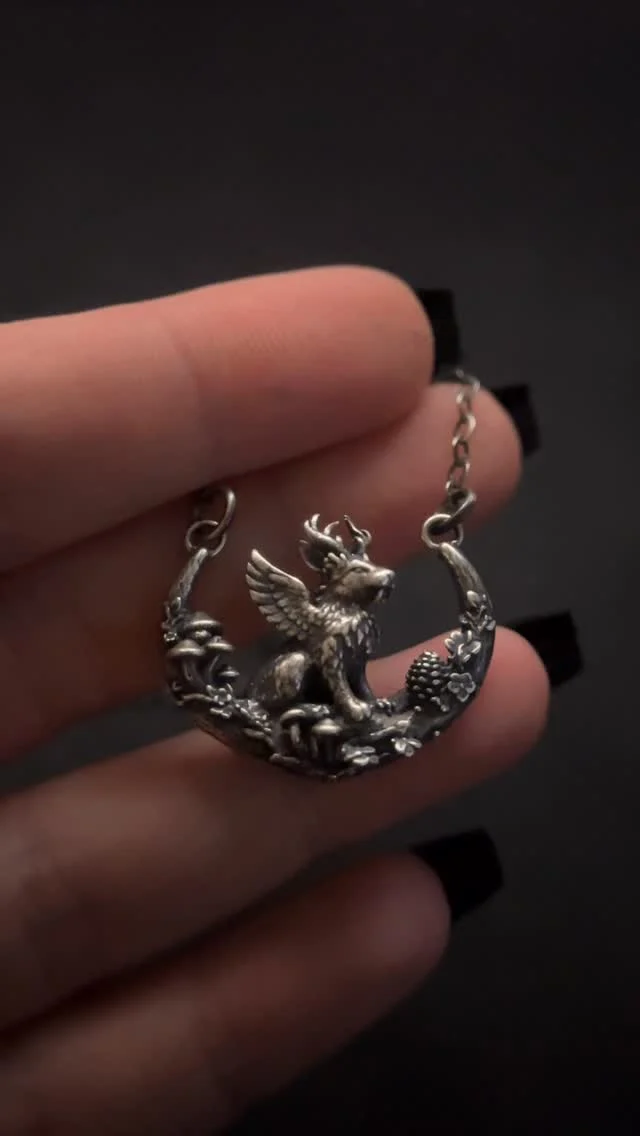
Bavarian Folklore says that you might just cross paths with a Wolpertinger in the alpine...

🐇🌲✨
He finally stepped out of the forest…
The Wolpertinger Pendant has arrived.
Inspired by...

I don’t often sell them, but love it when I do!
Vinca symbol bracelets ❤️...

Rooted in strength + guarded by ravens

The serpent waits 🖤
(Handcrafted Jörmungandr ring made to order in my shop)

Stay warm, everyone ❤️

😑😑😑🤮

I thought I had closed the book on the Alice in Wonderland rings…
But you...

Can this be over now, please?

In case you forgot 💜

Something I’ve been thinking about lately.
If there’s one thing I would’ve done differently early...

This year, we’re not buying things just to keep up.
If you need the reminder:...

My husband is from Bavaria (southern Germany) and I originally made this Krampus pendant for...

Some of the items I’m shipping out today ❤️
Please forgive my dirty nails 😂...

A few items shipping out today 🥰

This mornings rings shipping out ❤️

A few of the rjngs I’m shipping out this morning ❤️
How do you like...

Krampus is coming 🫶🏻

Getting ready to pack up these pretties and ship to their owners ❤️

Freya, cats and pentacles. Doesn’t get any better ❤️

You all got me going crazy making all these fairytale + storybook rings.
But I’ll...

Just launched these pretties ❤️
Size 9 amethyst ring + size 7.25 green kyanite

What would you trade to learn Baba Yaga’s secrets?

It *finally* looks, feels and smells like October!
And here are some items I’m packing...

This mornings pretties getting ready to ship :)

Getting ready to pack up these pretties and ship to their owners ❤️

You bet I’m hopping on this trend 😂
Thank you @shes_sinister for the prompt!

While I welcome the seasonal darkness…it sure is going to make my morning quick videos...

Finally finished the rings I’ve been working on in my stories ❤️
I think I...

Was going to post this update to my stories but it’s too long.

“How do you know I’m mad?” said Alice.
“You must be,” said the Cat, “or...

Some of this mornings orders getting ready to ship. Those little bats are so cute...

Here is the finished ring I was working on in my stories yesterday, along with...

A few of today’s orders shipping out this morning ❤️

The two silver raven rings I was working on in my stories yesterday.
…as well...

Eeeek! I’m so happy to add these to my shop ❤️
I’ve gotten so many...

I had 6 clamshells ready to ship this morning but I dropped and lost my...

Not the story you were told.
The girl didn’t run.
The wolf didn’t win.
This...

I love these raven rings so much 🖤
This mornings pretties shipping out.
All items...

Sleek + minimal Mjölnir ring ⚒️

Today’s orders getting ready to ship.
…And I finally got some time to work on...

That ant ring is so out of place 😂
Not that the mail is coming...

If you had this, which runes would you choose? Or would you accept the runes...

I love making these fun Halloween coffin pendants 🎃
All items you see are always...


About the author Jacqueline Fatica


