No products in the cart.
March 1, 2026 8:37 pm

Free USA shipping on orders $35+
March 1, 2026 8:37 pm
When we ask the question “What are fairy tales?” we are entering a conversation that blends philology, folklore, and literary history.
A fairy tale can appear in oral tradition, in a printed book, or as a modern adaptation in popular culture, yet it remains recognizable.
Scholars point out that every fairy story we know today, from Cinderella to Hansel and Gretel, carries both universal motifs and local adaptations.
To understand the importance of fairy tales, we must examine how researchers have defined them across time.
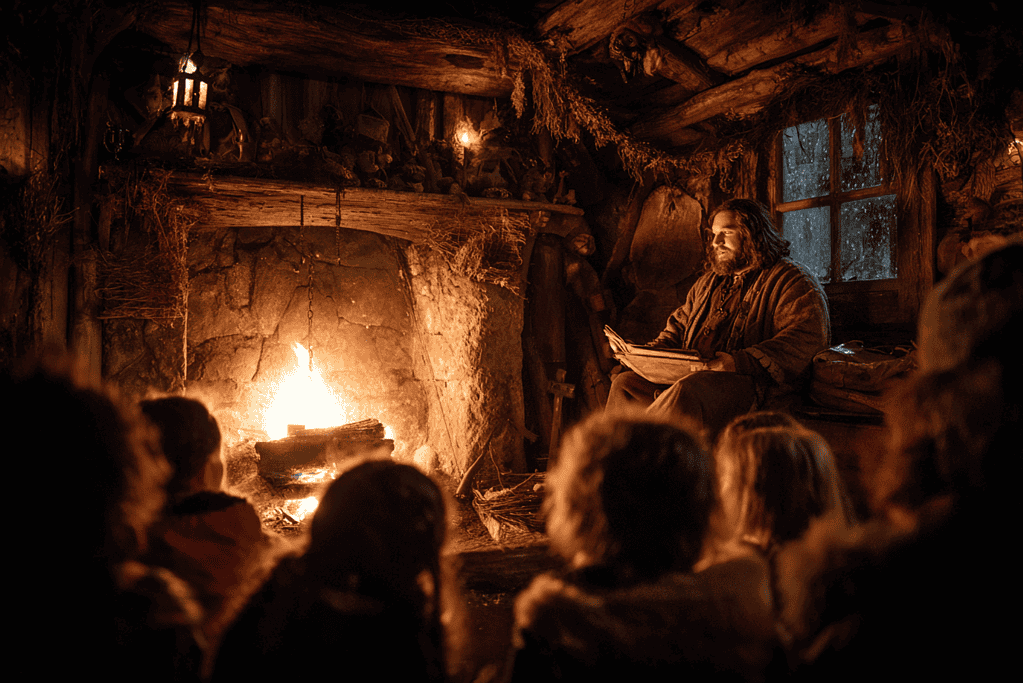
In the nineteenth century, folklorists such as E. Sidney Hartland considered the fairy tale alongside the fable, saga, and myth.
He observed that of all branches of folklore, none had advanced so quickly in scholarship as the study of the fairy tale (Hartland, 1890, p. 108).
Some scholars, like Max Müller, claimed that fairy tales were misunderstood metaphors for the sun and sky, a view known as the “sun-myth theory” (Hartland, 1890, pp. 110–111).
Yet others argued that fairy tales were more like talking animals in a fable or a peasant anecdote, transmitted orally and through literature as cultures met and shared stories.
Hartland emphasized that transmission, not just invention, shaped the spread of the fairy tale. He noted that Buddhist stories, Aesop’s fables, and collections like the Panchatantra may have seeded many European fairy tales (Hartland, 1890, pp. 113–115).
This showed that the same fairy tale could appear in different cultures, adapted through word of mouth, yet still carry its core structure.
By 1890, collectors were already building a list of fairy tales that included Māori, New Guinea, and Celtic narratives (Hartland, 1890, pp. 115–116), proving that fairy tales were not only European fairy tales but global traditions of orally passed down legends, tales.
And each of them carrying important cultural, historical and mythical beliefs.
Ruth B. Bottigheimer later argued that a fairy tale is never timeless or unmediated.
Instead, each fairy tale we encounter has been shaped by its form: oral telling, recorded transcript, or carefully edited book (1989, pp. 349–350).
A fairy tale can appear in children’s stories as part of children’s literature, or as a literary fairy tale retold by authors like Hans Christian Andersen.
Even in the case of the Brothers Grimm, their first edition of Grimm’s Fairy Tales was revised again and again, so that the final text bore little resemblance to the original story told orally (Bottigheimer, 1989, p. 356).
Bottigheimer demonstrated that fairy tales always pass through editorial filters. For example, the Grimm brothers and Wilhelm Grimm removed humor, inserted stepmothers, and emphasized morality (Bottigheimer, 1989, pp. 345–346).
A story like Snow White or Sleeping Beauty might seem like a traditional fairy tale, but in truth it was polished into a classic fairy story for publication.
Perrault’s Cinderella, with its glass slipper and fairy godmother, first published in the salons of seventeenth-century France, was likewise more a product of Charles Perrault’s pen than of anonymous peasants (Bottigheimer, 1989, pp. 344–345).

Alan Dundes stressed that a fairy tale is, above all, an oral folktale.
For him, a fairy tale that exists only as a single text is not authentic because true folklore is marked by “multiple existence and variation” (Dundes, 1986, p. 262).
Fairy tales survive because they are retold, orally and across generations, with minor differences each time.
In this sense, Hansel and Gretel, Rapunzel, or Jack and the Beanstalk are not single literary tales, but wonder tales that live through their variants.
Dundes reminded scholars that fairy tales could be classified systematically. Using the ATU Index, most fairy tales fall into numbers 300–749, a range labeled “tales of magic” or wonder tales (Dundes, 1986, p. 263).
Little Red Riding Hood is ATU 333, Rumpelstiltskin is ATU 500, and Beauty and the Beast is ATU 425C.
This demonstrates that fairy tales, unlike fables or sagas, belong to a group of motifs centered on magic, transformation, and fantastical encounters such as witches, dragons, and elves.
Dundes also distinguished between oral folktales (Volksmärchen) and authored literary tales (Kunstmärchen).
A tale by Hans Christian Andersen, such as The Ugly Duckling or The Little Mermaid, is a literary fairy tale, while Cinderella or Snow White belong to oral tradition.
This difference matters: fairy tales told by the Brothers Grimm or by Giambattista Basile were collected from word of mouth, though often heavily edited (Dundes, 1986, pp. 264–265).
By contrast, Andersen’s works were literary tales that never claimed to come directly from oral tradition.
Steven Swann Jones examined Little Red Riding Hood as a case study in the symbolic language of fairy tales.
He argued that fairy tales endure because they speak of maturation, sexuality, and fear in fantastical ways (Jones, 1987, pp. 101–102).
Unlike a fable, which teaches a moral directly, a fairy tale uses wondrous transformations and symbolic motifs to explore universal human anxieties.
This explains why tales like Snow White, Cinderella, or Hansel and Gretel are retold across centuries and in different cultures.

Jones argued that no single version of a fairy tale can be considered the original story.
For instance, French peasant versions of Little Red Riding Hood allowed the girl to escape, and included scatological humor absent in Perrault’s retelling (1987, p. 100).
These variations reveal that fairy tales are part of a broader cultural tradition rather than fixed literary texts.
This capacity to retell across boundaries makes the fairy tale a central part of both folklore and popular culture.
Bottigheimer and Jones both cautioned against reading fairy tales as simple windows into history. Wicked stepmothers, fairy godmothers, and magical numbers like three or seven are conventions of genre, not statistics about peasant life (Bottigheimer, 1989, p. 351).
Jones similarly argued that reading Little Red Riding Hood only as a French fable about famine ignores its symbolic layers (1987, p. 97).
This warns us that fairy tales should be studied as cultural texts, not as documentary evidence.
Dundes pointed out that while European fairy tales dominate modern collections, other traditions also contain fairy-tale-like narratives.
In Native American lore, “star husband” tales feature princesses taken by celestial beings, while African and Polynesian stories contain motifs familiar to wonder tales (Dundes, 1986, pp. 266–267).
These show that fairy tales are not limited to Grimm brothers’ collections but belong to a global field of folklore. Whether it is Three Little Pigs, Snow White, or Jack and the Beanstalk, the fairy tale demonstrates humanity’s fascination with the fantastical.
Recent research has confirmed just how old some fairy tales are.
Sara Graça da Silva and Jamshid Tehrani used phylogenetic methods to show that The Smith and the Devil (ATU 330) may date back over 6,000 years, to Proto-Indo-European cultures (2016, p. 5).
This proves that fairy tales are not merely children’s stories from the Brothers Grimm, but ancient oral narratives spread across different cultures.
Their research demonstrates that fairy tales evolve like living organisms, retold through word of mouth, with motifs surviving because they address universal fears and hopes (Graça da Silva & Tehrani, 2016, p. 7).
Fairy tales endure because they tell symbolic stories about marriage, danger, and transformation in ways that feel timeless.
The promise of a prince, the threat of a witch, the aid of a fairy godmother, or the ordeal of a princess makes them endlessly adaptable.
Jack Zipes and other scholars (Bottigheimer, 1989, p. 348) have shown how these narratives are reshaped in each age but remain part of classic fairy traditions.
This is why fairy tales end with “once upon a time” and promise “happily ever after,” speaking across centuries to audiences in search of meaning.
Fairy tales can therefore be defined as wonder tales that belong to oral tradition, categorized in the ATU Index as numbers 300–749.
They are distinguished from fables, myths, and sagas by their focus on magic, transformation, and fantastical settings. From Perrault’s Cinderella to Basile’s Pentamerone (Giambattista Basile, 1634), from Andersen’s Little Mermaid to George MacDonald’s literary tales, fairy tales span oral and literary forms.
What unites them is their ability to survive across different cultures and be retold endlessly, always shaped by editors, collectors, and audiences.
So, what are fairy tales?
They are oral wonder tales transmitted through folklore, reshaped by authors like Perrault, the Grimm brothers, and Hans Christian Andersen, and continually retold in different cultures.
Fairy tales differ from the fable or saga, but like them, they are part of a global repertoire of children’s literature and popular culture.
They carry cultural beliefs around morals, mythical beliefs regarding life and death and the beyond, and so much more.
However, they also adapt and change, yet, they can be resilient and survive many centuries within a given culture.
They survive because they offer fantastical stories of princesses, mermaids, and talking animals, always promising transformation and happily ever after.
The importance of fairy tales lies in their power to connect us, across generations, with both the past and the enduring human imagination.
Bottigheimer, R. B. (1989). Fairy Tales, Folk Narrative Research and History. Social History, 14(3), 343–357. Taylor & Francis. https://www.jstor.org/stable/4285792
Dundes, A. (1986). Fairy Tales from a Folkloristic Perspective. In R. B. Bottigheimer (Ed.), Fairy Tales and Society: Illusion, Allusion, and Paradigm (pp. 259–270). University of Pennsylvania Press. https://www.jstor.org/stable/j.ctt13x1nhz.21
Graça da Silva, S., & Tehrani, J. J. (2016). Comparative phylogenetic analyses uncover the ancient roots of Indo-European folktales. Royal Society Open Science, 3(1), 150645. https://doi.org/10.1098/rsos.150645
Hartland, E. S. (1890). Report on Folk-Tale Research in 1889. Folklore, 1(1), 108–117. Taylor & Francis. https://www.jstor.org/stable/1253691
Jones, S. S. (1987). On Analyzing Fairy Tales: “Little Red Riding Hood” Revisited. Western Folklore, 46(2), 97–106. Western States Folklore Society. https://www.jstor.org/stable/1499927

ᛉ 100% handcrafted artisan pagan , viking, witchcraft and shamanic inspired jewelry.
ᛉ Runes, Symbolism & European Folklore
Get 20% off👇🏻

Five witches dance around a blazing bonfire beneath a citrine cabochon in this Walpurgisnacht pendant....
Happy washing day 🙃
A few rings I’ve worked on the last couple days…
Freya’s cats rule and dogs drool?
Or was that the other way around? 🙃

Garm barely shows up in the old Norse stories.
Still… he leaves a mark.
A...
Leave a comment with your result ❤️
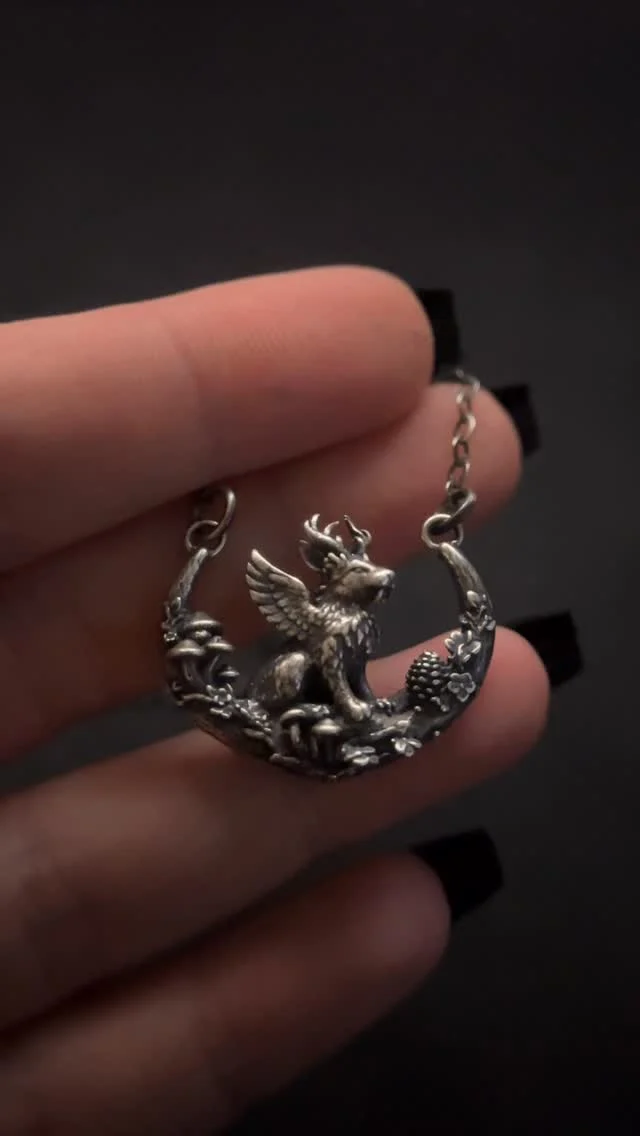
Bavarian Folklore says that you might just cross paths with a Wolpertinger in the alpine...

🐇🌲✨
He finally stepped out of the forest…
The Wolpertinger Pendant has arrived.
Inspired by...

I don’t often sell them, but love it when I do!
Vinca symbol bracelets ❤️...

Rooted in strength + guarded by ravens

The serpent waits 🖤
(Handcrafted Jörmungandr ring made to order in my shop)

Stay warm, everyone ❤️

😑😑😑🤮

I thought I had closed the book on the Alice in Wonderland rings…
But you...

Can this be over now, please?

In case you forgot 💜

Something I’ve been thinking about lately.
If there’s one thing I would’ve done differently early...

This year, we’re not buying things just to keep up.
If you need the reminder:...

My husband is from Bavaria (southern Germany) and I originally made this Krampus pendant for...

Some of the items I’m shipping out today ❤️
Please forgive my dirty nails 😂...

A few items shipping out today 🥰

This mornings rings shipping out ❤️

A few of the rjngs I’m shipping out this morning ❤️
How do you like...

Krampus is coming 🫶🏻

Getting ready to pack up these pretties and ship to their owners ❤️

Freya, cats and pentacles. Doesn’t get any better ❤️

You all got me going crazy making all these fairytale + storybook rings.
But I’ll...

Just launched these pretties ❤️
Size 9 amethyst ring + size 7.25 green kyanite

What would you trade to learn Baba Yaga’s secrets?

It *finally* looks, feels and smells like October!
And here are some items I’m packing...

This mornings pretties getting ready to ship :)

Getting ready to pack up these pretties and ship to their owners ❤️

You bet I’m hopping on this trend 😂
Thank you @shes_sinister for the prompt!

While I welcome the seasonal darkness…it sure is going to make my morning quick videos...

Finally finished the rings I’ve been working on in my stories ❤️
I think I...

Was going to post this update to my stories but it’s too long.

“How do you know I’m mad?” said Alice.
“You must be,” said the Cat, “or...

Some of this mornings orders getting ready to ship. Those little bats are so cute...

Here is the finished ring I was working on in my stories yesterday, along with...

A few of today’s orders shipping out this morning ❤️

The two silver raven rings I was working on in my stories yesterday.
…as well...

Eeeek! I’m so happy to add these to my shop ❤️
I’ve gotten so many...

I had 6 clamshells ready to ship this morning but I dropped and lost my...

Not the story you were told.
The girl didn’t run.
The wolf didn’t win.
This...

I love these raven rings so much 🖤
This mornings pretties shipping out.
All items...

Sleek + minimal Mjölnir ring ⚒️


About the author Jacqueline Fatica


