No products in the cart.
March 5, 2026 8:10 pm

Free USA shipping on orders $35+
March 5, 2026 8:10 pm
The figure of the werewolf stands among the most enduring creatures in European storytelling, feared and respected.
Across centuries of literature, folklore, and myth, stories appear of humans who leave their ordinary lives behind and transform into wolves, wandering the forests in animal form.
These traditions stretch from medieval Icelandic sagas to Iberian folk beliefs and Romanian seasonal rituals.
When examined through scholarly research, these narratives reveal far more than frightening monster stories.
They illuminate cultural ideas about identity, morality, and the boundary between civilization and the wild.
The history of werewolves is deeply intertwined with European literary traditions and oral storytelling.
According to the late French Professor and philologist Claude Lecouteux (2021) the Werewolf motif is a facet, another aspect, of the human soul that is able to detach from the physical body in order to communicate with the otherworldly within the Indo-European cultural sphere.
Medieval authors described knights who secretly became wolves, while rural traditions preserved beliefs about individuals who might periodically change into animal form.
Scholars studying these traditions note that the werewolf myth reflects broader patterns in myth and folklore, especially the symbolic relationship between humans and predators such as the wolf.
This article explores the origin of the werewolf, drawing exclusively on academic studies of medieval literature, European folklore, and fairy tale traditions.
By examining these sources carefully, we can better understand how werewolf mythology developed and why the creature continues to appear in stories today.
A werewolf is typically understood as a human who can transform into a wolf or assume the shape of a wolf.
The idea of a person shifting between human and animal identity appears repeatedly in European mythology and folklore, where it is often associated with supernatural curses, magical garments, or ritual transformations.
Scholars studying these traditions frequently describe the condition as lycanthropy, a concept referring to the belief that humans can adopt the animal form of a wolf.
In medieval and early modern traditions, the belief in lycanthropy sometimes blurred the boundary between folklore and perceived reality.
Communities occasionally believed that individuals could truly become a werewolf, especially if unusual events occurred.
Academic studies of fairy tales suggest that the werewolf belongs to a larger category of ambiguous or hybrid beings.
These figures combine human and animal identities and often act as symbolic representations of transformation, shapeshifting and human-animal personhood (Vaz da Silva, 2000, pp. 219–221).
The werewolf therefore represents more than a monster. It expresses deeper cultural concerns about identity, instinct, and the fragile line separating humans from wild animals such as the wolf.
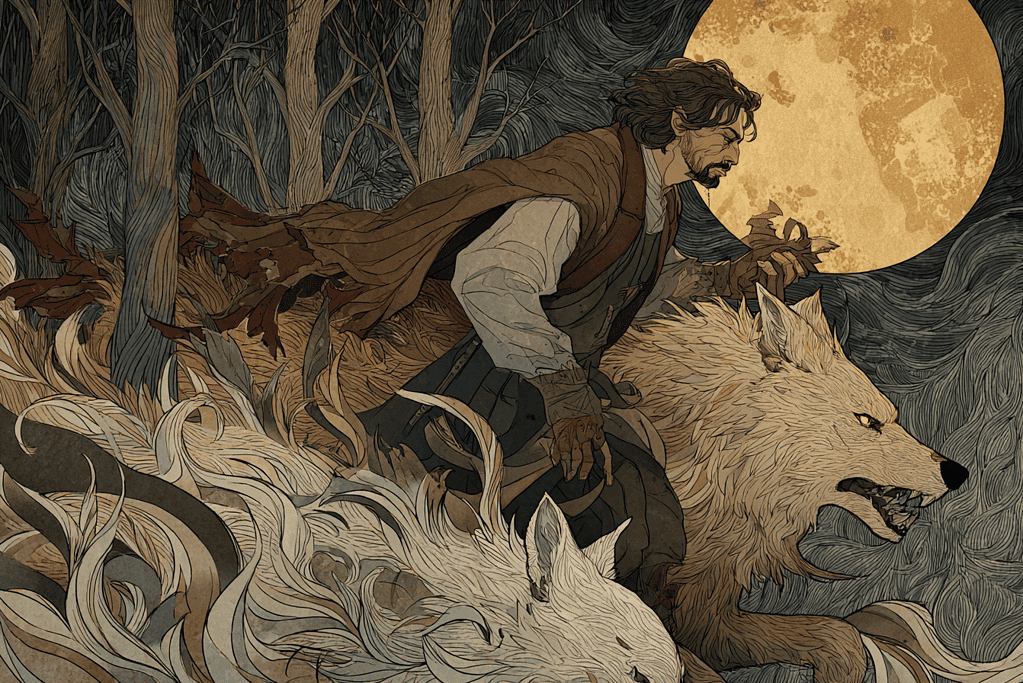
The origin of the werewolf cannot be traced to a single story or historical moment.
Instead, the creature appears in a wide range of myths and legends throughout European history.
Scholars examining medieval literature and oral traditions note that stories about humans becoming wolves emerged independently in multiple regions.
These werewolf tales share several recurring elements.
The person may wear a magical garment such as a wolf pelt, perform a ritual, or experience a supernatural transformation that allows them to transform into wolves.
In many cases the individual eventually returns to their human form, highlighting the unstable boundary between human identity and animal instinct.
Research on European storytelling traditions suggests that such transformations reflect symbolic patterns in narrative traditions.
The act of shape-shifting represents a moment of transition between states of existence.
In this sense, the werewolf myth belongs to a broader group of stories about humans becoming animals, spirits, or supernatural beings.
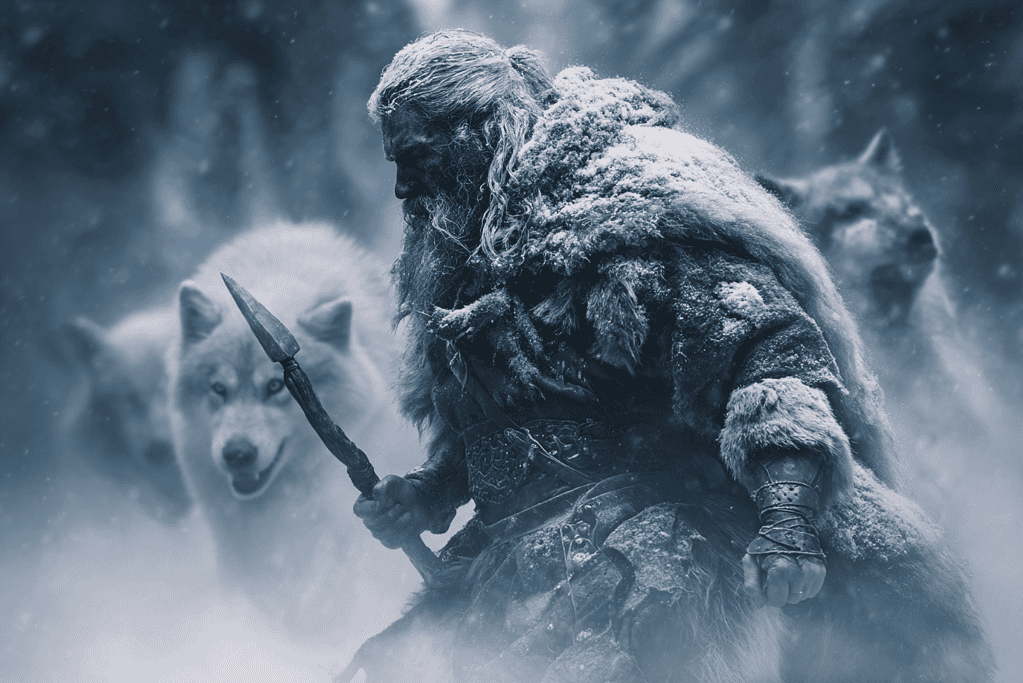
One of the richest bodies of werewolf legends appears in medieval Scandinavian literature.
Old Icelandic sagas preserve several stories involving warriors who could transform into a wolf or assume wolf-like characteristics.
These narratives illustrate how deeply the image of the wolf was embedded in Norse storytelling traditions.
In medieval texts, individuals sometimes wore enchanted wolf skins or pelts that allowed them to assume the wolf form.
These transformations often occurred during battle or supernatural encounters, suggesting that the wolf symbolized ferocity and strength.
According to Guðmundsdóttir’s study of medieval Icelandic literature, such narratives show how the werewolf functioned as a literary motif representing both danger and power (Guðmundsdóttir, 2007, pp. 284–286).
These stories also reveal that medieval audiences understood transformation as a temporary shift rather than a permanent change.
A warrior who could transform into a wolf might eventually regain his human form, demonstrating the fluid boundary between humanity and the animal world.
The Middle Ages produced several remarkable literary depictions of the werewolf, particularly in French storytelling traditions.
One of the most famous examples is the Breton tale recorded by Marie de France, in which a nobleman secretly transforms into a wolf.
This story, often considered a classic french werewolf narrative, portrays the creature as intelligent and loyal rather than purely monstrous.
Scholars analyzing medieval literature note that these stories reveal complex attitudes toward the wolf.
In some narratives the werewolf becomes a victim of betrayal or injustice rather than a villain.
Guðmundsdóttir observes that medieval writers sometimes used the werewolf myth to explore moral questions about loyalty, identity, and social trust (Guðmundsdóttir, 2007, pp. 292–294).
These medieval werewolf stories also show that transformation was not always associated with violence.
The knight who becomes a wolf may continue to behave honorably, suggesting that the true danger lies not in the animal form but in the treachery of human society.
Outside of literature, European folklore preserved a wide range of traditions concerning the werewolf.
Rural communities sometimes believed that individuals could turn into a werewolf through magic or supernatural influence.
These beliefs often connected the transformation to clothing, rituals, or enchanted objects.
One widely reported motif involves individuals who dressed in wolf hides or magical pelts that allowed them to transform into wolves.
Such practices appear in Scandinavian traditions as well as other parts of Europe.
These stories emphasize the symbolic relationship between humans and real wolves, animals that were both feared and admired for their strength.
In many traditions the werewolf could return to human life once the magical garment was removed.
The transformation therefore represented a temporary crossing of boundaries rather than a permanent change.
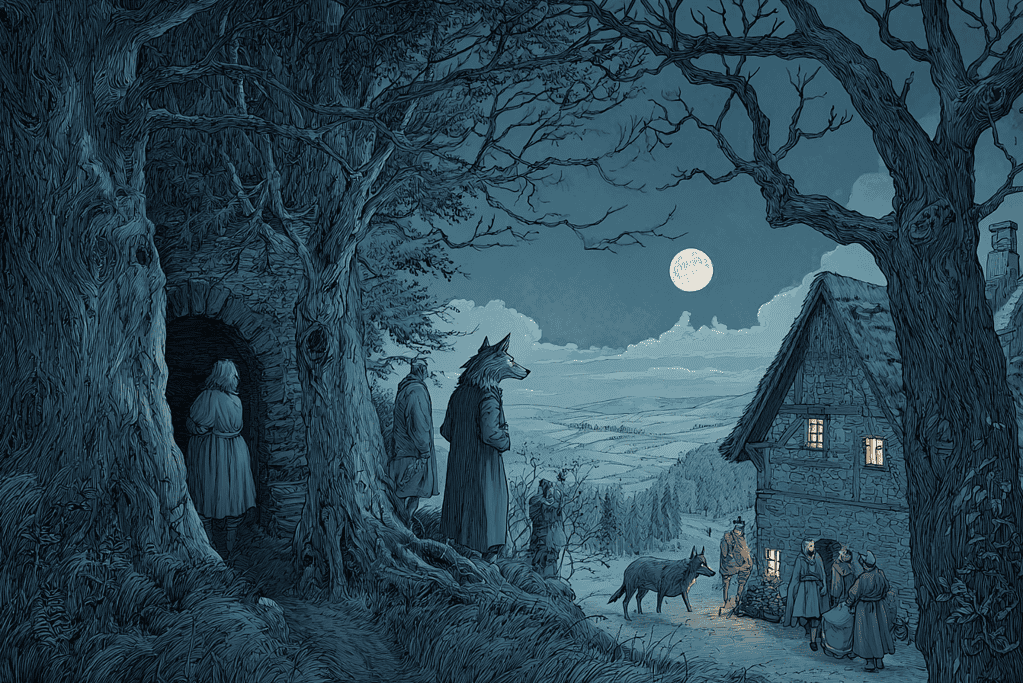
Research into Romanian traditions provides another fascinating dimension of werewolf lore.
Harry Senn’s study of Romanian beliefs shows that the werewolf sometimes appeared within seasonal ritual cycles connected to agricultural calendars.
According to these traditions, certain individuals might periodically transform into a wolf during particular times of the year.
These transformations were linked to symbolic ideas about renewal and cyclical change in nature (Senn, 1982, pp. 207–209).
The Romanian traditions also demonstrate that the belief in werewolves formed part of a broader system of supernatural ideas.
Creatures such as the werewolf and vampire existed within the same cultural imagination, illustrating how different supernatural beings could share similar symbolic roles within folklore (Balinisteanu, 2016, p. 151).
In parts of the Iberian Peninsula, folklore preserved a striking belief concerning birth order.
Some traditions held that the seventh son in a family might become a werewolf.
This belief reflects deeper symbolic patterns in European storytelling.
Francisco Vaz da Silva’s research shows that the seventh-born motif appears repeatedly in fairy tales and legends.
The number seven often symbolizes a threshold between ordinary life and supernatural destiny (Vaz da Silva, 2003, pp. 336–339).
In these narratives the individual destined to become werewolves may struggle with a supernatural fate linked to family lineage or ritual transformation.
The motif demonstrates how werewolf mythology became embedded in broader systems of symbolic storytelling.
Scholars studying fairy tales have proposed that creatures such as the werewolf belong to a category of hybrid beings that combine multiple identities.
These figures blur the boundary between human and animal states.
According to Vaz da Silva, fairy tales frequently contain “complex entities” whose nature shifts between different forms.
Such characters may transform into a wolf, return to human identity, or adopt other symbolic roles within the narrative (Vaz da Silva, 2000, pp. 219–222).
These transformations reflect deep cultural ideas about change and identity.
The act of transformation can symbolize initiation, moral testing, or confrontation with the beast within.
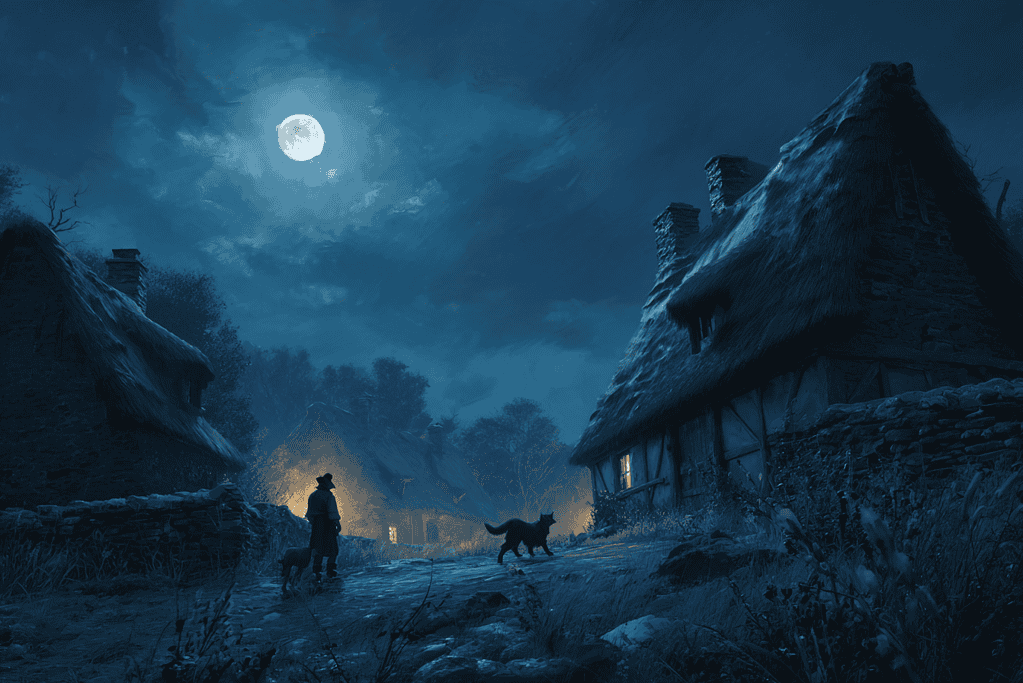
The belief in lycanthropy spread widely through medieval and early modern Europe, appearing in stories, legal records, and folklore traditions.
In some communities, people believed that individuals may be turned into wolves through magical rituals or supernatural curses.
Scholars studying the history of the werewolf emphasize that these beliefs often arose during periods of social tension.
Stories about werewolf attacks sometimes reflected fears of violence, disease, or unexplained deaths within rural communities.
At the same time, many narratives treated the werewolf as a symbolic figure rather than a literal monster.
The transformation allowed storytellers to explore questions about morality, identity, and the dangers hidden within human nature.
The enduring popularity of the werewolf reveals the deep symbolic power of the creature.
Across centuries of storytelling, the wolf has represented wilderness, instinct, and the untamed forces of nature, as well as other aspects of the human soul within European folklore and mythologies, in which it can function, appear and use shapeshifting as a vessel and tool.
When humans become wolves, the transformation suggests the possibility that civilization may collapse into primal behavior.
Scholars studying storytelling traditions note that the werewolf embodies a universal theme found in many myths and legends.
Humans possess both rational intelligence and animal instincts.
The werewolf myth dramatizes this tension by allowing a character to cross the boundary between the two.
Through literature, folklore, and scholarly analysis, the werewolf in lore and legend continues to reveal how cultures interpret the relationship between humanity and the natural world.
Ashliman, D. L. (2008). Review of Vergessene Bestie: Der Werwolf in der deutschen Literatur. Modern Austrian Literature, 41(2), 117–119.
Balinisteanu, T. (2016). Romanian folklore and literary representations of vampires. Folklore, 127(2), 150–172.
Guðmundsdóttir, A. (2007). The werewolf in medieval Icelandic literature. Journal of English and Germanic Philology, 106(3), 277–303.
Lecouteux (2021.) Mysteries of the Werewolf: Shapeshifting, Magic, and Protection. Rochester: Inner Traditions.
Senn, H. (1982). Romanian werewolves: Seasons, ritual, cycles. Folklore, 93(2), 206–215.
Vaz da Silva, F. (2000). Complex entities in the universe of fairy tales. Marvels & Tales, 14(2), 219–243.
Vaz da Silva, F. (2003). Iberian seventh-born children, werewolves, and the dragon slayer. Folklore, 114(3), 335–353.

ᛉ 100% handcrafted artisan pagan , viking, witchcraft and shamanic inspired jewelry.
ᛉ Runes, Symbolism & European Folklore
Get 20% off👇🏻
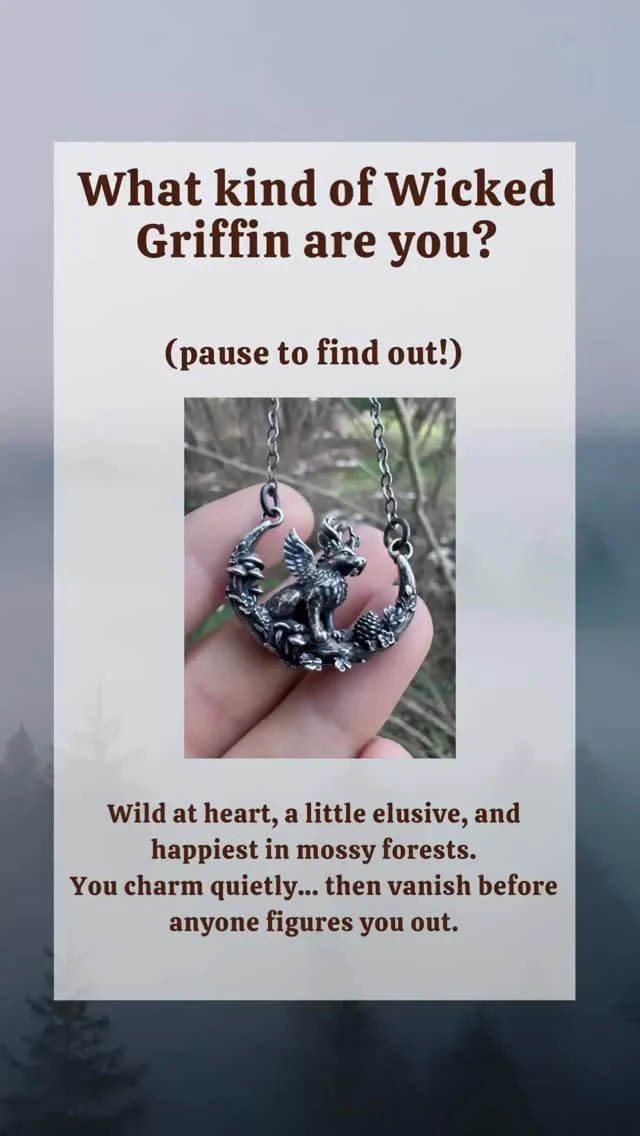
Leave a comment with your result ❤️
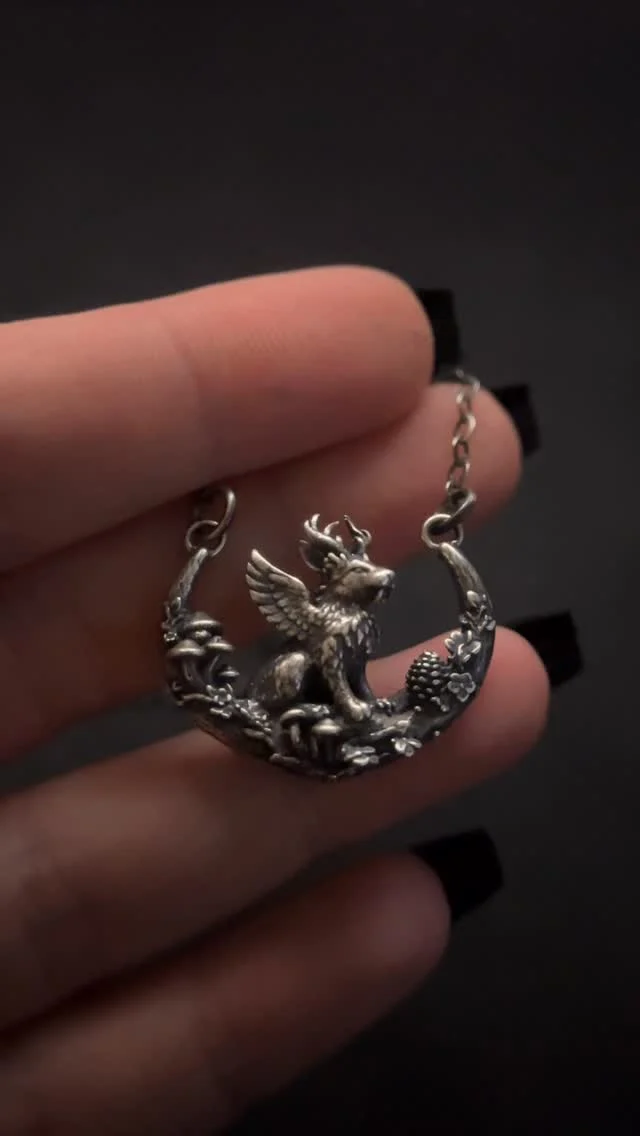
Bavarian Folklore says that you might just cross paths with a Wolpertinger in the alpine...

🐇🌲✨
He finally stepped out of the forest…
The Wolpertinger Pendant has arrived.
Inspired by...

I don’t often sell them, but love it when I do!
Vinca symbol bracelets ❤️...

Rooted in strength + guarded by ravens

The serpent waits 🖤
(Handcrafted Jörmungandr ring made to order in my shop)

Stay warm, everyone ❤️

😑😑😑🤮

I thought I had closed the book on the Alice in Wonderland rings…
But you...

Can this be over now, please?

In case you forgot 💜

Something I’ve been thinking about lately.
If there’s one thing I would’ve done differently early...

This year, we’re not buying things just to keep up.
If you need the reminder:...

My husband is from Bavaria (southern Germany) and I originally made this Krampus pendant for...

Some of the items I’m shipping out today ❤️
Please forgive my dirty nails 😂...

A few items shipping out today 🥰

This mornings rings shipping out ❤️

A few of the rjngs I’m shipping out this morning ❤️
How do you like...

Krampus is coming 🫶🏻

Getting ready to pack up these pretties and ship to their owners ❤️

Freya, cats and pentacles. Doesn’t get any better ❤️

You all got me going crazy making all these fairytale + storybook rings.
But I’ll...

Just launched these pretties ❤️
Size 9 amethyst ring + size 7.25 green kyanite

What would you trade to learn Baba Yaga’s secrets?

It *finally* looks, feels and smells like October!
And here are some items I’m packing...

This mornings pretties getting ready to ship :)

Getting ready to pack up these pretties and ship to their owners ❤️

You bet I’m hopping on this trend 😂
Thank you @shes_sinister for the prompt!

While I welcome the seasonal darkness…it sure is going to make my morning quick videos...

Finally finished the rings I’ve been working on in my stories ❤️
I think I...

Was going to post this update to my stories but it’s too long.

“How do you know I’m mad?” said Alice.
“You must be,” said the Cat, “or...

Some of this mornings orders getting ready to ship. Those little bats are so cute...

Here is the finished ring I was working on in my stories yesterday, along with...

A few of today’s orders shipping out this morning ❤️

The two silver raven rings I was working on in my stories yesterday.
…as well...

Eeeek! I’m so happy to add these to my shop ❤️
I’ve gotten so many...

I had 6 clamshells ready to ship this morning but I dropped and lost my...

Not the story you were told.
The girl didn’t run.
The wolf didn’t win.
This...

I love these raven rings so much 🖤
This mornings pretties shipping out.
All items...

Sleek + minimal Mjölnir ring ⚒️

Today’s orders getting ready to ship.
…And I finally got some time to work on...

That ant ring is so out of place 😂
Not that the mail is coming...

If you had this, which runes would you choose? Or would you accept the runes...

I love making these fun Halloween coffin pendants 🎃
All items you see are always...


About the author Jacqueline Fatica


