

Vlad Tepes Dracul: The Real Dracula, Vlad the Impaler, and the Dark Legends of Transylvania
Dracula, Vlad the Impaler, and the Historical Vlad Dracula of Wallachia
Few historical figures have undergone such a dramatic transformation as Dracula.
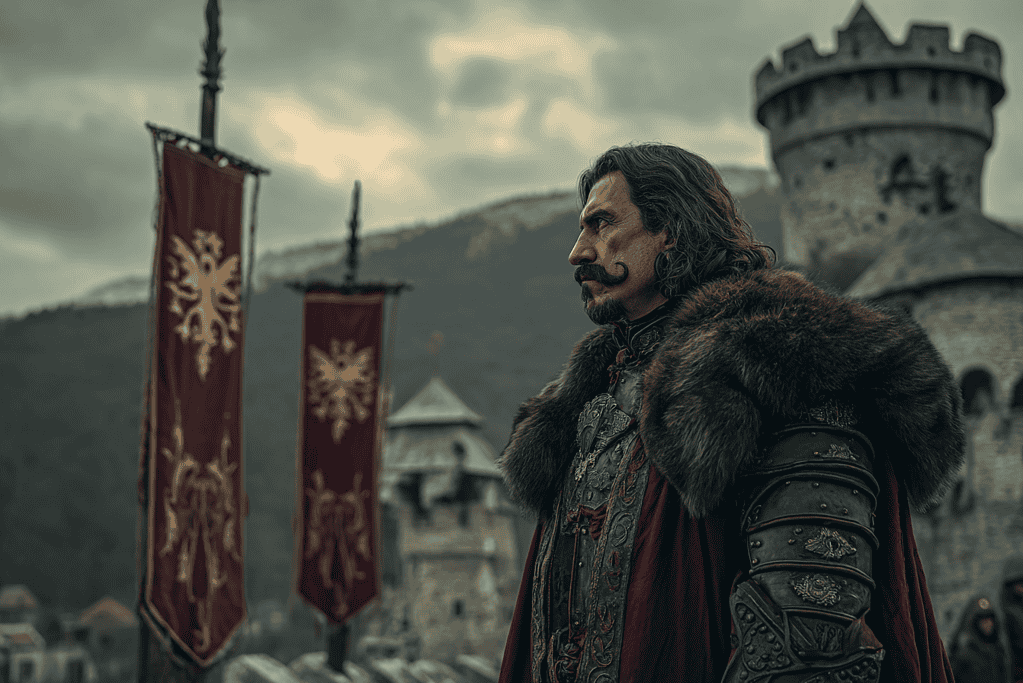
To modern readers the name immediately evokes the immortal vampire of Gothic fiction, yet behind the legend stood a real medieval ruler: Vlad III, better known as Vlad the Impaler or Vlad Țepeș.
The historical Vlad Dracula ruled the principality of Wallachia during the fifteenth century and lived within the turbulent political frontier between Christian Europe and the Ottoman Empire.
His reputation for harsh punishment and dramatic warfare made him famous during his own lifetime, while later centuries transformed that reputation into legend.
Yet the connection between the real Dracula and the fictional Count Dracula created by Bram Stoker in 1897 is far more complicated than popular culture suggests.
Historians and folklorists repeatedly emphasize that Stoker borrowed only a handful of historical details, particularly the name itself, while the vampire myth emerged from a long tradition of folklore and Gothic literature (Hovi, 2017, p. 280; Butler, 2010, p. 108).
Understanding this transformation requires looking at several layers of tradition: the historical Vlad the Impaler, the medieval stories about Vlad, the folklore of Eastern Europe, and finally the literary imagination of the nineteenth century.
Together these elements explain how a medieval prince became one of the most famous monsters in world literature.
Table of Contents
Who Was Vlad III and Why Is He Connected to Dracula?
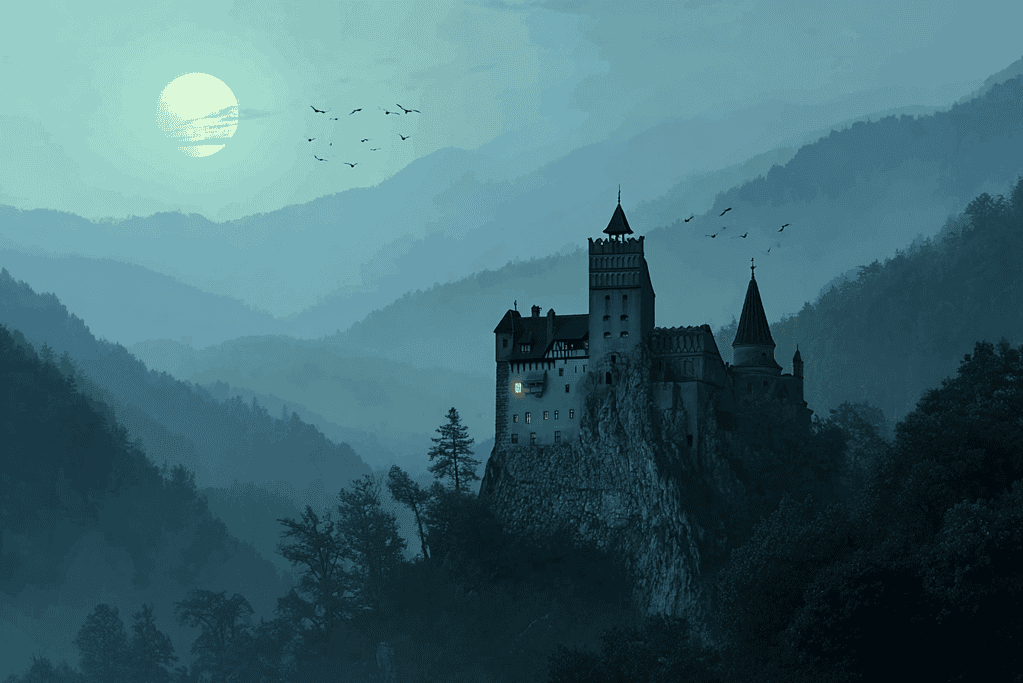
The historical Vlad III, often referred to as Vlad the Impaler, was born in 1431 in the Transylvanian town of Sighișoara (Akeroyd, 2009, p. 22).
Although he was born in Transylvania, he did not rule that region.
Instead, he later became voivode of Wallachia, a principality south of the Carpathian Mountains.
Vlad belonged to a ruling dynasty closely tied to the politics of Hungary, the Balkans, and the Ottoman Empire.
His father, Vlad II, ruled Wallachia during the 1430s and 1440s and played an important role in the military alliances of the period.
Because of these political circumstances, Vlad spent part of his youth in diplomatic captivity within the Ottoman sphere along with his younger brother Radu, a common political practice during the period (Akeroyd, 2009, p. 22).
The historical Vlad Dracula therefore emerged from a world defined by shifting alliances and frontier warfare.
It was this environment that shaped both his rule and his later reputation.
How Did Vlad II Dracul and the Order of the Dragon Create the Name Dracula?
The name Dracula did not originate with Vlad III himself.
It came from his father, Vlad II Dracul, who became a member of the Order of the Dragon, a Christian order established by the Holy Roman Emperor Sigismund to defend against the Ottoman advance (Akeroyd, 2009, p. 23).
The order used the dragon as its emblem, symbolizing the Christian struggle against enemies of the faith.
After his induction, Vlad II adopted the name Dracul, meaning dragon.
His son therefore became known as Vlad Drăculea, meaning son of the dragon (Hovi, 2017, p. 270).
Later linguistic developments complicated this meaning.
In Romanian the word dracul also came to be associated with the devil.
When Bram Stoker encountered the name in nineteenth-century historical writing, he noted precisely this association, which made the name ideal for a supernatural villain (Hovi, 2017, p. 272).
What Was Wallachia and Why Did Vlad Rule There?
The kingdom over which Dracula ruled was Wallachia, a principality located between Central Europe and the Balkans.
During the fifteenth century the region was caught between two powerful states: Hungary to the north and the Ottoman Empire to the south.
The ruler of this principality held the title voivode, a term indicating both military leadership and princely authority.
Vlad eventually became voivode of Wallachia, though his rule was far from stable.
Rival noble families known as boyarsfrequently contested the throne, and political alliances shifted rapidly.
Vlad first briefly seized the throne of Wallachia in 1448, then later returned to power with the support of the Hungariancommander Hunyadi (Akeroyd, 2009, p. 22).
These repeated struggles for power illustrate the instability of the region and the challenges faced by any ruler attempting to maintain authority there.
Why Was Vlad Known as Vlad the Impaler?
The most famous nickname associated with Vlad is “the Impaler,” referring to the execution method for which he became notorious.
The Romanian term Țepeș derives from țeapă, meaning stake.
Although impalement was not an invention of Vlad himself, contemporary sources describe him using the method frequently as punishment (Hovi, 2017, p. 270).
The technique was intended to serve both as execution and as public warning.
Because of these practices, stories about Vlad the Impaler’s punishments circulated widely across Europe.
These stories formed the basis for the later reputation of Dracula as an unusually cruel ruler.
What Happened in 1462 and the “Forest of the Impaled”?
One of the most famous episodes in the story of Dracula occurred in 1462, during a conflict with the Ottoman sultan.
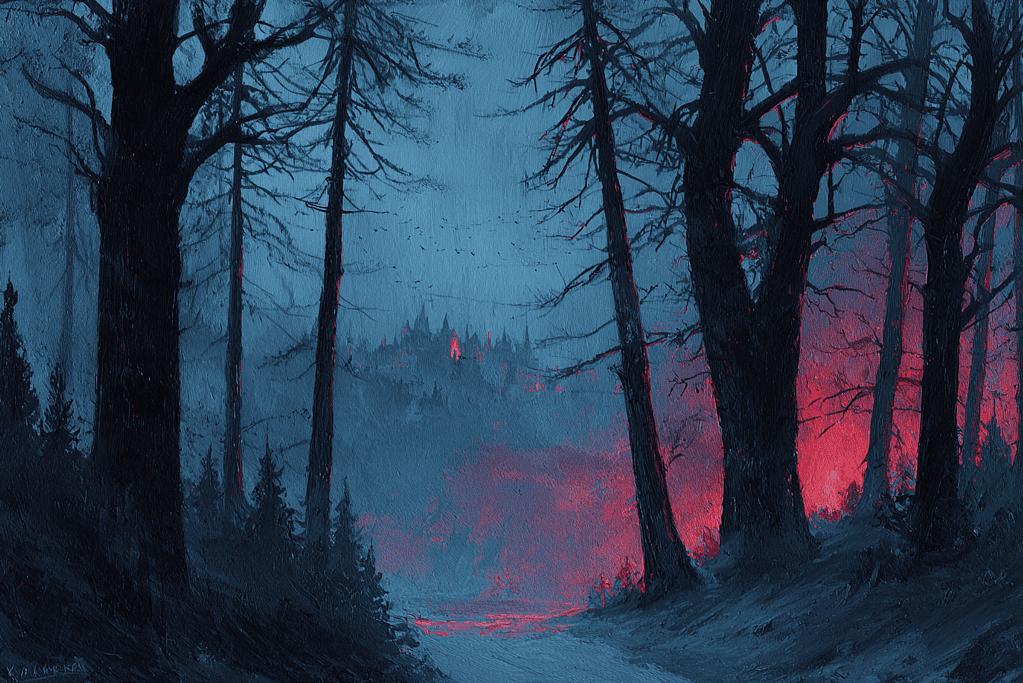
When the Ottoman army advanced toward the Wallachian capital of Târgoviște, they reportedly encountered a horrifying spectacle: a large field filled with impaled bodies.
The scene became known as the “Forest of the Impaled.”
This event shocked contemporary observers and later chroniclers, and it became one of the most frequently repeated episodes in the stories about Vlad (Hovi, 2017, p. 270).
Whether exaggerated or not, the story illustrates the theatrical nature of Vlad’s warfare and the psychological strategies he used against enemies.
How Did German Pamphlet Stories Turn Vlad into a Monster?
The terrifying reputation of Dracula did not arise solely from historical events.
It was also shaped by printed propaganda.
During the fifteenth century German merchants living in Transylvania had economic conflicts with Vlad.
After his fall from power, they circulated sensational printed pamphlet stories describing his alleged atrocities (Akeroyd, 2009, p. 24).
These pamphlets, often accompanied by dramatic woodcut illustrations, depicted Vlad committing gruesome punishments, including executions and torture.
Because printing technology allowed these texts to spread rapidly across Europe, the stories played an important role in establishing Vlad’s reputation as a monstrous tyrant.
Modern historians recognize that these accounts were shaped by political conflict and should not be treated as neutral descriptions of historical events.
Did Romanian Tradition Portray Vlad Dracula Differently?
While German sources emphasized cruelty, Romanian traditions often remembered Vlad more positively.
In local narratives he appears as a stern ruler who punished disorder and defended the country against foreign enemies.
These stories helped shape the image of Vlad as a hero in Romania, a defender of national independence and justice (Hovi, 2017, p. 269).
Because of this positive cultural memory, Vlad was not traditionally associated with vampires within Romanian folklore.
On the contrary, linking a respected ruler with such a supernatural monster would have contradicted the tone of these traditions (Hovi, 2017, p. 272).
How Did Bram Stoker Discover the Name Dracula?
The connection between Vlad and the fictional vampire emerged centuries later through the work of Bram Stoker.
While researching his novel Dracula, published in 1897, Stoker encountered the name Dracula in William Wilkinson’s 1820 history of Wallachia and Moldavia.
Wilkinson briefly mentioned a Wallachian ruler named Dracula who fought against the Ottoman advance (Hovi, 2017, p. 272).
Stoker noted that the name could be interpreted as meaning devil.
This association made the name particularly suitable for the villain of his Gothic novel.
Before discovering it, Stoker had planned to name the character Count Wampyr (Hovi, 2017, p. 273).
Why Did Transylvania Become the Home of Count Dracula?
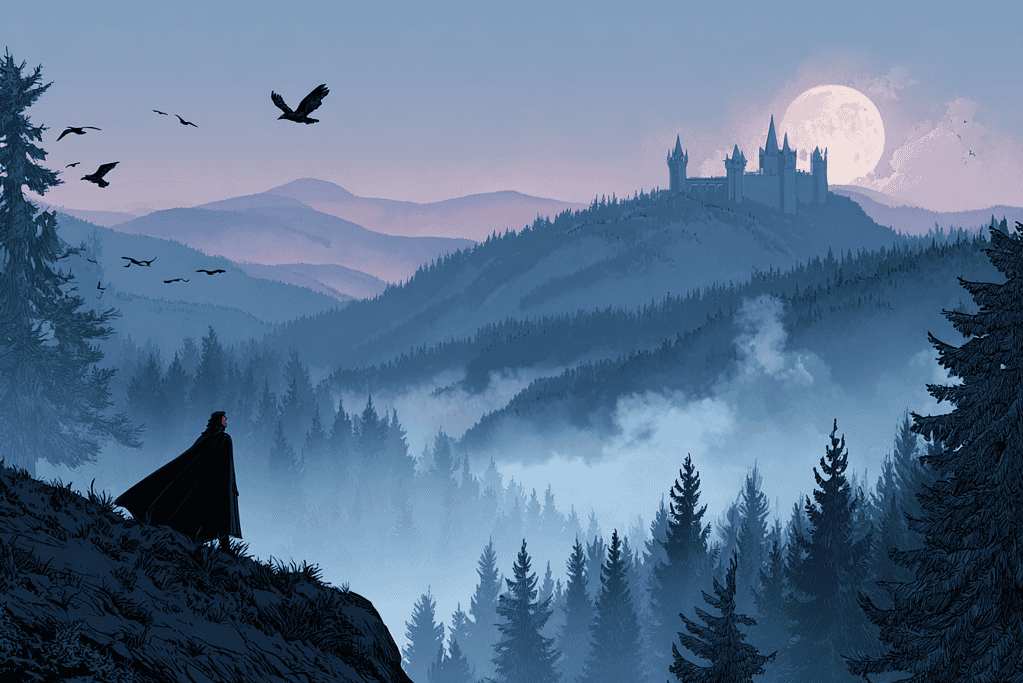
In Bram Stoker’s Dracula, the vampire resides in a castle in Transylvania.
The choice of location helped create the eerie atmosphere of the novel.
Stoker relied heavily on travel literature describing Eastern Europe as a land of ancient superstition and mysterious landscapes.
These descriptions made the region an ideal setting for Gothic horror (Butler, 2010, p. 111).
Because the historical Vlad had been born in Transylvania, readers later assumed that the fictional vampire must have been based directly on him.
In reality, the connection between the two figures is far more limited.
Why Do People Still Believe Vlad Was the Real Dracula?
The belief that Vlad the Impaler inspired the vampire Count Dracula became especially popular during the twentieth century.
One influential work was In Search of Dracula (1972) by Raymond McNally and Radu Florescu, which presented Vlad as the historical origin of the vampire legend.
Although highly influential, later scholars have pointed out that many of its claims rely on speculation rather than direct evidence (Hovi, 2017, p. 271).
As a result, modern historians generally agree that Stoker borrowed the name Dracula and a few historical references but did not base his vampire directly on Vlad’s life.
The fictional vampire instead emerged from a combination of folklore traditions, Gothic literature, and nineteenth-century cultural anxieties (Butler, 2010, p. 108).
What Vampire and Werewolf Folklore Already Existed in Romania?
Long before Bram Stoker imagined the fictional vampire Count Dracula, the lands of Romania, particularly Transylvania and the surrounding Carpathian regions, already possessed a rich body of supernatural folklore.
These traditions included beliefs about restless spirits, werewolves, and vampiric creatures that roamed the night.
Understanding this folkloric background helps explain why the story of Dracula felt so natural when it was later set in this landscape.
Romanian folklore preserved a detailed seasonal rhythm for supernatural activity.
According to ethnographic research, villagers believed that certain times of year weakened the boundary between the living and the dead.
One particularly dangerous period began on St. Andrew’s Day (30 November) and lasted through the winter holidays until Epiphany.
During these nights people believed that malevolent beings such as vampires, witches, and werewolves wandered the countryside (Senn, 1982, p. 206).
Protective rituals were often performed during this season, including placing garlic at doors or windows and observing special household customs intended to guard families from supernatural attack.
These beliefs formed part of the broader spiritual worldview of rural Romanian communities.
Within this cosmology the supernatural creature known as the vircolac occupied an especially intriguing place.
In Romanian legend the vircolac was sometimes described as a wolf-like being capable of attacking celestial bodies.
During lunar eclipses villagers believed that such creatures were attempting to devour the moon itself (Senn, 1982, pp. 206–207).
In some traditions the vircolac was associated with the wandering souls of the dead or with cursed individuals capable of transformation.
The overlap between werewolf and vampire traditions in this folklore shows that the boundaries between different supernatural beings were fluid rather than strictly defined.
Ritual life in rural Romania also preserved dramatic winter ceremonies that echoed these beliefs.
During midwinter festivals villagers performed masked dances in which participants dressed as animals such as wolves, bears, goats, or horses.
These processions moved through the village accompanied by music and theatrical performances.
Anthropologists interpret these customs as survivals of much older ritual cycles connected with agricultural renewal and the symbolic return of the dead (Senn, 1982, pp. 206–207).
In this ritual environment wolves and other creatures were not merely animals but figures tied to spiritual power and transformation.
When Bram Stoker later placed his fictional vampire in Transylvania, he was therefore drawing upon a region already associated with supernatural beliefs.
Travel literature of the nineteenth century frequently described the Carpathian mountains as a place where ancient superstitions still flourished.
Although Stoker did not directly use Romanian folklore sources, the atmosphere he created in Dracula resonated strongly with traditions that had existed in Eastern Europe for centuries (Butler, 2010, p. 111).
From the perspective of folklore studies, this background is crucial.
The historical Vlad Dracula was not remembered in traditional Romanian stories as a vampire.
Yet the broader mythological landscape of the region already contained many elements later associated with the Dracula legend: nocturnal predators, wandering spirits, transformations between human and animal, and ritual attempts to control supernatural forces.
These traditions created the cultural environment in which the literary figure of Dracula could flourish.
Thus the famous vampire did not arise solely from the life of Vlad the Impaler.
Instead, the story of Dracula emerged where history, folklore, and literary imagination intersected, drawing upon centuries of supernatural belief embedded within the cultural traditions of Romania and the wider world of Eastern European legend (Senn, 1982, pp. 206–207; Butler, 2010, p. 111).
References
Akeroyd, J. (2009). The historical Dracula: Monster or Machiavellian prince? History Ireland, 17(2), 21–24.
Butler, E. (2010). Dracula: Vampiric contagion in the late nineteenth century. In Metamorphoses of the vampire in literature and film: Cultural transformations in Europe, 1732–1933 (pp. 107–123). Boydell & Brewer.
Buchowski, M. (2003). Romania, the Balkans and beyond. Anthropology Today, 19(2), 24–25.
Hovi, T. (2017). From a crusader to a vampire? The connections between Vlad Dracula, Count Dracula, and current Dracula tourism. In T. M. Bohn, R. Einax, & S. Rohdewald (Eds.), Vlad der Pfähler – Dracula: Tyrann oder Volkstribun?(pp. 269–281). Harrassowitz Verlag.
Senn, H. (1982). Romanian werewolves: Seasons, ritual, cycles. Folklore, 93(2), 206–215.