
Best Viking & Norse Mythology Quotes & Sayings
Welcome to a journey through the mystic realms of Viking and Norse mythology, a world where gods, giants, and heroes stride across the pages of history and imagination.
This rich tapestry has long captivated those drawn to Norse paganism, witchcraft, and the indomitable Viking spirit.
Our exploration is not just an homage to these ancient narratives but a bridge connecting the old with the new, where each quote and saying resonates with the echoes of the past.
In this collection, we delve into the profound wisdom encapsulated in the memorable quotes from the Viking Age, the sagacious Prose Edda, the poetic depths of the Poetic Edda, and the dramatic narratives from the “Vikings” TV series.
Each selection is more than just words; they are the vessels of insight, courage, and reflection, chosen to inspire and challenge our modern perspectives.
Join us as we traverse this historical and mythical landscape, uncovering the timeless wisdom that continues to guide and influence the path of those who walk with the gods and giants of old.

Table of Contents
The Essence of Viking Wisdom
Viking Values and Virtues
The heart of Viking wisdom is woven through the fabric of their core values: bravery, honor, and the unbreakable bonds of family and community.
These principles were not merely ideals but the very pillars upon which Viking society stood, reflected profoundly in their sayings and deeds.
Within these values lies the essence of what it meant to live and thrive in the Viking Age, offering insights into a worldview where honor was earned and courage revered.
Bravery and Courage
Central to Viking culture was the valor displayed in the face of daunting odds. Bravery for a Viking was not the absence of fear but the strength to confront and overcome it.
This courage is immortalized in their sagas and eddas, where tales of heroic deeds and fearless warriors abound, serving as an enduring inspiration for those today who seek to embody the Viking spirit in the face of adversity.
Their willingness to stand firm, to explore uncharted territories, and to battle formidable foes encapsulates the essence of Viking bravery, echoing the sentiment that to live well, one must be willing to face the unknown with courage.
Honor and Loyalty
Equally paramount was the Viking emphasis on honor, which transcended mere personal glory to encompass a deep-seated loyalty to kin and community.
Honor was the lens through which every action was viewed, dictating that one’s deeds could elevate or tarnish not only their name but also that of their family for generations to come.
Loyalty, akin to an unspoken oath, bound individuals to their leaders and each other, creating a societal fabric that was resilient in the face of both internal and external strife.
In Viking lore, to betray this bond was to forsake one’s very essence, illustrating the profound depth of their commitment to honor and loyalty.
These values, intricately linked, forged a society where one’s word was their bond, and their deeds, a reflection of their honor.
Insights from the “Vikings” TV Series
Ragnar Lothbrok’s Philosophy
Ragnar Lothbrok, a legendary figure brought vividly to life in the “Vikings” TV series, embodies a complex philosophy that transcends the stereotypical image of Vikings as mere warriors.
His vision and reflective quotes offer a nuanced perspective on leadership, ambition, and the human condition.
Ragnar’s character challenges viewers to rethink conventional wisdom and societal norms, provoking a deeper understanding of what drives us as individuals and as a community.
The Fury of a Patient Man
One of Ragnar’s most impactful quotes, “I would worry less about the gods and more about the fury of a patient man,” delves into the virtue of patience as a strategic and personal strength.
This statement underscores the immense power that lies in waiting for the right moment to act, suggesting that true strength often resides not in immediate action but in thoughtful deliberation and timing.
Ragnar’s patience is a testament to his understanding of human nature and the chess-like maneuvering of leadership and conflict, offering a valuable lesson in the importance of foresight and self-control.
Legacy and Power
Ragnar’s musings on legacy and power provide a compelling commentary on the ephemeral nature of authority and the lasting impact of one’s actions.
He contemplates the marks we leave on the world, questioning the value of power when weighed against the legacy of wisdom, kindness, and innovation.
His perspective invites us to consider how modern pursuits of power and success might be viewed through the lens of history and whether true greatness lies in the conquests we achieve or the legacy we leave behind.
In a world where power is often sought for its own sake, Ragnar’s reflections encourage a reevaluation of what constitutes genuine leadership and enduring influence.
Powerful Viking Quotes from the TV Show
Vikings is known for its memorable quotes that capture the essence of the characters and the dramatic, often philosophical nature of the series. Here are some notable quotes from the show:
- “Power is always dangerous. It attracts the worst and corrupts the best.” – Ragnar Lothbrok
- “I would worry less about the gods and more about the fury of a patient man.” – Ragnar Lothbrok
- “Don’t waste your time looking back. You’re not going that way.” – Ragnar Lothbrok
- “The true measure of a man is how he chooses to react in the face of uncertainty.” – King Ecbert
- “I am the boneless. I am the sin of my father, a snake in the grass.” – Ivar the Boneless
- “In my world, you must have a life worth living before you can even consider death.” – Ragnar Lothbrok
- “It is one thing to use a weapon, but another to kill.” – Lagertha
- “I did not become a king out of ambition, but once again, I had no choice as a result of other people’s actions.” – Ragnar Lothbrok
- “Fate has brought us together. You are the wings on my back, and I am the sword in your hand.” – Ragnar Lothbrok
- “Who wants to be king?” – Ragnar Lothbrok
- “We fight. That is how we win, and that is how we die.” – Rollo
- “You can try to kill me a thousand times, but all you will do is teach me how to die well.” – Floki
- “A man must have a code, a way of life to live by.” – Bjorn Ironside
- “All my life, I have been living with the dead. I have called upon them and asked them, and they have answered me.” – Seer
- “We are all fated to die on a certain day, but it is our own choice to do as we please until that day comes.” – Ragnar Lothbrok
Wisdom from the Prose Edda
Ancient Texts, Timeless Lessons
The Prose Edda stands as a monumental pillar in the vast edifice of Norse literature, weaving together the ancient threads of myths and legends to offer profound insights into the Norse cosmos, deities, and the very fabric of human life.
This ancient text serves as a window into the minds and hearts of the Norse people, revealing a worldview where every element of existence is imbued with meaning and interconnected in the great tapestry of life and destiny.
The Doom of Gods and Men
Within the pages of the Prose Edda, the theme of fate and inevitable doom—Ragnarök, the twilight of the gods—is a recurring motif that casts a long shadow over the joys and sorrows of the gods and their creations.
This narrative not only underscores the transient nature of power and the cyclical process of creation and destruction but also imparts a valuable lesson on the importance of facing one’s hour of doom with dignity and courage.
The acceptance of fate, as depicted in the Prose Edda, encourages a stoic embrace of life’s vicissitudes, fostering a resilience that resonates deeply with those who navigate the uncertainties of the human condition.
Human Life and the Natural World
The Prose Edda intricately binds the fate of humans to the rhythms and cycles of the natural world, highlighting an intrinsic bond between mankind and the environment.
This connection is vividly portrayed through tales where gods and humans interact with the elements, creatures, and the very land itself, suggesting a profound respect and reverence for the natural world.
Such narratives advocate for harmony between humans and nature, a principle that holds particular significance in contemporary discussions on environmental stewardship and sustainability.
By reflecting on these ancient stories, one can glean wisdom on the importance of living in balance with the natural world, a concept that continues to inspire and guide those who seek to align with the ancient Viking spirit and the timeless teachings of Norse paganism.
Best Quotes from the Prose Edda
The Prose Edda, attributed to Snorri Sturluson, is a key source of Norse mythology and Scandinavian heroic legends.
Unlike the poetic format of much ancient Norse literature, the Prose Edda presents these myths and stories in prose.
Here are 15 quotes from the Prose Edda, which may vary slightly in wording depending on the translation:
- “There was a beginning, and things were not as they are now.”
- “From Ymir’s flesh the earth was created, and from his sweat, the sea; mountains from bones, trees from hair, and from his skull, the sky.”
- “Then from the throng did three come forth, from the home of the gods, the mighty and gracious; Two without fate on the land they found, Ask and Embla, empty of might.”
- “Fear not death for the hour of your doom is set and none may escape it.”
- “The wise one sees from afar the coming of doom: he who stands nearby is blind.”
- “Better to fight and fall than to live without hope.”
- “The high One heard in Ida-plain, and he swore an oath that no one knows which oath he swore.”
- “Then is fulfilled Hlín’s second sorrow, when Óðinn goes to fight with the wolf, and Beli’s slayer, bright, against Surtr.”
- “The world will be destroyed; fire and flood will swallow doomed men.”
- “And I saw, and I was silent, I saw and I thought I should not speak, I heard and I should not hear.”
- “There sits Sigyn, for her consort’s sake, not right glad.”
- “Out of the sea will rise again the darkened, dead world; the sun shall turn black, earth sink in the sea, from heaven fall the fair, bright stars.”
- “Then comes Sigfather’s mighty son, Víðarr, to fight with the foaming wolf; in the giant’s son does he thrust his sword full to the heart: then avenges he his father.”
- “So is the dark destiny of the gods sealed, and the mighty past plunges into night.”
- “But in that place which you now behold there will be found a hall brighter than the sun, shingled with gold, called Gimle. There shall dwell the good and righteous people and enjoy forever the delights at their pleasure.”
These quotes encapsulate the rich tapestry of Norse mythology, from the creation of the world to its prophesied destruction in Ragnarök, and the eventual renewal of the world.
The language used in translations of the Prose Edda can vary significantly, reflecting the poetic and often enigmatic style of Old Norse literature.
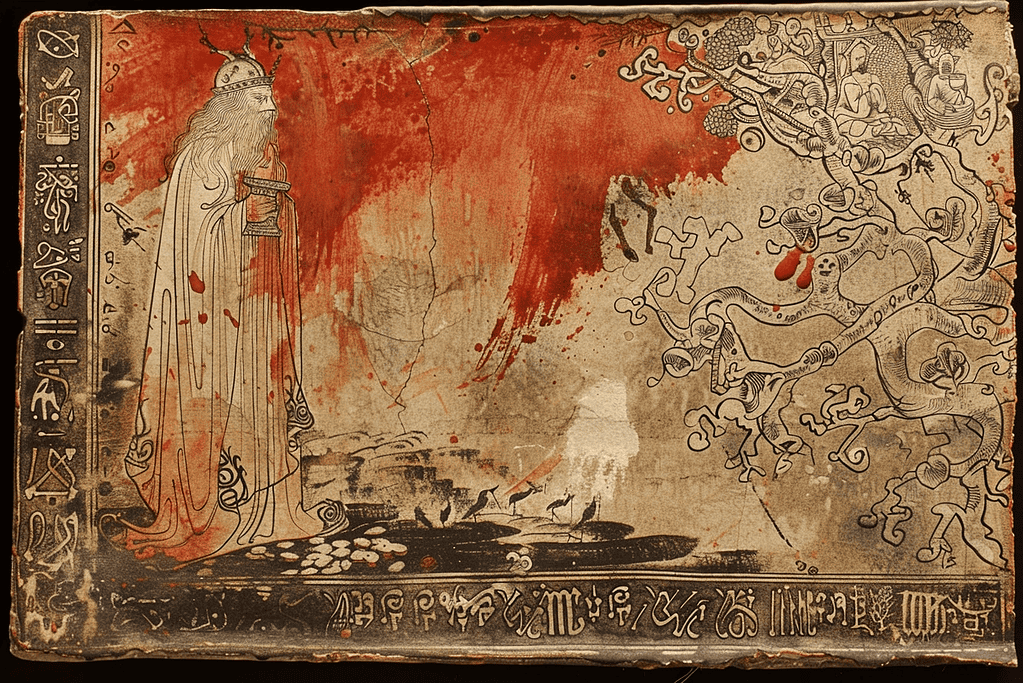
Echoes from the Poetic Edda
The Poetic Depth of Norse Mythology
The Poetic Edda is a treasure trove of Norse mythology, capturing the essence of Viking culture, beliefs, and the human condition through its lyrical narratives.
This collection of poems serves as a cornerstone for understanding the rich tapestry of Norse lore, offering a window into the minds and hearts of the ancients.
Its verses carry the weight of wisdom, heroism, and the eternal search for understanding the cosmos and our place within it.
The Wisdom of Hávamál
Within the Poetic Edda, the “Hávamál,” or the “Sayings of the High One,” offers practical advice, philosophical insights, and the virtues of wisdom and moderation.
This poem is a guide to life, as seen through the eyes of Odin, the Allfather, presenting a code of conduct that values honor, self-reliance, and the importance of keeping one’s word.
The “Hávamál” teaches the value of caution, the virtue of hospitality, and the wisdom of keeping thy mind vigilant and sober, especially when much ale is at hand, underscoring the belief that a clear mind and a vigilant heart are key to navigating life’s challenges.
Visions of Völuspá
The “Völuspá,” or “The Prophecy of the Seeress,” stands as one of the most profound poems within the Poetic Edda, offering a cosmic vision of the creation and end of the world.
It speaks of the origin of the universe, the fate of the gods, and the inevitable doom of Ragnarök, leading to a rebirth of the world.
This cycle of creation, destruction, and renewal reflects the Norse understanding of the cyclical nature of life and the universe.
Through its vivid imagery and stark revelations, the “Völuspá” imparts a sense of awe and acceptance of the great cycles that govern existence, urging us to embrace the impermanence of life and the enduring rhythm of the natural world.
Best Quotes from the Poetic Edda
The Poetic Edda is a collection of Old Norse poems that are rich with mythology, wisdom, and the heroic tales of Norse gods and heroes.
Here are over 15 quotes from various poems within the Poetic Edda. Keep in mind that translations may vary, as the original Old Norse text can be interpreted in different ways:
- “Cattle die, kindred die, Every man is mortal: But the good name never dies Of one who has done well.” – Hávamál
- “Better to stand than to sit, And to lie down is best of all.” – Hávamál
- “Where you recognize evil, speak out against it, And give no truces to your enemies.” – Hávamál
- “The unwise man is awake all night, And ponders everything over; When morning comes he is weary in mind, And all is a burden as ever.” – Hávamál
- “From their homes all men will flee; Nine paces will Odin’s son retreat from the serpent, fear unafraid.” – Völuspá
- “All door-ways, before going forward, should be looked to; for difficult it is to know where foes may sit within a dwelling.” – Hávamál
- “Generous and bold men live the best, seldom will they sorrow; but the base man sees bogies everywhere and the miser pines for presents.” – Hávamál
- “The lame can ride horse, the handless drive cattle, the deaf one can fight and prevail, ’tis happier for the blind than for him on the bale-fire, but no man hath care for a corpse.” – Hávamál
- “Often it has been that I have regretted speech, never silence.” – Hávamál
- “A small hut of one’s own is better, A man is his master at home: A couple of goats and a corded roof Still are better than begging.” – Hávamál
- “Fire is needed by the newcomer whose knees are frozen numb; meat and clean linen a man needs who has journeyed over the mountains.” – Hávamál
- “Young was I once, I walked alone, and bewildered seemed in the way; then I found me another and rich I thought me, for man is the joy of man.” – Hávamál
- “The wise one sees from afar the coming of doom; even the gods are doomed to die.” – Völuspá
- “It sates itself on the life-blood of fated men, paints red the powers’ homes with crimson gore. Black become the sun’s beams in the summers that follow, weathers all treacherous.” – Völuspá
- An ash I know there stands, Yggdrasil is its name, a tall tree, showered with shining loam. From there come the dews that drop in the valleys. It stands forever green over Urðr’s well.” – Völuspá
- “The High One made, earth from Ymir’s flesh, and from his sweat the sea; mountains from bone, trees from hair, and from his skull the sky.” – Völuspá
- “Then all the Powers went to the thrones of fate, the sacrosanct gods, and considered this: who should form the lord of the dwarfs out of Brimir’s blood and from the legs of Bláinn?” – Völuspá
These quotes reflect the varied content of the Poetic Edda, from the wisdom literature of the Hávamál to the mythological narratives of the Völuspá.
The themes of wisdom, fate, the impermanence of life, and the intricate relationships between the gods and mortals pervade these texts, offering a deep well of insight into Norse culture and belief systems.
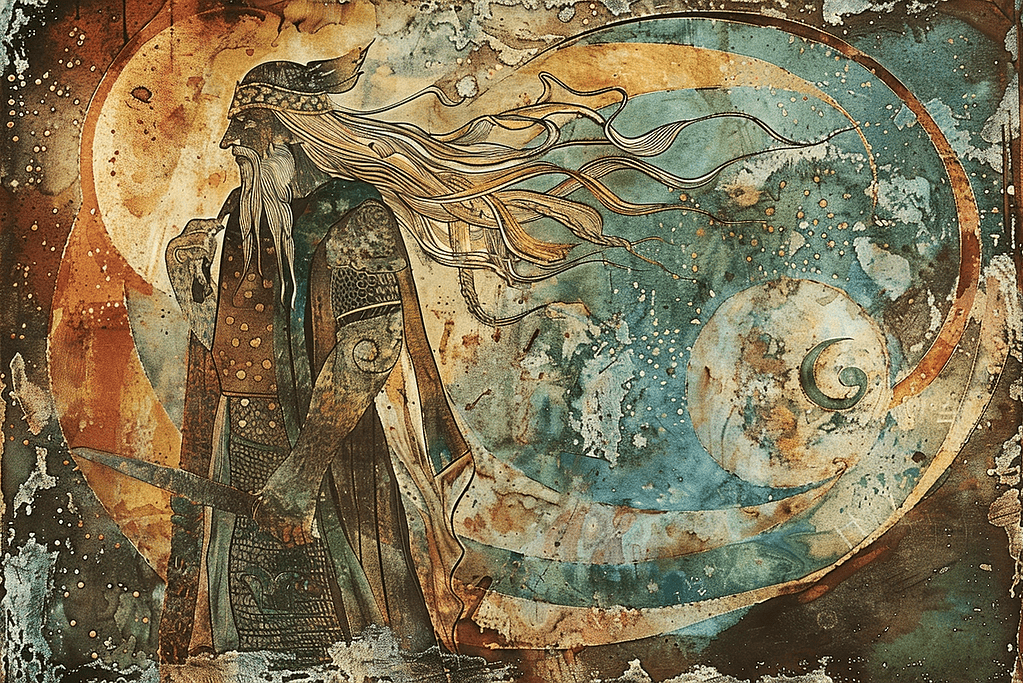
The Legacy of the Völsunga Saga
The Volsunga Saga, an epic narrative woven into the fabric of Old Norse literature, stands as a monumental testament to the Viking spirit, embodying the quintessence of Norse mythology and heroism.
This ancient saga, steeped in magic, destiny, and the complexities of human and divine interactions, offers a window into the world of the Völsungs, a lineage marked by the favor and meddling of gods, notably Odin.
At the heart of the saga are the figures of Sigmund and his son Sigurd, the dragon-slayer, whose fates encapsulate the themes of valor, vengeance, and the inexorable nature of destiny.
Sigurd’s conquest of the dragon Fafnir, driven by a quest for glory and spurred on by the machinations of the gods, and his tragic entanglement with the formidable valkyrie Brynhildr, weave a narrative rich in drama and pathos.
The Völsunga Saga is not merely a chronicle of heroic deeds but also a reflection on the complexities of honor, the bonds of kinship, and the tragic consequences of hubris and betrayal.
The saga’s influence permeates through centuries, inspiring operas, literature, and art, serving as a cornerstone for those who seek to understand the ethos of the Viking age and the enduring appeal of Norse mythology.
In its tales of heroic struggles and its exploration of the human heart, the Völsunga Saga continues to captivate and inspire, resonating with those who cherish the tales of old and seek the wisdom and courage of the legendary Völsungs in the face of life’s tumultuous journey.
The “Völsunga Saga” originates from medieval Iceland. It is part of the larger corpus of Old Norse literature that captures the myths, legends, and history of the Scandinavian people during the Viking Age.
The saga is deeply rooted in ancient Norse mythology, drawing on earlier Eddic poetry and oral traditions to tell the story of the Völsung family, from its divine origins to the tragic fates of its heroes, most notably Sigurd the Dragon-Slayer and his descendants.
Through its rich narrative, the saga explores themes of heroism, power, betrayal, and the inexorable influence of fate, offering a window into the values and beliefs of the Norse world.
Powerful Quotes from the Völsunga Saga
- “For the blood of the slain, the weeping voice of the bereaved, life shall be paid for with life.”
- “With a good woman, if you wish to enjoy her, let her believe she is free, and not coerced.”
- “One’s back is vulnerable, unless one has a brother.”
- “Now remember, my son, to be aware of that sleeping thorn.”
- “But the king’s heart swells, bulging with courage in battle, where heroes sink down.”
- “It is the way of men to make known their grief, but to keep their heart’s counsel.”
- “Never is one given a good without having to pay for it.”
- “Fear not death for the hour of your doom is set and none may escape it.”
- “Often it is that what comes from the gods, by the way of harm, seems to us better than it is in truth.”
- “Every man who is not hampered by his own deed grows strong as he grows old.”
- “Where wolf’s ears are, wolf’s teeth are near.”
- “He who has power over himself, too, will have power over others.”
- “The brave man well shall fight and win, though dull his blade may be.”
- “Few things hinder a man more than to be full of his own wisdom.”
- “Better no prayer than too big an offering, by thy getting measure thy gift; better is none than too big a sacrifice.”
- “An unwise man, when he gets into a tight place, lays the blame on fate.”
- “The high-born must speak out and promise, who wish to gain esteem; one gets little from silence.”
- “Gold is little comfort for the kinsman dead.”
- “Much have I fared, much have I found, much have I got of the gods.”
- “Who can say what sorrow seemingly carefree folk bear to their life’s end?”
- “For a noble man, death is better than a shameful life.”
- “Let no man be so trustful that he trusts his brother overmuch, or a kinsman, or a friend; for often word will go to wolf from word.”
- “The leader of the host should be last to take his meal but first to take his stand.”
- “Often should one make an early move where power’s wielded.”
- “Great deeds and ill deeds often fall on one man’s lot.”
These quotes encapsulate the wisdom, courage, and tragic beauty that permeate the “Völsunga Saga,” offering timeless insights into the human condition as viewed through the lens of Norse mythology.

Living the Viking Spirit Today
Modern Interpretations and Inspirations
The ancient wisdom of the Vikings, with its rich mythology and storied history, continues to offer profound insights and guidance for individuals today, particularly those drawn to the paths of Norse paganism and the venerable Viking way of life.
In our fast-paced, modern world, the enduring principles of bravery, honor, and community that underpinned Viking society provide a source of inspiration and a model for resilience, strength, and integrity.
Inspirational Quotes for Today’s Challenges
In the face of contemporary challenges, the words of the Vikings resonate with timeless relevance, offering motivation and a broader perspective.
Consider the saying, “Fear not death for the hour of your doom is set and none may escape it,” which encourages us to face life’s uncertainties with courage.
Another quote, “The brave man well shall fight and win, though dull his blade may be,” reminds us that determination and spirit often prevail over mere circumstance.
These inspirational quotes, drawn from sagas and eddas, embolden us to meet today’s trials with a Viking’s heart.
Embracing the Old Ways in a New Age
In reconnecting with the wisdom and practices of the Vikings, we find not only a link to the past but also timeless principles that can enrich our lives in the present.
The Viking emphasis on the value of good counsel, the importance of steadfastness in friendship, and the pursuit of honor in one’s actions can guide us in building stronger communities and leading lives of deeper fulfillment.
By embracing these old ways, we foster a connection not just to the rich culture and heritage of the Norse but also to the natural world and the communal bonds that sustain us.
This synthesis of ancient wisdom and contemporary living invites us to forge our own path with the strength, courage, and integrity that characterized the Viking spirit.
Authentic Hávamál Quotes & Runic Inscriptions
Beyond the sagas and TV adaptations, the most authentic Viking voices come from the medieval Icelandic poem Hávamál (“Sayings of the High One”) and from runic inscriptions carved in stone during the Viking Age itself. These sources offer a rawer, more historically grounded perspective on Norse wisdom.
What are “Viking quotes,” really—who is speaking, and when?
A quote is only as honest as its chain of custody.
For the Viking world, most famous lines reach us through texts written down in Christian-era Iceland, preserving older material in poetry and story.
That does not make them “fake,” yet it does mean we are hearing voices through manuscripts, scribes, and translation choices.
In other words, we have to be careful with taking them too literally.
Hávamál is at the core of “viking sayings” text for everyday counsel: how to enter a hall, how to behave as a guest, what to do with money, how to handle friends, how to protect your name.
Scholar Canevaro points out a hard edge running through this material: the poem repeatedly returns to the idea that the body goes away, but a person’s name can outlast them (Canevaro, 2014, pp. 11–13).
That is a key to why “viking quotes” feel profound: they often treat reputation as a form of afterlife.
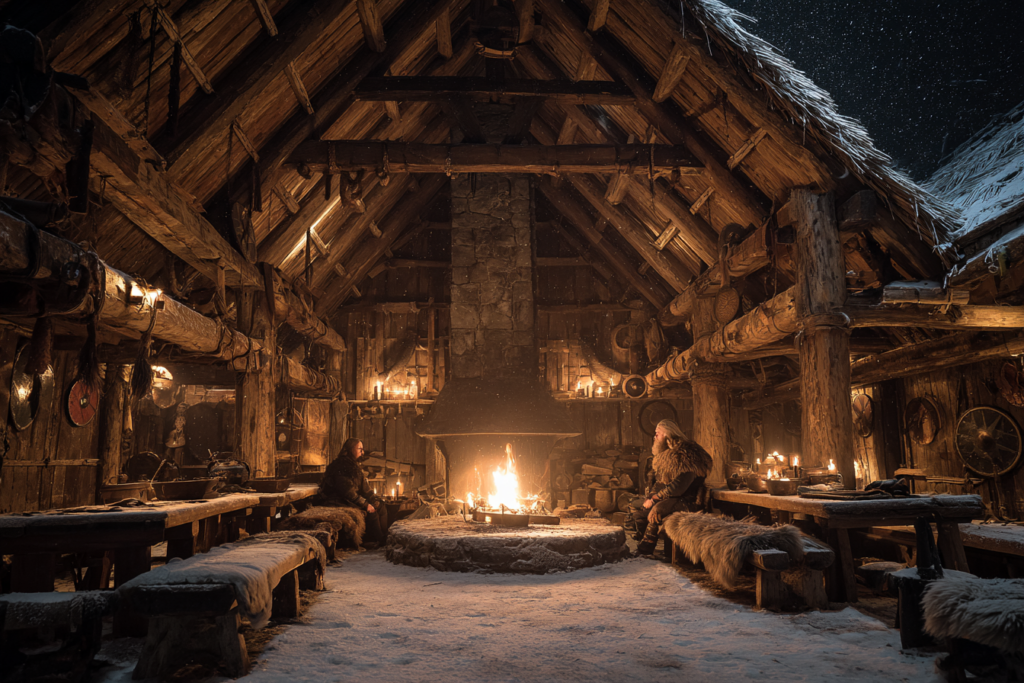
Viking quotes and hospitality: what does a guest owe, and what does a host owe?
Hospitality is not sentimental here; it is social engineering.
You survive travel by being welcomed, then you repay that welcome by behaving in a way that does not shame your host.
Quote 1 (hospitality, limits):
“Better a little | than too much to give; … No man is so good | that he grudge not a gift.” (Bellows, 1936, p. 36)
This is not a cheerful generosity slogan. It is a warning: gift-giving is real, yet overreaching invites resentment, and resentment poisons relationships.
Quote 2 (don’t overstay):
“The guest must depart, | nor always remain, … The loved becomes loathed | if long he sits by the hearth.” (Bellows, 1936, p. 36)
That “hearth” detail matters: the hall is warmth, food, stories, status. Yet it is still someone else’s space. The saga world prizes sociability, but it distrusts dependence.
Warrior quotes or survival advice: what does “courage” look like in these texts?
A lot of “warrior quotes” online are really modern sayings dressed in horns.
The older material tends to praise steadiness: preparation, alertness, not being foolish with risk.
Quote 3 (a baseline for survival):
“A man is happy | if he hath within / His strength and means sufficient; … Better is home, | though small it be.” (Bellows, 1936, p. 36)
That is not romantic. It is a claim about security: a roof and a fire beat glamorous wandering if wandering ends in begging.
Quote 4 (preparedness):
“Never a whit | must a man lack / Of weapons, … for a man knows not | when need shall arise / Of a spear on the road.” (Bellows, 1936, p. 36)
This is a viking road-world: travel is dangerous, and a warrior mindset is not only for raiding. It is for getting home alive.
What do Norse viking quotes say about fate, death, and reputation?
If you want norse viking quotes about fate, you end up back at the lines that treat fame as the one thing that can outlive the grave.
This is where the material becomes unmistakably legendary in tone, even when it is talking about ordinary people.
Quote 5 (the famous one, with teeth):
“Cattle die, | and kinsmen die, … But fair fame will fade never, | I ween, / For him who gets it well.” (Bellows, 1936, p. 37)
This is the classic saying about mortality and reputation. It is not saying “don’t grieve.”
It is saying that your deeds, your words, and your reliability have a life beyond your pulse.
Canevaro highlights that this logic is not abstract philosophy; it is tied to memory practices such as commemorating the dead (Canevaro, 2014, pp. 11–13).
It belongs to a culture where stories and memorials keep names active among the living.
Wisdom and self-control: why is speech treated like a weapon?
In these texts, language is social power.
A loose tongue can get you killed, or get your friends killed. That is why “wisdom” is not dreamy—it is tactical.
Quote 6 (the sleepless mind):
“The unwise man is awake all night, / Ponders everything over; / When morning comes he is weary in mind, / And all is a burden as ever.” (Bellows, 1936, p. 49)
This is an ancient insight into anxiety and rumination. It is also a warning: mental spiraling makes you weaker for the day’s real demands.
Quote 7 (a direct rule for speech):
“At the Thing | shalt fight not in words with fools; / For the man unwise | a worser word / Than he thinks doth utter oft.” (Bellows, 1936, p. 398)
This is advice from a culture that takes public speech seriously. The “Thing” is the legal-social arena; a reckless phrase can stain your name, spark feuds, or invite humiliation.
Work, wealth, and hard work: what counts as security in Viking culture?
The poem does not glamorize poverty. It does not moralize wealth either. It treats resources as stability, and stability as dignity.
Quote 8 (what people actually want):
“The halt rides horse, | the handless drives, / The deaf is bold in fight; … Better blind than burnt, / For no good can come of a corpse.” (Bellows, 1936, p. 37)
This is brutal, and it is honest. It sees life as a set of constraints to be worked with. It praises adaptability and insists on the value of staying alive.
Read it next to modern “motivational” slogans and you can hear how much older this voice is.
The same worldview can praise hard work without turning it into virtue theater.
The underlying message is simple: if you can act, act. If you can plan, plan.
Love and judgment: what does a saying about desire reveal?
A lot of modern “viking quotes” about love are invented.
The real material can be tender, mocking, cynical, and sometimes all at once.
However, it is still historically located in a poem that wants to teach social survival.
Quote 9 (love without moral grandstanding):
“Fault for loving | let no man find / Ever with any other; / Oft the wise are fettered, | where fools go free, / By beauty that breeds desire.” (Bellows, 1936, p. 48)
This one is sharp: love can trap even a thinker.
It treats desire as a force that changes judgment, status, and choices. The poem does not pretend people are purely rational.
Friendship and kin: what bonds are treated as real currency?
For “daily life” material, friendship is one of the richest veins in Hávamál. A friend is not an aesthetic; a friend is an investment and a risk.
Quote 10 (maintenance of friendship):
“If a friend thou hast | whom thou fully wilt trust, / Then fare to find him oft; / For brambles grow | and waving grass / On the rarely trodden road.” (Bellows, 1936, p. 55)
This is a social law: bonds decay without contact.
The image is rural and nordic such as roads vanish into growth when neglected. It is one of those sayings that still hits modern readers cleanly.
It also links to kin logic.
Many societies treat kinship as automatic. These texts treat loyalty as something that must be practiced and tested.
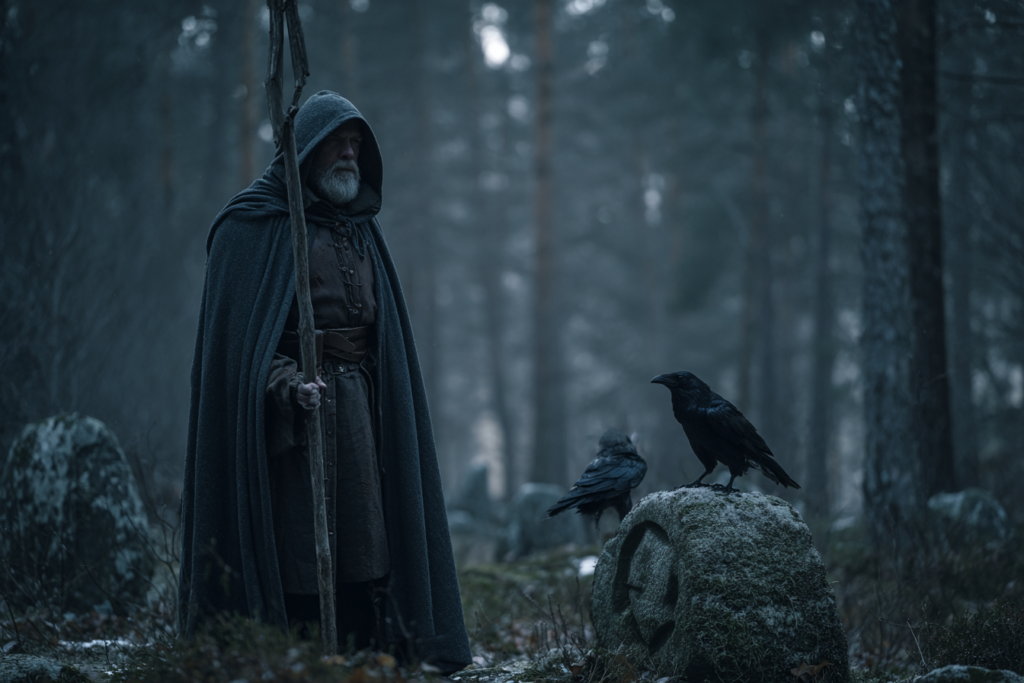
Rune and memory: why do runic texts feel like quotes carved into the world?
So far we have been in the eddas, the poetry preserved in manuscripts. Runic inscriptions move the “quote” into the physical world: stone, wood, metal.
They are often short, yet the brevity is part of the power.
A memorial stone from Denmark preserves a compact formula invoking Thor to protect the inscription:
“Sassur placed this stone in memory of Ásgautr, his brother, but he died in Gotland. May Thor hallow the runes.” (McKinnell et al., 2004, p. 119)
That last sentence is doing more than piety.
It treats the inscription as something that can be harmed, distorted, stolen, re-aimed. Calling on Thor is protection for memory itself.
This is where runic culture and ethics meet: language is a thing with weight.
This also gives you a clean place to say Futhark without hand-waving: the editors explicitly frame these materials as part of “the Younger Futhark” runic tradition (McKinnell et al., 2004, pp. 116–133).
Motivational lines that still resonate today: what survives translation and time?
If you want “motivational” material that is historically grounded, you are better off reading it as guidance shaped by risk and scarcity, not as modern positivity.
One last example comes from Grímnismál, describing Valhalla and the daily selection of the slain:
“Stands Valhall stretching wide; / And there does Othin | each day choose / The men who have fallen in fight.” (Bellows, 1936, p. 89)
This is not a general-purpose pep talk however.
It rather functions as a kind of mythical framing for a social ideal: the fallen viking warrior as someone remembered, chosen, re-situated in story. It is about legacy as much as it is about battle.
Read together, these viking quotes sketch a mindset: stay alert, value your name, respect social boundaries, hold onto friends, accept that desire can undo you, and meet your end without pretending you can bargain your way out of it.
References
Bellows, H. A. (Trans.). (1936). The Poetic Edda. Princeton University Press. (PDF edition hosted by Sacred Texts).
Canevaro, L. (2014). Hesiod and Hávamál: Transitions and the Transmission of Wisdom. Oral Tradition, 29(1), 9–36.
McKinnell, J., Simek, R., & Düwel, K. (2004). Runes, Magic and Religion: A Sourcebook (Studia Medievalia Septentrionalia, Vol. 10). Fassbaender.
Final Thoughts
The sagas and eddas of the Vikings and their gods weave a tapestry of wisdom that remains strikingly pertinent in our modern era.
These ancient words, brimming with the virtues of courage, honor, and the profound depths of human and divine complexities, continue to inspire and guide those drawn to the mystical path of Norse paganism and the robust spirit of the Viking age.
As we navigate the trials and triumphs of our own journeys, let these timeless sayings serve as beacons, illuminating our path with the enduring light of ancient wisdom.
Reflect on these quotes in the context of your own life, and may they empower you to embrace each day with the strength and conviction of the mighty Vikings who uttered them.

Norse Wisdom for Today’s World
| Norse Source | Theme/Quote | Modern Application |
|---|---|---|
| Vikings TV Show | “Power attracts the worst and corrupts the best.” | In leadership roles, embracing Viking belief and striving for high honors can foster integrity and resilience in the face of power. |
| Völsunga Saga | “One’s back is vulnerable, unless one has a brother.” | In the saga of life, true friends and old friends are the cornerstone of a fulfilled life, much like the bonds in the saga of Olaf Haraldsson. |
| Poetic Edda | “The unwise man is awake all night, worrying over and again.” | Applying the wisdom of Hávamál in personal growth, we understand that most vigor and a brave man’s heart lead to profound life changes. |
| Prose Edda | “From Ymir’s flesh the earth was created…” | Our environmental efforts should remind us of our deep connection to the natural world, urging us to live in harmony with it. |
| Vikings TV Show | “The true measure of a man is how he chooses to react in the face of uncertainty.” | Facing the danger of their lives, individuals can find strength in the courage of Viking warriors, turning challenges into opportunities. |
| Völsunga Saga | “Fear not death for the hour of your doom is set and none may escape it.” | The saga teaches us to face our hour of doom with dignity, making solemn vows to live authentically and with purpose. |
| Poetic Edda (Hávamál) | “A small axe can fell a large tree.” | Even a short knife can achieve great resolutions, illustrating that persistence and effort can overcome the most daunting obstacles. |
| Prose Edda | “He who has power over himself, too, will have power over others.” | Mastering oneself is the ultimate position of power, a lesson that underpins successful leadership and influence. |
| Vikings TV Show | “Who wants to be king?” | This question challenges us to reflect on the importance of honor and the lasting legacy of our actions in leadership. |
| Völsunga Saga | “Gold is little comfort for the kinsman dead.” | The saga reminds us that in the pursuit of good things, true wealth lies not in material possessions but in life’s intangible treasures. |
Check out these other categories: