No products in the cart.
November 20, 2025 10:55 am

Free USA shipping on orders $35+
November 20, 2025 10:55 am
Western Siberia holds some of the most enduring and complex shamanic traditions in the world.
Long before written history, the region’s Indigenous peoples shaped a spiritual system rooted in land, animals, and a living spirit world.
This article explores Siberian Shamanism through the lens of the Khanty worldview, which is indeed an ancient culture whose cosmology, ritual life, and shamanic practices survived massive cultural upheaval over centuries.
Readers will find this worth their time because it reveals an extraordinary spiritual system where humans, animals, rivers, and deities form a reciprocal web of responsibility.
It is a worldview that remains one of the most intact windows into the ancient circumpolar religious imagination.
Siberian shamanism is rooted in the belief that the world is alive .
It is relational; a place where every river, tree, and animal is a spirit-bearing presence.
The Khanty worldview, grounded in Western Siberia’s forests and waterways, fits fully into this tradition.
Shamanism in Siberia is not simply a religion; it is a relational system where survival depends on ritual balance with the spirit world. And it is always embedded in the mode of subsistence of its culture (hunting, gathering, fishing, livestock herding).
The Khanty view their land as conscious and responsive.
This mirrors broader Siberian shamanic systems where the shaman acts as a conduit between people and invisible forces.
In the Khanty case, every safe hunt or successful journey requires ritual respect.
The region of Siberia has produced some of the most iconic shamanic traditions in anthropology because the Indigenous people who inhabit these territories lived intimately with the landscape for millennia.
Through this, Siberian shamanism emerges as a living dialogue between humans and the unseen.
Let’s have a look at an ancient culture where the forest, animals, and sky share a single spiritual ecology.
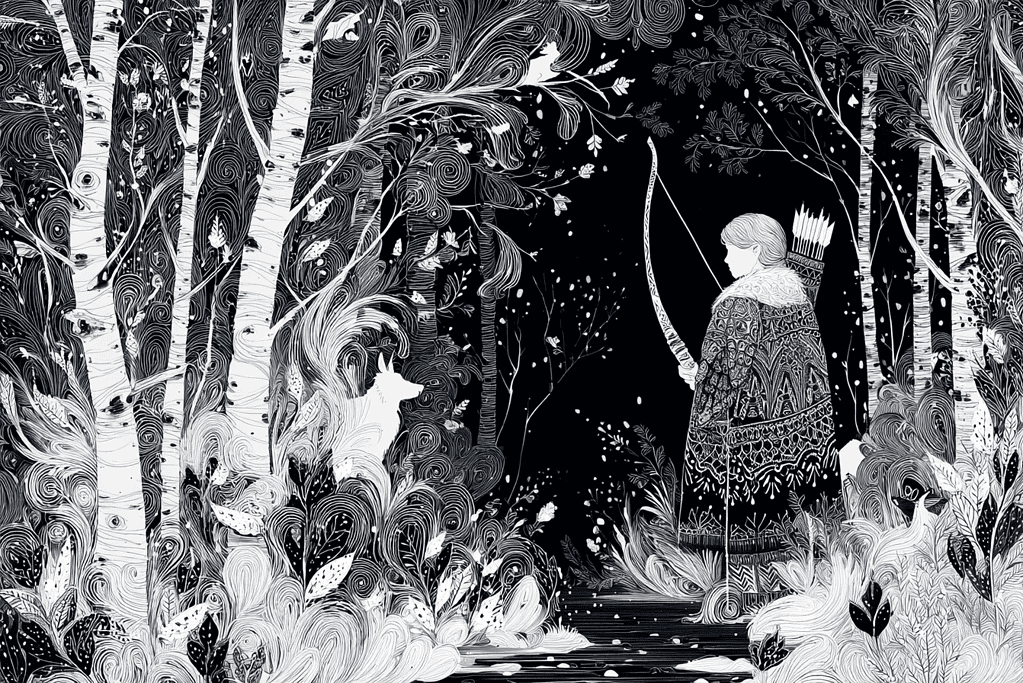
The Khanty form one of the major Indigenous peoples of Siberia, whose traditions illuminate the depth of shamanism in Siberia.
Their animistic worldview is deeply connected to land and animals rather than temples or institutions.
This sets their traditions apart from groups in southern Siberia, such as Buryats, whose spiritual systems later absorbed influences from Buddhism.
For the Khanty, shamanism is woven through ordinary life. The forest is filled with watching presences. Rivers have guardians. Animals have spirit-masters.
This makes their worldview a core example for anyone studying Siberian shamanism.
Even today, Khanty rituals survive in sacred trees, offerings, fire rites, and animal ceremonialism.
The endurance of these practices highlights Siberian shamanism as a powerful cultural force that persisted.
Western Siberia’s environment, where vast rivers, larch forests, wetlands, and tundra collide, forms a sacred geography.
For Siberian shamans and the Indigenous people who rely on them, the land is a living archive. Every hill and river is a site of story and ritual.
The Khanty share this spiritual ecology with neighboring groups such as the Nenets, Mansi, and Selkup. All recognize non-human beings as spiritual agents.
This worldview is ancient, likely stretching back to early northern hunter-gatherers.
Such a landscape naturally produces shamanic traditions, because the boundary between the world of humans and the world of spirits feels thin, indeed shaped by weather, luck, and ritual.
This is why Siberian shamanism remains one of the most studied spiritual systems: it reveals a cosmology where land and life endlessly respond to human actions.
Traditional Khanty cosmology divides existence into three major worlds, each containing seven layers, forming a classic structure found across northern shamanic traditions.
These layers represent the upper heavens, the human and animal world, and a lower realm associated with decay and affliction (Wiget & Balalaeva, 2001, p. 85).
At the top is Numi Torum, the supreme deity who governs fate and creation. His divine children oversee rivers, forests, herds, and seasons.
The middle world hosts humans, animals, and guardian spirits, all bound together in ritual relationships. Beneath everything lies the domain of Kul’, the Man of Disease who is a frightening power associated with misfortune.
This three-layered cosmos parallels other northern systems documented by scholars like Åke Hultkrantz and Juha Pentikäinen.
It shows that Siberian shamanism preserves one of the oldest cosmological models on Earth, rooted in hunter-gatherer perceptions of the universe.

Animals hold extraordinary importance in Siberian shamanism.
To the Khanty, they are not just resources but they are persons with agency and souls. Every major animal has a spirit-master. Every hunt is a spiritual event requiring ritual acknowledgment.
A reindeer, elk, or bear must be ritually honored after death to release its soul (kaine). Without proper rites, the spirit may return with misfortune.
The Khanty hang reindeer hides on sacred birch or pine trees so the soul can ascend to the upper world (Wiget & Balalaeva, 2001, pp. 94–95).
This worldview mirrors other parts of Siberia where the reindeer is central to shamanic cosmology.
Across the broader circumpolar region from the Sayan mountains to the taiga, humans and animals share a reciprocal bond formed through ritual.
Khanty mythology preserves some of the oldest northern tales, including cosmic narratives tied to animals.
One of the most important is the tale in which an elk steals the sun, plunging the world into darkness.
A hunter, sometimes identified as the Bear, pursues the elk through the sky. The Milky Way marks his path; the Big Dipper is the fleeing animal (Konakov & Black, 1994, p. 52).
This belongs to the widespread Eurasian and North American “Cosmic Hunt” cycle, considered by scholars to be one of the oldest shared myths across hunter-gatherer cultures.
Such stories do more than entertain but they map celestial movements onto ritual life, teaching the community how the heavens mirror earthly behavior.
Through myth, Siberian shamanism becomes a bridge between the cosmos and daily survival.
Parne is one of the most striking figures in Khanty tradition: a terrifying, powerful old woman-spirit who embodies the wild and untamed forces of nature (Fayzullina et al., 2019, p. 201).
Her grotesque features and supernatural abilities echo female spirits like the Slavic Baba Yaga.
In Khanty narratives, Parne sometimes plays tricks on children. Yet these grisly scenes reflect ancient initiation motifs, where symbolic death leads to transformation.
Real Khanty and Mansi rites are often performed near the hearth when there’s an upcoming birth, this is done for strengthening, a ritual mirrored in the mythic cauldron (Fazyullina et al., 2019, p. 204).
Parne’s dual role as a destroyer and midwife of rebirth highlights how Siberian shamanism understands wild feminine spirits: not as villains, but as guardians of thresholds.

One of the most important Khanty rituals is the myr, a communal reindeer sacrifice.
This rite reaffirms harmony across the three worlds of the Khanty cosmos. Every color, gesture, and offering is symbolic:
The structure of the ritual mirrors the cosmos: the hearth stands at the center, the sacred tree forms the axis, and the sky frames the ceremony above.
Such Siberian shamanic rituals are not merely religious expressions . They are acts of cosmic maintenance, ensuring that life, luck, and balance continue.
Even into modern times, Khanty spiritual life did not vanish.
Rituals adapted into metaphor. Songs encoded older meanings. Ceremonies were conducted privately or in simplified forms.
By the end of the 20th century, many Khanty communities still practiced modified seasonal rites, preserved sacred reindeer traditions, and passed down their cosmology through oral storytelling (Wiget & Balalaeva, 2001, pp. 96–97).
This resilience is one of the most powerful testaments to Siberian shamanism: a spiritual system strong enough to survive while retaining its core.

Siberian shamanism is a window into humanity’s oldest spiritual frameworks.
It preserves a worldview where land, animals, and humans share a single relational network.
This is not an abstract religion but a lived spirituality rooted in ritual reciprocity.
The Khanty demonstrate that ancient traditions survive not only in ceremonies but in ethical relationships such as respect for animals, attention to land, and communal responsibility.
Siberian shamanism reminds us that the world is animated, watching, and alive . To these cultures, this is a truth that shaped early northern cultures and continues to guide Indigenous people today.
Fayzullina, G. Ch., Prokopova, M. V., & Ermakova, E. N. (2019). Female demonic characters in the myths and folklore of the peoples of Western Siberia: Genesis, functions, attributes. Nauchnyi Dialog, 12, 198–209. https://doi.org/10.24224/2227-1295-2019-12-198-209
Konakov, N. D., & Black, L. T. (1994). Calendar symbolism of Uralic peoples of the pre-Christian era. Arctic Anthropology, 31(1), 47–61.
Wiget, A., & Balalaeva, O. (2001). Khanty communal reindeer sacrifice: Belief, subsistence and cultural persistence in contemporary Siberia. Arctic Anthropology, 38(1), 82–99.

ᛉ 100% handcrafted artisan pagan , viking, witchcraft and shamanic inspired jewelry.
ᛉ Runes, Symbolism & European Folklore
Get 20% off👇🏻
Leave a comment with your result ❤️
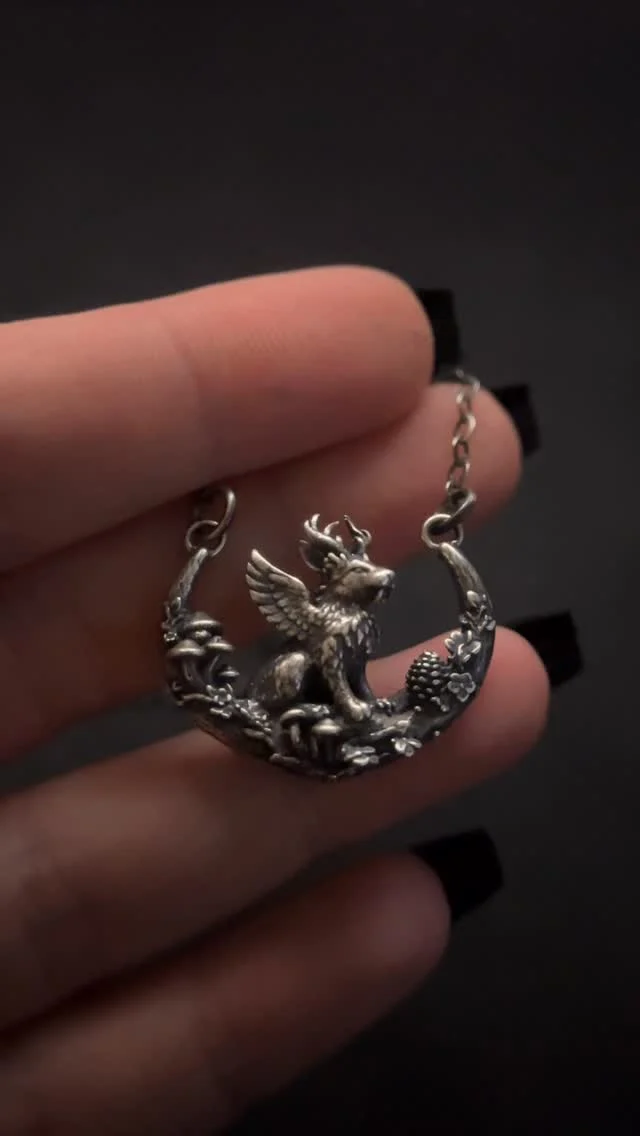
Bavarian Folklore says that you might just cross paths with a Wolpertinger in the alpine...

🐇🌲✨
He finally stepped out of the forest…
The Wolpertinger Pendant has arrived.
Inspired by...

I don’t often sell them, but love it when I do!
Vinca symbol bracelets ❤️...

Rooted in strength + guarded by ravens

The serpent waits 🖤
(Handcrafted Jörmungandr ring made to order in my shop)

Stay warm, everyone ❤️

😑😑😑🤮

I thought I had closed the book on the Alice in Wonderland rings…
But you...

Can this be over now, please?

In case you forgot 💜

Something I’ve been thinking about lately.
If there’s one thing I would’ve done differently early...

This year, we’re not buying things just to keep up.
If you need the reminder:...

My husband is from Bavaria (southern Germany) and I originally made this Krampus pendant for...

Some of the items I’m shipping out today ❤️
Please forgive my dirty nails 😂...

A few items shipping out today 🥰

This mornings rings shipping out ❤️

A few of the rjngs I’m shipping out this morning ❤️
How do you like...

Krampus is coming 🫶🏻

Getting ready to pack up these pretties and ship to their owners ❤️

Freya, cats and pentacles. Doesn’t get any better ❤️

You all got me going crazy making all these fairytale + storybook rings.
But I’ll...

Just launched these pretties ❤️
Size 9 amethyst ring + size 7.25 green kyanite

What would you trade to learn Baba Yaga’s secrets?

It *finally* looks, feels and smells like October!
And here are some items I’m packing...

This mornings pretties getting ready to ship :)

Getting ready to pack up these pretties and ship to their owners ❤️

You bet I’m hopping on this trend 😂
Thank you @shes_sinister for the prompt!

While I welcome the seasonal darkness…it sure is going to make my morning quick videos...

Finally finished the rings I’ve been working on in my stories ❤️
I think I...

Was going to post this update to my stories but it’s too long.

“How do you know I’m mad?” said Alice.
“You must be,” said the Cat, “or...

Some of this mornings orders getting ready to ship. Those little bats are so cute...

Here is the finished ring I was working on in my stories yesterday, along with...

A few of today’s orders shipping out this morning ❤️

The two silver raven rings I was working on in my stories yesterday.
…as well...

Eeeek! I’m so happy to add these to my shop ❤️
I’ve gotten so many...

I had 6 clamshells ready to ship this morning but I dropped and lost my...

Not the story you were told.
The girl didn’t run.
The wolf didn’t win.
This...

I love these raven rings so much 🖤
This mornings pretties shipping out.
All items...

Sleek + minimal Mjölnir ring ⚒️

Today’s orders getting ready to ship.
…And I finally got some time to work on...

That ant ring is so out of place 😂
Not that the mail is coming...

If you had this, which runes would you choose? Or would you accept the runes...

I love making these fun Halloween coffin pendants 🎃
All items you see are always...


About the author Jacqueline Fatica


