No products in the cart.
March 2, 2026 8:30 pm

Free USA shipping on orders $35+
March 2, 2026 8:30 pm
Roman mythology was not limited to a handful of famous Olympians.
However, the religious world of ancient Rome included sky gods, agricultural powers, underworld rulers, household spirits, and personified virtues.
And more importantly, while Jupiter, Venus, and Mars remain the best known, the full range of Roman mythology names reveals a complex religious system rooted in ritual, family life, political authority, and daily survival.
Indeed, the Roman world was deeply rooted in livelihood, subsistence such as shepherding and pastoralism as well as agricultural.
If you are searching for a list of Roman deities with descriptions, or looking for names inspired by Roman religion and legend, this guide presents sixty of the most significant divine figures from Roman mythology.
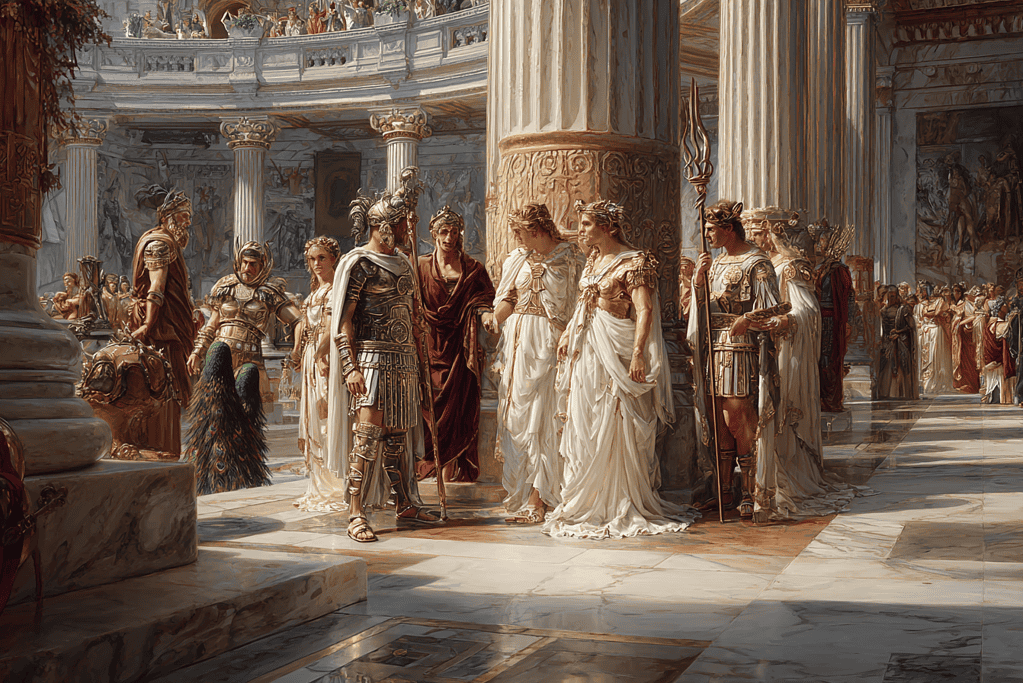
Jupiter was king of the gods in Roman mythology and ruler of sky and thunder. Identified with Zeus in Greek mythology, he embodied sovereignty and divine law. His temple on the Capitoline Hill stood at the heart of Roman religion (Beard, North & Price, 1998).
Juno, protector of marriage and childbirth, was Jupiter’s consort and guardian of the Roman people. Equivalent to Hera, she was honored under titles such as Juno Lucina. Her cult tied family life to state stability (Rose, 1959).
Minerva, goddess of wisdom and crafts, was the Roman counterpart of the Greek goddess Athena. As part of the Capitoline Triad, she represented intellect and strategy within both civic and military contexts (Beard et al., 1998).
Originally an agricultural guardian, Mars became Rome’s celebrated god of war. Unlike Ares in Greek mythology, Mars was viewed as noble and ancestral father of Romulus. His cult united fertility and warfare (Dumézil, 1970).
Venus, goddess of love and beauty, was equivalent to the Greek goddess Aphrodite. Through Aeneas, she was linked to Rome’s legendary origins. Her cult blended desire, fertility, and dynastic identity (Rose, 1959).
Adopted directly from Greek religion, Apollo retained his name in Roman worship. He presided over medicine, prophecy, and the arts. Augustus elevated his importance in imperial ideology (Beard et al., 1998).
Diana, goddess of the hunt and moon, carried bow and arrows and paralleled Artemis. Her cult at Lake Nemi suggests Etruscan influence. She protected women and wilderness alike (Turcan, 2000).
Vulcan, god of fire and forge, embodied both destructive flames and creative metalwork. Equivalent to Hephaestus, he was honored during the Vulcanalia festival (Beard et al., 1998).
Vesta, guardian of the hearth, symbolized domestic and civic continuity. Her eternal flame in the Temple of Vesta represented Rome’s survival (Rose, 1959).
Mercury, messenger and guide of souls to the underworld, was identified with Hermes. He governed trade and communication, reflecting Rome’s commercial life (Turcan, 2000).
Ceres, goddess of grain and agriculture, corresponded to Demeter. Her cult was tied to plebeian identity and seasonal fertility rites (Beard et al., 1998).
Neptune ruled the sea and horses. As the Roman counterpart of Poseidon, he governed waters and storms (Turcan, 2000).
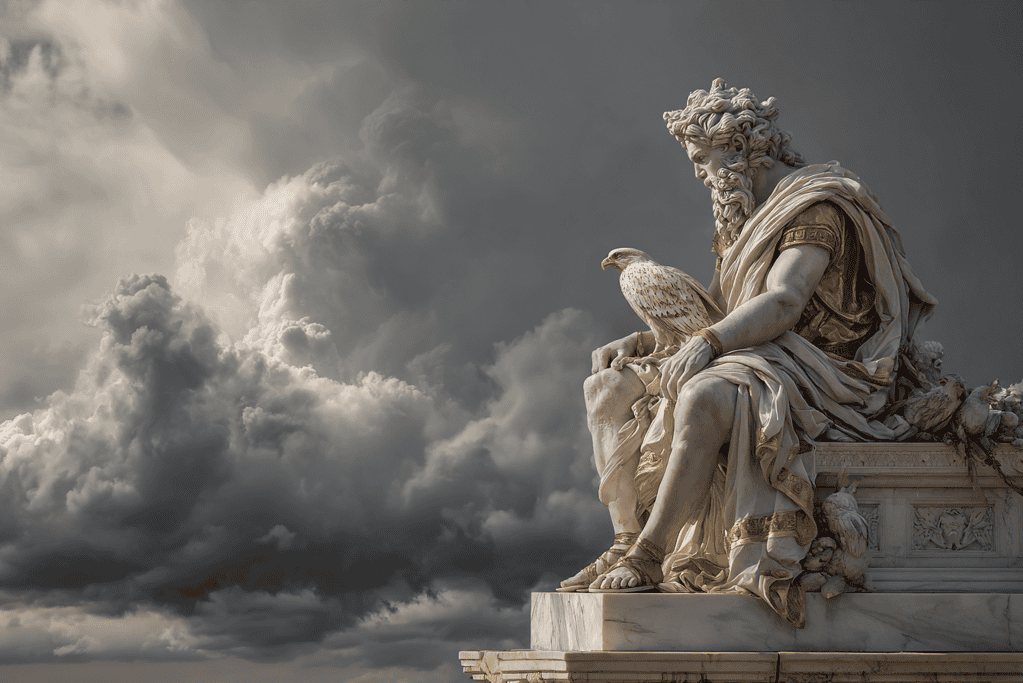
Associated with Romulus, founder of Rome, Quirinus represented civic unity and collective identity (Dumézil, 1970).
The two-faced god of beginnings and endings, Janus presided over transitions and sacred time. He had no Greek equivalent (Ovid, Fasti).
Guardian of boundaries, Terminus protected property and social order (Rose, 1959).
Fides embodied trust and loyalty in treaties and civic agreements (Beard et al., 1998).
Concordia represented civic harmony and political unity (Turcan, 2000).
Salus governed health and public welfare, linking personal and collective safety (Beard et al., 1998).
God of the underworld, Pluto ruled the realm of the dead alongside Proserpina (Turcan, 2000).
Queen of the underworld, equivalent to Persephone, she symbolized seasonal cycles and rebirth (Ovid, Metamorphoses).
A grim underworld figure associated with punishment and oaths (Beard et al., 1998).
Presiding over funerals and burial rites, Libitina sanctified death rituals (Rose, 1959).
The Manes were ancestral spirits honored at tombs and festivals (Beard et al., 1998).
Restless spirits appeased during the Lemuria festival (Ovid, Fasti).
Adopted from Greek tradition, Hecate presided over magic and crossroads (Ogden, 2002).
Earth mother figure tied to agriculture and burial offerings (Varro).
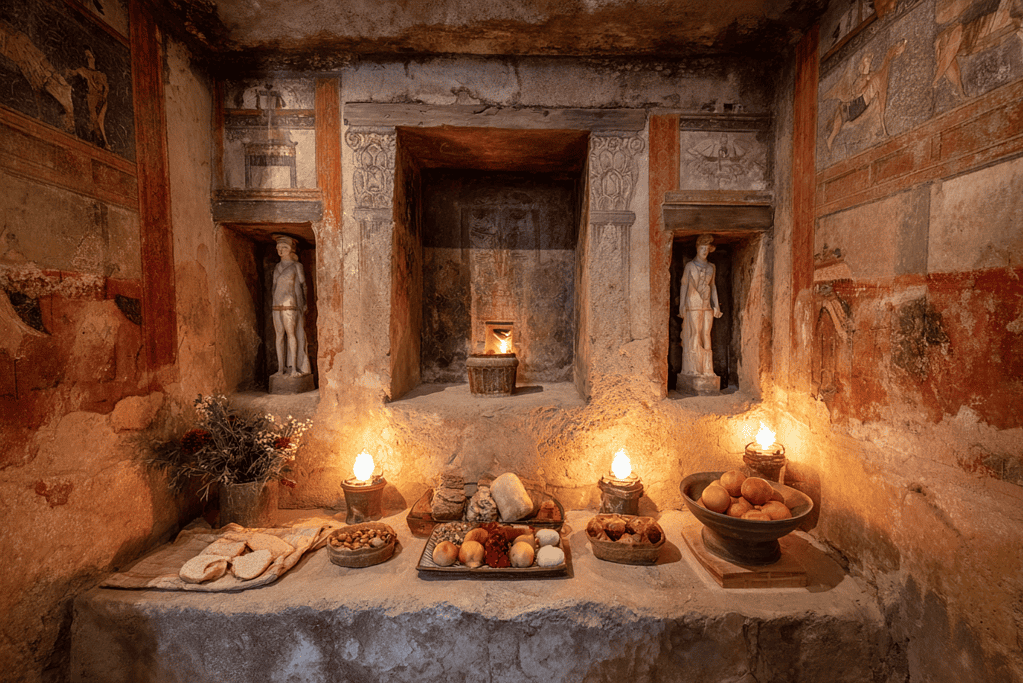
Protective spirits of households and crossroads (Beard et al., 1998).
Guardians of food storage and domestic prosperity (Rose, 1959).
The personal guiding spirit of a Roman man (Beard et al., 1998).
Each woman’s personal divine counterpart.
The household guardian spirit overseeing family continuity (Turcan, 2000).
Goddess of flowers and spring renewal (Beard et al., 1998).
Protector of orchards and fruit trees (Rose, 1959).
Guardian against crop disease (Beard et al., 1998).
God of springs and fresh water (Rose, 1959).
Protector of harbors and gateways (Beard et al., 1998).
Pastoral goddess associated with flocks (Rose, 1959).
Rustic woodland deity linked to fertility (Turcan, 2000).
Guardian of forests and rural boundaries (Beard et al., 1998).
Agricultural god associated with the golden age and Saturnalia (Beard et al., 1998).
Goddess of abundance and harvest wealth (Rose, 1959).
Goddess of chance and fate (Beard et al., 1998).
Goddess of victory (Turcan, 2000).
Embodiment of duty and devotion (Rose, 1959).
Deity of valor (Beard et al., 1998).
Personification of honor (Turcan, 2000).
Goddess of hope (Rose, 1959).
Personification of sleep (Ovid, Metamorphoses).
Goddess of dawn, equivalent to Eos (Ovid).
Goddess of the moon (Rose, 1959).
Solar deity later associated with Sol Invictus (Turcan, 2000).
Personification of the city itself (Beard et al., 1998).
Goddess of peace (Turcan, 2000).
War goddess linked to Mars (Rose, 1959).
Adopted from Greek tradition as goddess of retribution (Beard et al., 1998).
Goddess of freedom (Beard et al., 1998).
Personification of happiness and success (Rose, 1959).
Symbol of prosperity (Turcan, 2000).
Embodiment of eternity in imperial ideology (Rose, 1959).
Goddess of joy celebrated in imperial art (Beard et al., 1998).
This list of Roman mythology names demonstrates how vast the Roman religious imagination truly was.
From Jupiter, king of the gods, to household spirits like the Lares, to personifications such as Fortuna and Libertas, Roman religion touched every sphere of life.
For readers fascinated by Roman deities or searching for names inspired by ancient tradition, these sixty figures reveal a culture where divine power shaped identity, ritual, politics, and memory.
There is a lot to explore, discover and learn from the ancient Roman world!
Beard, M., North, J., & Price, S. (1998). Religions of Rome: Volume 1. A history. Cambridge University Press.
Dumézil, G. (1970). Archaic Roman religion (P. Krapp, Trans.). University of Chicago Press. (Original work published 1966)
Ogden, D. (2002). Magic, witchcraft, and ghosts in the Greek and Roman worlds: A sourcebook. Oxford University Press.
Ovid. (n.d.). Fasti. (A. J. Boyle & R. D. Woodard, Eds./Trans., various editions).
Ovid. (n.d.). Metamorphoses. (A. D. Melville, Trans., Oxford World’s Classics edition commonly used).
Rose, H. J. (1959). Religion in ancient Rome. Harper & Row.
Turcan, R. (2000). The gods of ancient Rome: Religion in everyday life from archaic to imperial times (A. Nevill, Trans.). Routledge.
Varro, M. T. (n.d.). De lingua Latina. (R. G. Kent, Trans., Loeb Classical Library edition commonly used).
Wissowa, G. (1912). Religion und Kultus der Römer. C. H. Beck.
Rüpke, J. (2007). Religion of the Romans. Polity Press.

ᛉ 100% handcrafted artisan pagan , viking, witchcraft and shamanic inspired jewelry.
ᛉ Runes, Symbolism & European Folklore
Get 20% off👇🏻

Five witches dance around a blazing bonfire beneath a citrine cabochon in this Walpurgisnacht pendant....
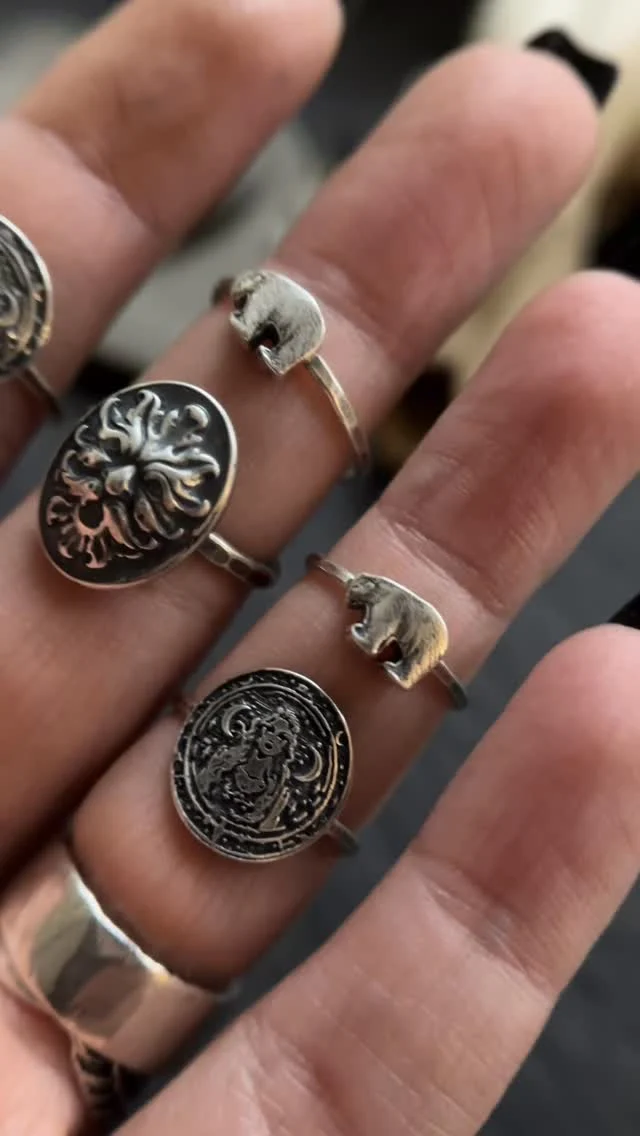
Happy washing day 🙃
A few rings I’ve worked on the last couple days…
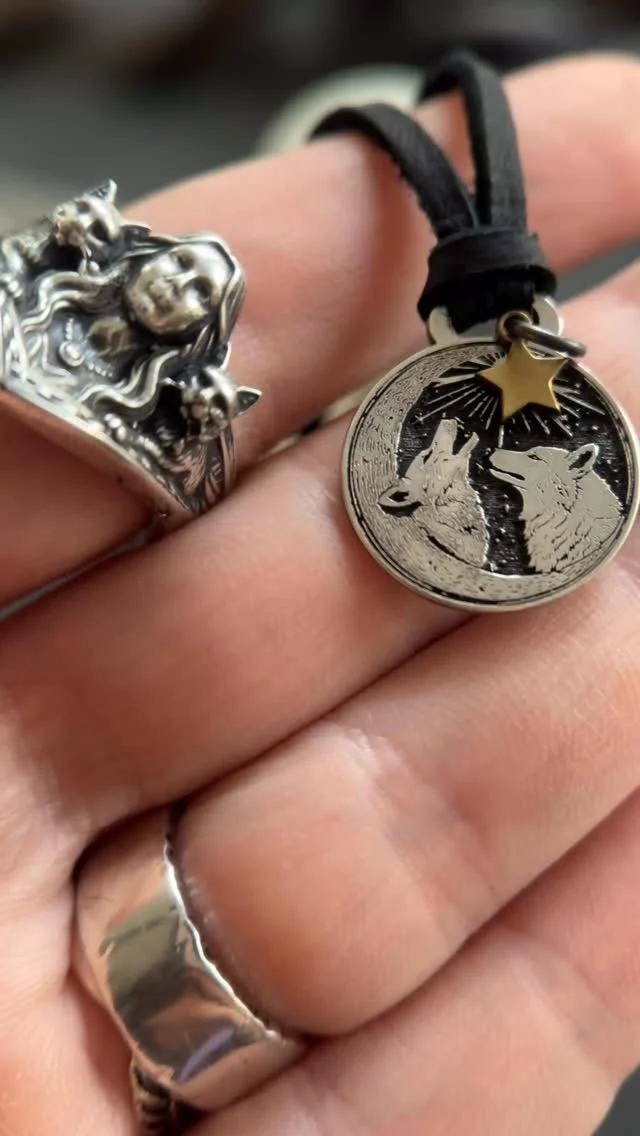
Freya’s cats rule and dogs drool?
Or was that the other way around? 🙃

Garm barely shows up in the old Norse stories.
Still… he leaves a mark.
A...
Leave a comment with your result ❤️
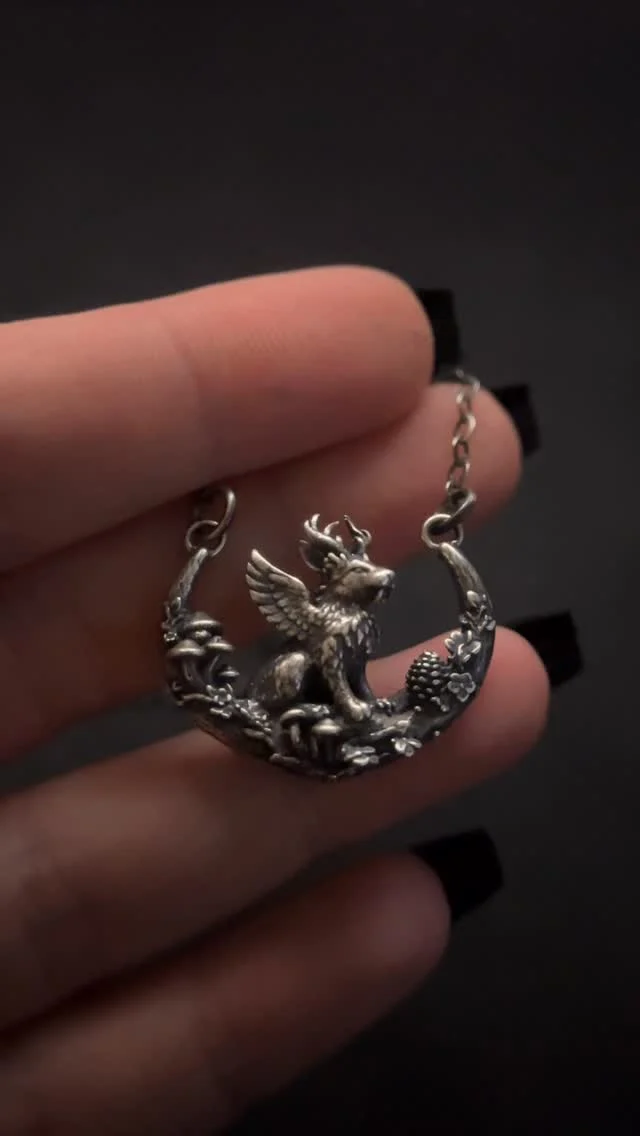
Bavarian Folklore says that you might just cross paths with a Wolpertinger in the alpine...

🐇🌲✨
He finally stepped out of the forest…
The Wolpertinger Pendant has arrived.
Inspired by...

I don’t often sell them, but love it when I do!
Vinca symbol bracelets ❤️...

Rooted in strength + guarded by ravens

The serpent waits 🖤
(Handcrafted Jörmungandr ring made to order in my shop)

Stay warm, everyone ❤️

😑😑😑🤮

I thought I had closed the book on the Alice in Wonderland rings…
But you...

Can this be over now, please?

In case you forgot 💜

Something I’ve been thinking about lately.
If there’s one thing I would’ve done differently early...

This year, we’re not buying things just to keep up.
If you need the reminder:...

My husband is from Bavaria (southern Germany) and I originally made this Krampus pendant for...

Some of the items I’m shipping out today ❤️
Please forgive my dirty nails 😂...

A few items shipping out today 🥰

This mornings rings shipping out ❤️

A few of the rjngs I’m shipping out this morning ❤️
How do you like...

Krampus is coming 🫶🏻

Getting ready to pack up these pretties and ship to their owners ❤️

Freya, cats and pentacles. Doesn’t get any better ❤️

You all got me going crazy making all these fairytale + storybook rings.
But I’ll...

Just launched these pretties ❤️
Size 9 amethyst ring + size 7.25 green kyanite

What would you trade to learn Baba Yaga’s secrets?

It *finally* looks, feels and smells like October!
And here are some items I’m packing...

This mornings pretties getting ready to ship :)

Getting ready to pack up these pretties and ship to their owners ❤️

You bet I’m hopping on this trend 😂
Thank you @shes_sinister for the prompt!

While I welcome the seasonal darkness…it sure is going to make my morning quick videos...

Finally finished the rings I’ve been working on in my stories ❤️
I think I...

Was going to post this update to my stories but it’s too long.

“How do you know I’m mad?” said Alice.
“You must be,” said the Cat, “or...

Some of this mornings orders getting ready to ship. Those little bats are so cute...

Here is the finished ring I was working on in my stories yesterday, along with...

A few of today’s orders shipping out this morning ❤️

The two silver raven rings I was working on in my stories yesterday.
…as well...

Eeeek! I’m so happy to add these to my shop ❤️
I’ve gotten so many...

I had 6 clamshells ready to ship this morning but I dropped and lost my...

Not the story you were told.
The girl didn’t run.
The wolf didn’t win.
This...

I love these raven rings so much 🖤
This mornings pretties shipping out.
All items...

Sleek + minimal Mjölnir ring ⚒️


About the author Jacqueline Fatica


