No products in the cart.
March 3, 2026 8:20 pm

Free USA shipping on orders $35+
March 3, 2026 8:20 pm
The Norse afterlife was never a single destination.
In Norse belief, death opened the door to multiple realms where the dead continued to exist among gods, spirits, and ancestors.
Some warriors hoped to go to Valhalla, others entered the realm of Hel, and still others remained in burial mounds or traveled across the sea.
But the Norse world was far more than just warriors or seafaring explorers. Most Norsemen during the Viking Age weren’t Vikings by profession or occupation.
Many were farmers, tradesmen, craftsmen, pastoralists who kept livestock for a living… but where did they go?
Understanding death in Norse paganism reveals a worldview where death and the afterlife were closely tied to landscape, kinship, and the actions of the living.
The Norse did not divide existence into simple categories of reward or punishment. Instead, they imagined a network of afterlives, each reflecting different ways people lived and died.
Exploring the Norse afterlife opens a window into how Viking-age Scandinavia understood death, memory, and the ongoing presence of ancestors in the world of the living.
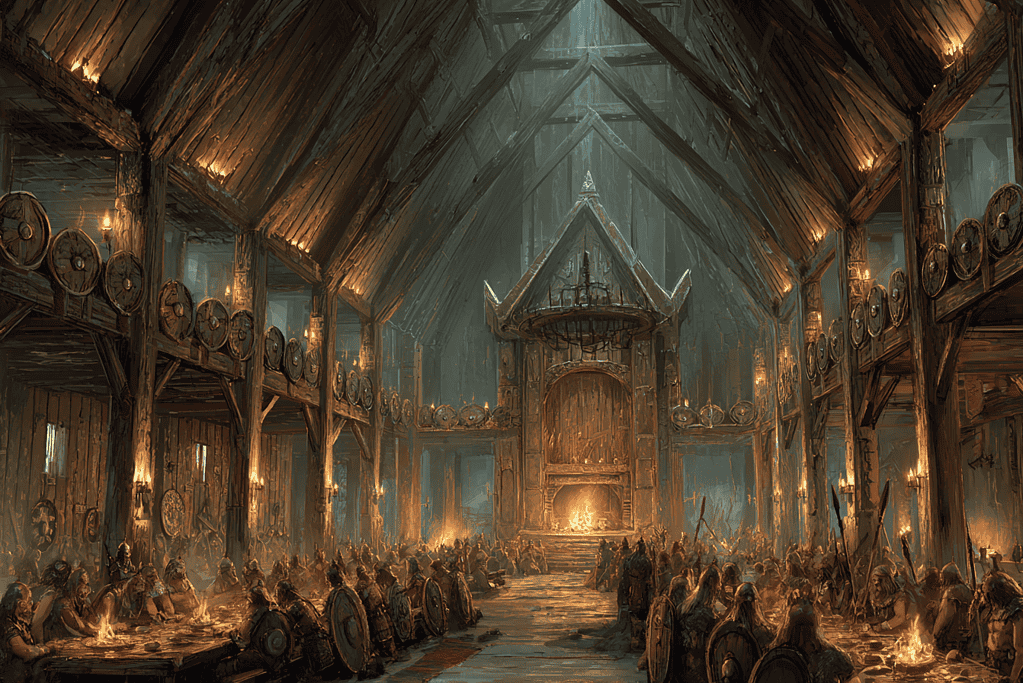
The Norse afterlife cannot be reduced to a single location.
Primary sources describe a range of destinations where the dead might go after death, depending on how they died and how their community honored them.
The Norse concept of the afterlife reflected a society deeply shaped by warfare, seafaring, and strong ties to family land.
In Norse religion, the dead might enter Valhalla, Fólkvangr, Hel, burial mounds, or even the ocean depths ruled by the sea goddess Rán.
These varied destinations reveal a worldview in which death was part of a wider cosmic order shared by gods, humans, and spirits.
Rather than separating the dead completely from the living, the Norse believed that living and the dead remained connected (Jennbert, 2006).
Ancestors could appear in dreams, haunt burial sites, or protect their descendants, reinforcing the idea that the boundary between worlds was never absolute. This has been especially elaborated by the British scholar Hilda Ellis Davidson.
Among the most famous destinations in the Norse afterlife is Valhalla, the hall ruled by Odin in Asgard. In Norse mythology, warriors who die in battle might be chosen by the Valkyries and brought to this hall.
Those fallen warriors became the Einherjar, a host of fighters who would train for the battle of Ragnarök, the final conflict at the end of days (Hultgård, 2011).
Every day they fought and slay one another in combat, only to rise again and share a great feast of meat and mead in Odin’s hall.
Valhalla is often highlighted in modern culture, though scholars note that it represented only one aspect of the Norse afterlife.
Scholar Professor Hilda Ellis Davidson pointed out that literary sources sometimes exaggerated the role of Valhalla compared to broader Norse beliefs (Davidson, 1968; Davidson, 2007).
Contrary to popular belief, most Vikings did not expect to go to Valhalla. Only those who die in battle might be chosen by the Valkyries.
Many others were believed to go to Hel, a separate afterlife realm for those who died naturally.
This distinction highlights how the Norse concept of the afterlife reflected social identity.
Warriors killed in battle could gain honor in Odin’s hall, while people who die of old age entered a quieter realm of the dead.
The Norse also believed that the dead could remain near their families through burial sites, reinforcing the idea that multiple afterlives existed simultaneously within Norse belief. (Davidson, 1968).
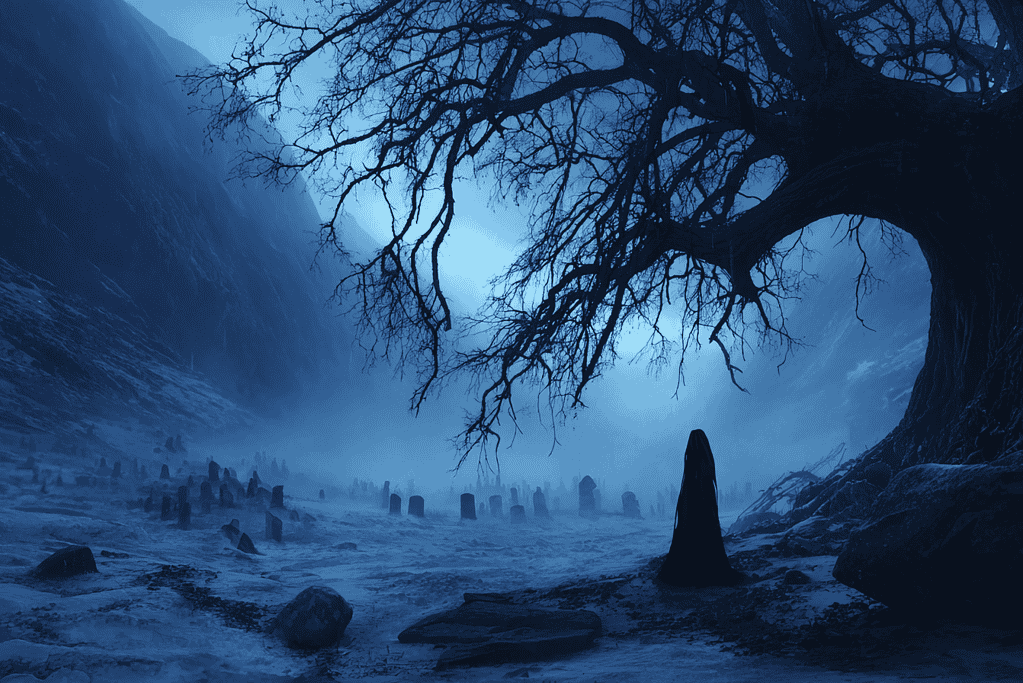
Hel, sometimes called Helheim, was the realm ruled by the goddess Hel, the daughter of Loki. In Old Norse tradition she presided over those who died of illness, age, or natural causes.
Unlike the Christian Hell, this realm was not primarily a place of torment.
Instead, Hel was a domain beneath the earth where the dead continued their existence.
Medieval authors such as Snorri Sturluson described Hel as a cold region connected to Niflheim, though these descriptions may reflect later Christian influence, as is the case with much of the Edda’s.
Still, Old Norse literature shows that many people simply ended up in Hel after death, suggesting that it functioned as a common destination in the Norse afterlife.
Not all warriors entered Valhalla.
According to myth, the goddess Freyja who is also often called the goddess of love received half of the warriors killed in battle.
These warriors were taken to the realm of Fólkvangr, where Freyja’s hall Sessrúmnir stood. This location shows that multiple deities could receive the heroic dead.
The division between Odin’s hall and Freyja’s field illustrates how Norse mythology distributed power among several gods.
Some scholars interpret this tradition as reflecting older Germanic religious structures.
Archaeological evidence suggests that many people expected the dead to remain close to their communities.
The burial mound was often viewed as a dwelling place for the deceased.
These mounds sometimes contained weapons, jewelry, tools, and animals, showing that the corpse might require resources in the next life.
The practice of elaborate burial rituals suggests that people believed the dead continued to exist in a physical form.
Some sagas describe spirits who guarded treasure within burial mounds, becoming the feared undead known as draugr.
For a seafaring culture like the Norse, death at sea had its own mythological meaning.
Some traditions describe sailors who die at sea as entering the domain of the sea goddess Rán.
Rán and her husband Ægir ruled the waters beneath the waves.
According to myth, she used a net to capture those lost in storms and pull them into her underwater hall.
This belief reflects the maritime world of the Viking age, where the ocean represented both livelihood and danger.
Some passages in Old Norse poetry hint at the idea of rebirth or reincarnation.
Characters in the sagas occasionally appear to inherit the spirit or destiny of earlier heroes.
This belief appears in stories where warriors came back to life symbolically through descendants or were described as being reborn in later generations.
Though the concept was never systematized into doctrine, it suggests that Norse thought allowed for cycles of life beyond a single death.
One of the most famous stories involving the Norse afterlife concerns the death of Baldr, the beloved son of Odin and Thor’s companion among the gods.
After Baldr was killed through Loki’s deception, the god Hermóðr traveled to the underworld to negotiate his return.
In the Icelandic account preserved by Snorri Sturluson, the gods ask Hel to release Baldr from her domain.
This story shows how myth connected the realms of gods and the dead. It also highlights how the Norse imagined the journey between worlds.
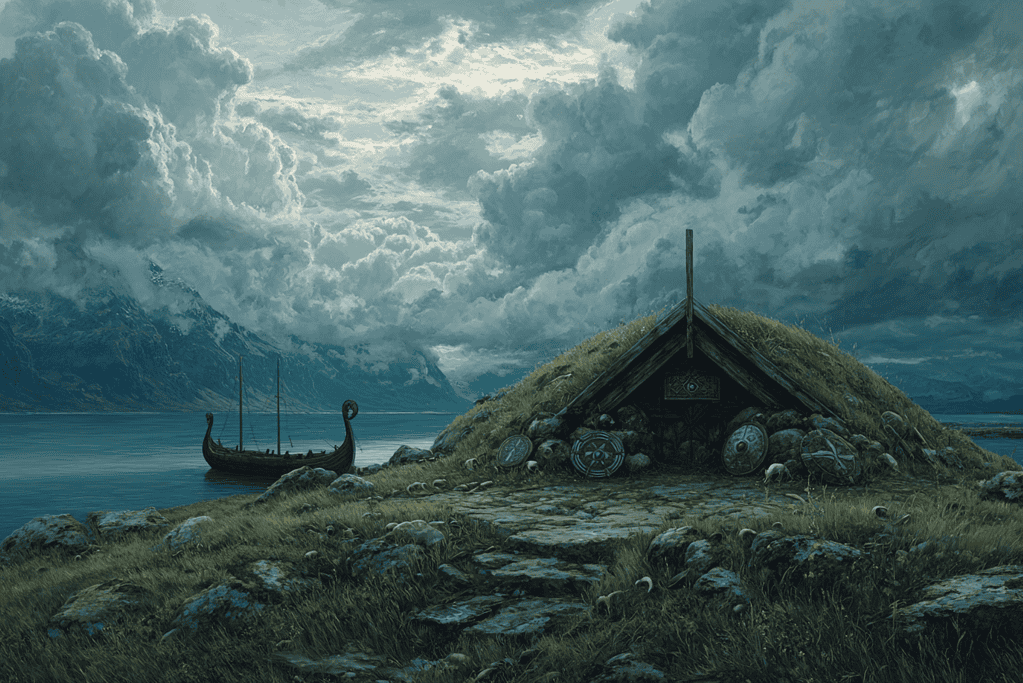
When Christianity spread across Scandinavia, traditional Norse ideas about death changed gradually. Christian missionaries reinterpreted Hel as a place closer to the Christian Hell.
Churches were often built near earlier burial sites, merging pre-Christian traditions with Christian burial practices.
Yet traces of older beliefs survived for centuries. Even Christian graves sometimes included objects or orientations rooted in Norse religion.
Today, the Norse afterlife continues to appear in books, films, and television. Stories about Valhalla, Ragnarök, and the gods of Asgard have become widely known through modern culture.
Yet historical sources reveal a more complex system than modern depictions suggest.
Instead of a single destination, the Norse imagined a network of afterlife realms connected to social identity, geography, and myth.
This layered understanding reflects how the Norse viewed existence itself: a continuous relationship between gods, humans, and ancestors.
Davidson, H. E. (2007). Religion in everyday life. In J. R. Hinnells (Ed.), A Handbook of Ancient Religions (pp. 414–415). Cambridge University Press.
Davidson, Hilda Roderick Ellis. (1968). The Road to Hel: A Study of the Conception of the Dead in Old Norse Literature. Greenwood Press.
DuBois, T. A. (1999). Nordic Religions in the Viking Age. University of Pennsylvania Press.
Hultgård, A. (2011). Óðinn, Valhǫll and the Einherjar: Eschatological myth and ideology in the late Viking period. In G. Steinsland, J. V. Sigurðsson, J. Meulengracht Sørensen, & I. Mundal (Eds.), Ideology and Power in the Viking and Middle Ages: Scandinavia, Iceland, Ireland, Orkney and the Faeroes (pp. 297–310). Brill.
Jennbert, K. (2006). The heroized dead. In A. Andrén, K. Jennbert, & C. Raudvere (Eds.), Old Norse Religion in Long-term Perspectives: Origins, Changes, and Interactions (pp. 135–139). Nordic Academic Press.

ᛉ 100% handcrafted artisan pagan , viking, witchcraft and shamanic inspired jewelry.
ᛉ Runes, Symbolism & European Folklore
Get 20% off👇🏻

Five witches dance around a blazing bonfire beneath a citrine cabochon in this Walpurgisnacht pendant....
Happy washing day 🙃
A few rings I’ve worked on the last couple days…
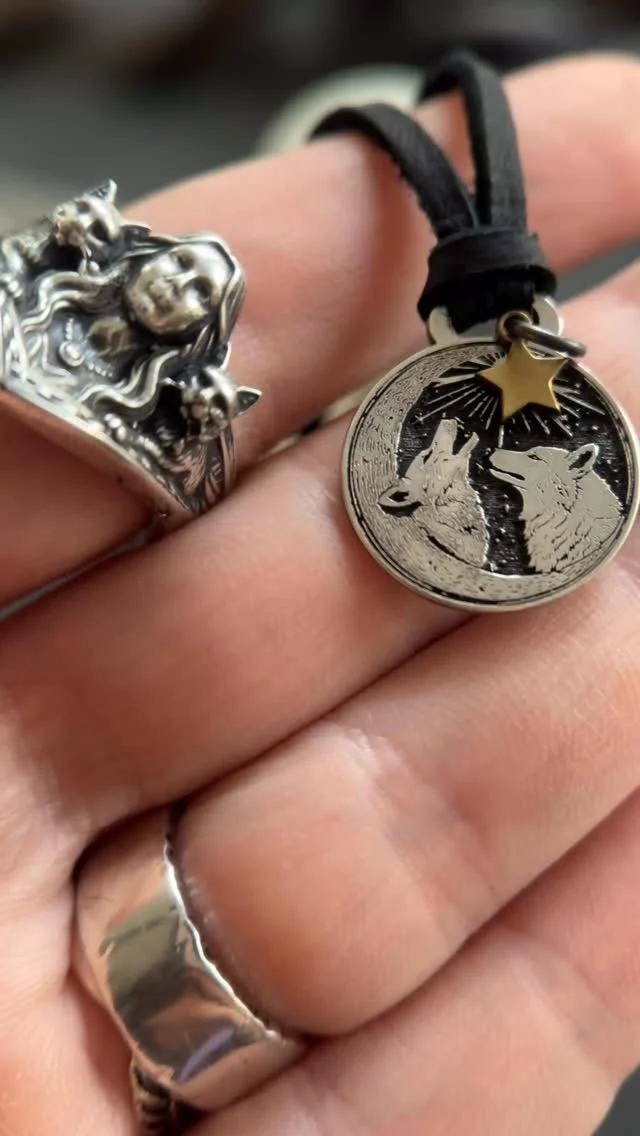
Freya’s cats rule and dogs drool?
Or was that the other way around? 🙃

Garm barely shows up in the old Norse stories.
Still… he leaves a mark.
A...
Leave a comment with your result ❤️
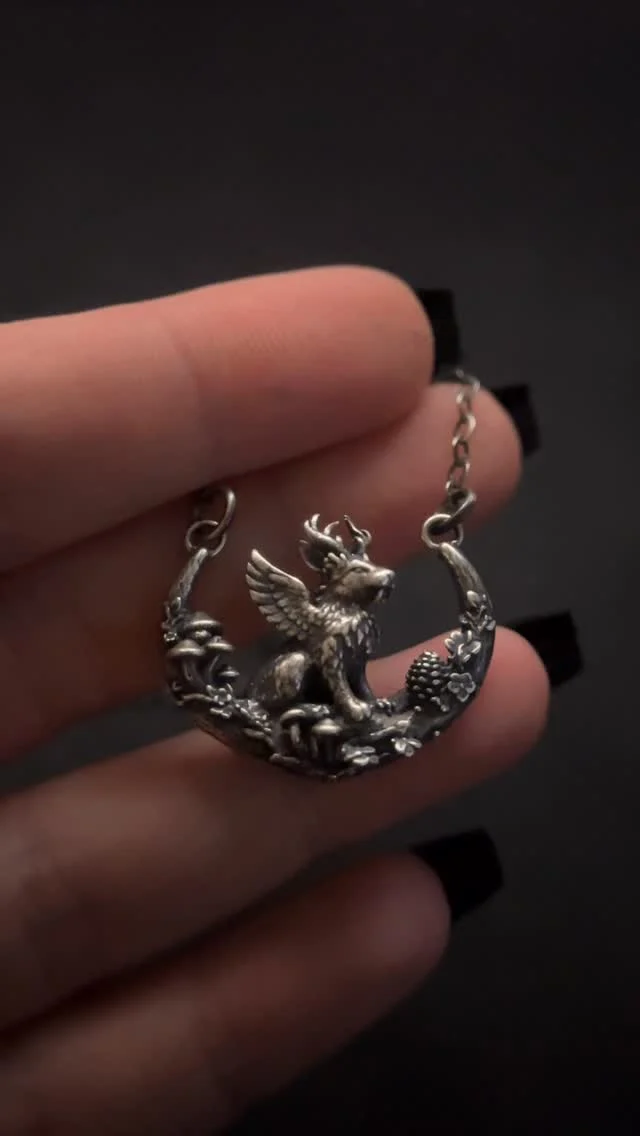
Bavarian Folklore says that you might just cross paths with a Wolpertinger in the alpine...

🐇🌲✨
He finally stepped out of the forest…
The Wolpertinger Pendant has arrived.
Inspired by...

I don’t often sell them, but love it when I do!
Vinca symbol bracelets ❤️...

Rooted in strength + guarded by ravens

The serpent waits 🖤
(Handcrafted Jörmungandr ring made to order in my shop)

Stay warm, everyone ❤️

😑😑😑🤮

I thought I had closed the book on the Alice in Wonderland rings…
But you...

Can this be over now, please?

In case you forgot 💜

Something I’ve been thinking about lately.
If there’s one thing I would’ve done differently early...

This year, we’re not buying things just to keep up.
If you need the reminder:...

My husband is from Bavaria (southern Germany) and I originally made this Krampus pendant for...

Some of the items I’m shipping out today ❤️
Please forgive my dirty nails 😂...

A few items shipping out today 🥰

This mornings rings shipping out ❤️

A few of the rjngs I’m shipping out this morning ❤️
How do you like...

Krampus is coming 🫶🏻

Getting ready to pack up these pretties and ship to their owners ❤️

Freya, cats and pentacles. Doesn’t get any better ❤️

You all got me going crazy making all these fairytale + storybook rings.
But I’ll...

Just launched these pretties ❤️
Size 9 amethyst ring + size 7.25 green kyanite

What would you trade to learn Baba Yaga’s secrets?

It *finally* looks, feels and smells like October!
And here are some items I’m packing...

This mornings pretties getting ready to ship :)

Getting ready to pack up these pretties and ship to their owners ❤️

You bet I’m hopping on this trend 😂
Thank you @shes_sinister for the prompt!

While I welcome the seasonal darkness…it sure is going to make my morning quick videos...

Finally finished the rings I’ve been working on in my stories ❤️
I think I...

Was going to post this update to my stories but it’s too long.

“How do you know I’m mad?” said Alice.
“You must be,” said the Cat, “or...

Some of this mornings orders getting ready to ship. Those little bats are so cute...

Here is the finished ring I was working on in my stories yesterday, along with...

A few of today’s orders shipping out this morning ❤️

The two silver raven rings I was working on in my stories yesterday.
…as well...

Eeeek! I’m so happy to add these to my shop ❤️
I’ve gotten so many...

I had 6 clamshells ready to ship this morning but I dropped and lost my...

Not the story you were told.
The girl didn’t run.
The wolf didn’t win.
This...

I love these raven rings so much 🖤
This mornings pretties shipping out.
All items...

Sleek + minimal Mjölnir ring ⚒️


About the author Jacqueline Fatica


