No products in the cart.
January 9, 2026 1:28 pm

Free USA shipping on orders $35+
January 9, 2026 1:28 pm
Who Were the Traditional Valkyries in Norse Mythology and Why Do They Still Fascinate Us Today?
The valkyries of Norse mythology are among the most enduring and enigmatic female figures in the ancient Scandinavian imagination.
These warrior women, serving Odin, rode through the skies over the battlefield to choose the slain and guide them to Valhalla.
But what did the traditional sources really say about them?
This article explores the valkyrie in Old Norse texts and archaeology to understand their origin, function, and cultural significance beyond modern fantasy and popular portrayals.
In traditional Norse mythology, a valkyrie is a female figure who serves Odin, the god of war and death. The term comes from the Old Norse valkyrja, meaning “chooser of the slain” (Lindow, 2001, p. 308).
Valkyries select warriors who die in battle and bring them to Valhalla, Odin’s hall, where they will prepare for Ragnarök.
They are most clearly defined in the Poetic Edda and the Prose Edda, especially in poems like Grímnismál and Völuspá.
Snorri Sturluson lists valkyries by name and describes them as warrior maidens riding through the sky (Sturluson, 1995, p. 88).
These women were not merely symbolic.
They had agency in shaping the outcome of battles and the fate of men.
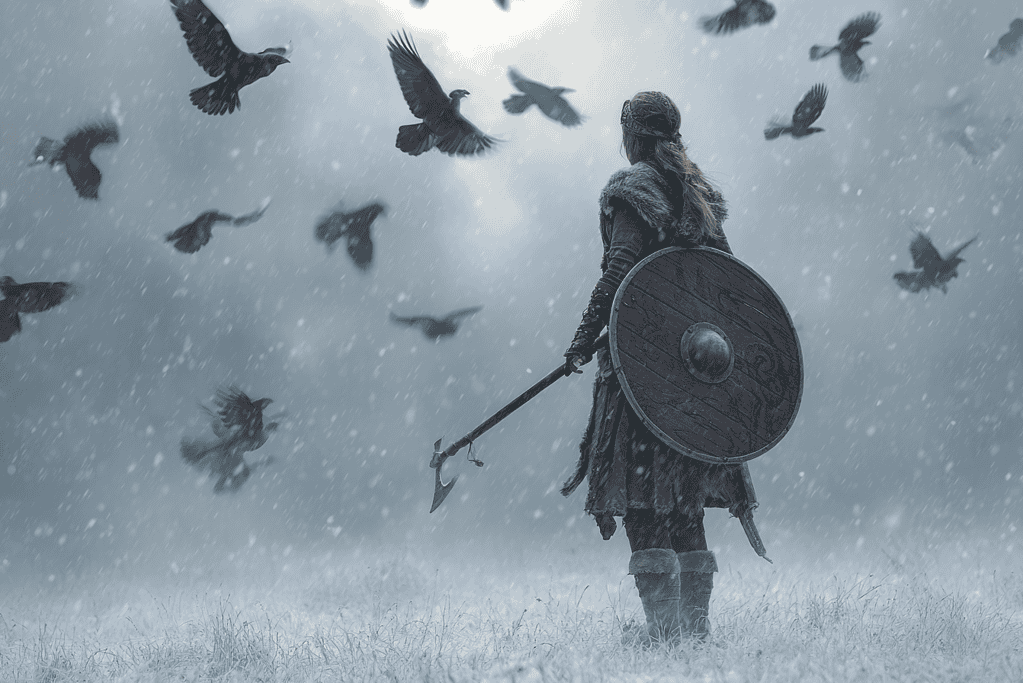
Old Norse literature depicts valkyries in multiple roles.
They serve Odin in Valhalla and decide who shall die in battle. In Darraðarljóð, twelve valkyries are described weaving on a loom made of weapons and human entrails, foretelling future events.
In heroic sagas, valkyries like Brynhildr appear as warrior princesses or supernatural women who influence the fates of mortal men.
Brynhildr, for instance, is punished by Odin and put into a deep sleep until awakened by a hero (Larrington, 2014, p. 173).
These texts show the valkyries as both fierce warriors and complex female characters.
Scholars debate whether valkyries reflect actual women warriors or entirely mythological figures.
While there is no direct evidence that women fought regularly in Viking armies, some burial sites suggest women were buried with weapons and high status, as for instance noted by British scholar Professor Neil Price.
These may have inspired or mirrored valkyrie lore.
The valkyries’ mythical traits such as flying, riding horses across the sky, choosing the slain are clearly supernatural.
Yet they share attributes with female warriors in Germanic folklore and with seeresses, or völur, who held ritual authority (Davidson, 1988, p. 94).
This blending of myth and culture makes the valkyrie a powerful symbol of Norse ideals.
Valhalla, the hall of the slain, is Odin’s domain where warriors who die in battle prepare for the end of the world.
Valkyries serve food and drink to the warriors, known as the einherjar, and also maintain order (Lindow, 2001, p. 308).
Their dual role as battlefield spirits and caretakers of the afterlife reflects the broader Norse view of war and death.
These female warriors guide those worthy of a place in Valhalla. Odin’s elite fighters, having been chosen by the valkyries, will rise again at Ragnarök.
This elevates the valkyrie from mere death-dealer to a crucial link in the afterlife journey.
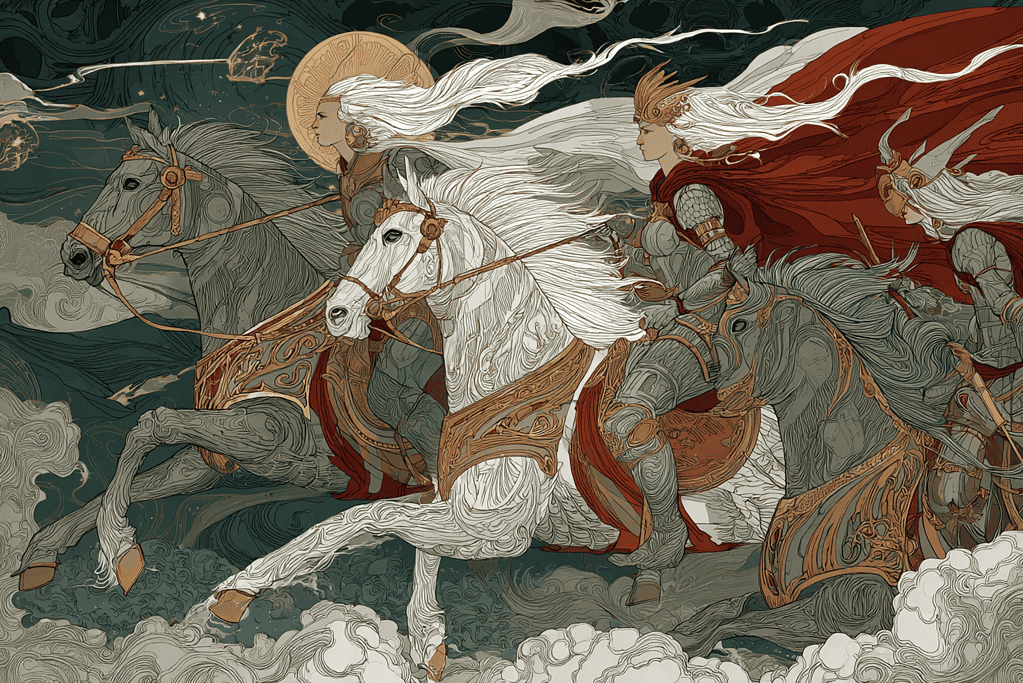
Old Norse texts preserve many specific valkyrie names, each with thematic meaning.
Examples include Gunnr (“battle”), Skuld (“debt” or possibly linked to the Norns), Hildr (“battle”), Sigrún (“victory rune”), and Eir (“mercy”) (Sturluson, 1995, p. 88).
These names reinforce their functions some direct the outcome of battles, others embody abstract forces like fate or healing.
The Prose Edda and Poetic Edda include lists of these names, grounding the valkyries firmly in Norse mythological tradition.
Odin, the god of war, poetry, and the dead, commands the valkyries. He sends them to battlefields to gather the fallen.
Their allegiance to Odin links them to the broader cosmology of Norse belief, especially ideas about fate, honor, and sacrifice.
Odin’s connection to the valkyries reflects his interest in both wisdom and destruction. They act as his agents in choosing who dies and who gains glory.
In this way, they mirror Odin’s own contradictory nature as both god of war and seeker of knowledge.
Small figurines discovered in Viking Age graves and settlements have been interpreted as depictions of valkyries.
These often show female figures wearing helmets and holding weapons.
One silver figurine from Tjängvide, Sweden, shows a woman greeting a rider with a drinking horn.
This was interpreted by some as a valkyrie welcoming a warrior to Valhalla (Davidson, 1988, p. 103).
While these interpretations are debated, they reflect the cultural weight of the valkyrie figure.
They may also indicate a wider belief in warrior women or divine female guardians among the Norse.
In some texts, valkyries are linked to the Norns, female beings who determine fate. Skuld, for instance, is named as both a valkyrie and one of the three Norns (Sturluson, 1995, p. 89).
This suggests that valkyries may have had roles in shaping destiny, not just enforcing it.
They are also related in imagery to swan maidens, who wear cloaks of feathers and can transform.
These motifs appear in Völundarkviða and other Old Norse poems, connecting valkyries with older Indo-European myths of supernatural women (Larrington, 2014, p. 229).
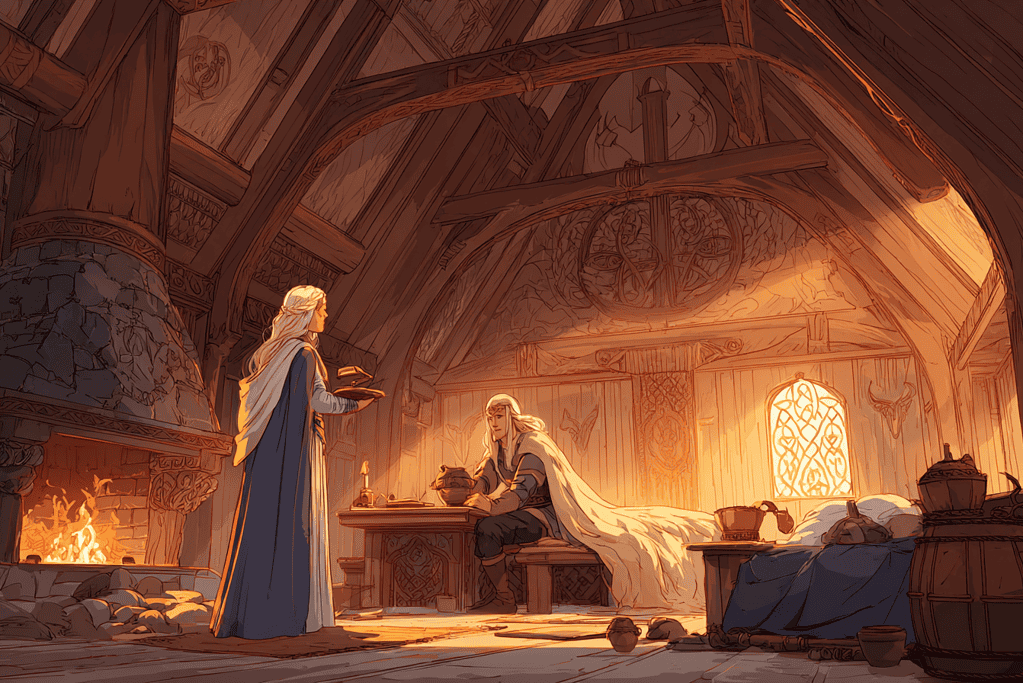
The Darraðarljóð poem, preserved in Njáls saga, presents valkyries weaving the fate of warriors with a gruesome loom of swords and severed heads.
This passage illustrates the way valkyries were used to explain the horrors and heroism.
Some scholars, like Wilhelm Mannhardt, also explored valkyrie-like figures in Germanic folklore, noting their roles as battle spirits and supernatural women (Mannhardt, 1905, p. 212).
These suggest a wider cultural memory of female beings who influence battle and destiny.
Valkyries continue to represent Norse ideals of strength, fate, and sacrifice.
In their traditional form, they are not mere symbols of beauty or fantasy but deeply rooted in the mythological and warrior culture of the Viking Age.
Whether seen as supernatural priestesses, battlefield spirits, or afterlife guides, the valkyries of Norse mythology were powerful agents of divine will.
Their place in literature, archaeology, and legend speaks to a worldview where death in battle was not an end, but a passage to something greater.

Brink, S., & Price, N. (Eds.). (2008). The Viking World. Routledge.
Davidson, H. R. E. (1988). Myths and Symbols in Pagan Europe: Early Scandinavian and Celtic Religions. Syracuse University Press.
Larrington, C. (Trans.). (2014). The Poetic Edda. Oxford University Press.
Lindow, J. (2001). Norse Mythology: A Guide to the Gods, Heroes, Rituals, and Beliefs. Oxford University Press.
Mannhardt, W. (1905). Wald- und Feldkulte: Band II. Gebrüder Borntraeger.
Price, N. (2020). Children of Ash and Elm: A History of the Vikings. Basic Books.
Price, N. (2023). The Viking Way: Magic and Mind in Late Iron Age Scandinavia (2nd ed.). Oxbow Books.
Sturluson, S. (1995). The Prose Edda (Trans. J. Young). University of California Press.

ᛉ 100% handcrafted artisan pagan , viking, witchcraft and shamanic inspired jewelry.
ᛉ Runes, Symbolism & European Folklore
Get 20% off👇🏻

Five witches dance around a blazing bonfire beneath a citrine cabochon in this Walpurgisnacht pendant....
Happy washing day 🙃
A few rings I’ve worked on the last couple days…
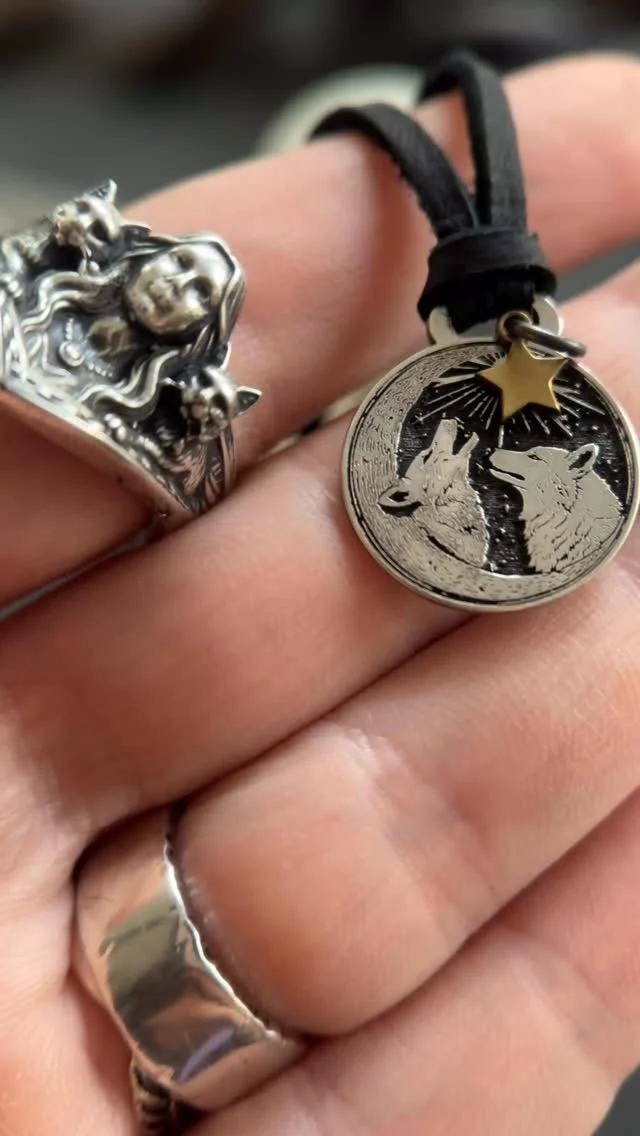
Freya’s cats rule and dogs drool?
Or was that the other way around? 🙃

Garm barely shows up in the old Norse stories.
Still… he leaves a mark.
A...
Leave a comment with your result ❤️
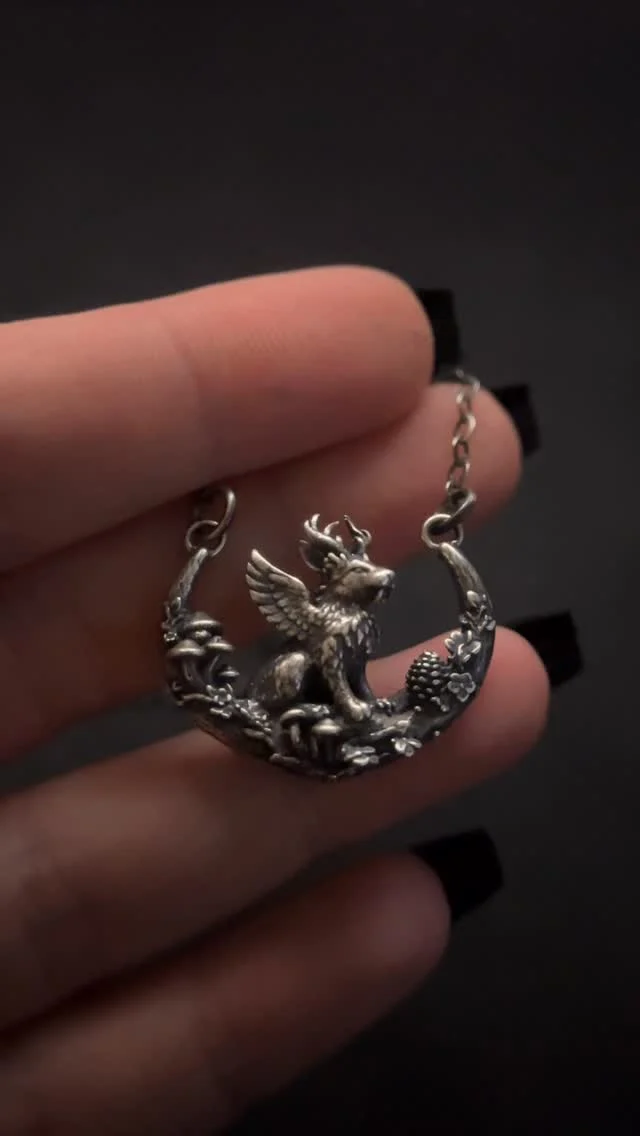
Bavarian Folklore says that you might just cross paths with a Wolpertinger in the alpine...

🐇🌲✨
He finally stepped out of the forest…
The Wolpertinger Pendant has arrived.
Inspired by...

I don’t often sell them, but love it when I do!
Vinca symbol bracelets ❤️...

Rooted in strength + guarded by ravens

The serpent waits 🖤
(Handcrafted Jörmungandr ring made to order in my shop)

Stay warm, everyone ❤️

😑😑😑🤮

I thought I had closed the book on the Alice in Wonderland rings…
But you...

Can this be over now, please?

In case you forgot 💜

Something I’ve been thinking about lately.
If there’s one thing I would’ve done differently early...

This year, we’re not buying things just to keep up.
If you need the reminder:...

My husband is from Bavaria (southern Germany) and I originally made this Krampus pendant for...

Some of the items I’m shipping out today ❤️
Please forgive my dirty nails 😂...

A few items shipping out today 🥰

This mornings rings shipping out ❤️

A few of the rjngs I’m shipping out this morning ❤️
How do you like...

Krampus is coming 🫶🏻

Getting ready to pack up these pretties and ship to their owners ❤️

Freya, cats and pentacles. Doesn’t get any better ❤️

You all got me going crazy making all these fairytale + storybook rings.
But I’ll...

Just launched these pretties ❤️
Size 9 amethyst ring + size 7.25 green kyanite

What would you trade to learn Baba Yaga’s secrets?

It *finally* looks, feels and smells like October!
And here are some items I’m packing...

This mornings pretties getting ready to ship :)

Getting ready to pack up these pretties and ship to their owners ❤️

You bet I’m hopping on this trend 😂
Thank you @shes_sinister for the prompt!

While I welcome the seasonal darkness…it sure is going to make my morning quick videos...

Finally finished the rings I’ve been working on in my stories ❤️
I think I...

Was going to post this update to my stories but it’s too long.

“How do you know I’m mad?” said Alice.
“You must be,” said the Cat, “or...

Some of this mornings orders getting ready to ship. Those little bats are so cute...

Here is the finished ring I was working on in my stories yesterday, along with...

A few of today’s orders shipping out this morning ❤️

The two silver raven rings I was working on in my stories yesterday.
…as well...

Eeeek! I’m so happy to add these to my shop ❤️
I’ve gotten so many...

I had 6 clamshells ready to ship this morning but I dropped and lost my...

Not the story you were told.
The girl didn’t run.
The wolf didn’t win.
This...

I love these raven rings so much 🖤
This mornings pretties shipping out.
All items...

Sleek + minimal Mjölnir ring ⚒️


About the author Jacqueline Fatica


