No products in the cart.
November 19, 2025 11:04 am

Free USA shipping on orders $35+
November 19, 2025 11:04 am
Understanding norse mythology begins with understanding the texts that preserved it.
Every modern mythology book about Odin, Thor, Loki, and the Nine Realms traces back to medieval Icelandic manuscripts, Latin chronicles, archaeological finds, and oral poetry.
The best norse mythology books aren’t just entertaining, but rather they teach you how the myths survived, how they were written, and why they matter.
This article is built for readers looking for the best books and the most important books on norse mythology, especially those wanting a deeper view of the primary sources that shaped the stories we read today.
One of the remarkable features of norse mythology is that it survived through a combination of poetry, prose, sagas, inscriptions, and archaeology.
Unlike many other traditions where myths survive in continuous literary transmission the tales of Odin, Thor, Loki, and the norse gods reached us through a patchwork of manuscripts written centuries after the Viking Age.
Anyone looking for a book to understand this material must appreciate how unusual this is.
Much of the norse myth tradition is preserved because medieval Icelanders wrote down older oral tales.
These texts form the backbone for nearly all modern norse mythology books, giving readers access to stories of Asgard, Midgard, giants, valkyries, dwarfs, and ragnarök.
Without such manuscripts, scholars would rely only on archaeological fragments rather than full narratives of gods and heroes.
Books that explain this process via how myth travels from oral culture into written form can help readers understand why the best books on norse mythology often focus on how stories were recorded rather than only retelling them.
They show why primary sources matter when trying to learn about norse mythology.
The poetic edda and prose edda are the most essential works for anyone studying norse mythology.
The poetic edda, preserved in the Codex Regius, offers mythic poems that describe the creation of the cosmos, Odin’s wisdom, Thor’s power, Loki’s tension with the gods, the structure of asgard, and the destruction at ragnarok (Larrington, 2014).
These poems anchor everything we know about the norse gods.
The poetic edda includes Völuspá, Hávamál, Lokasenna, and Grímnismál, each a cornerstone of norse myth.
These poems introduce readers to the mystical worlds of giants, dwarfs, valkyries, and the world tree Yggdrasil, offering a direct look at old norse storytelling.
The prose edda, written by snorri sturluson, organizes these myths into narrative prose.
Snorri’s Gylfaginning provides the clearest medieval account of asgard, odin, thor, loki, and their relationship to humans and the Nine Realms (Faulkes, 1987).
Anyone exploring norse mythology books will return to these two Eddas again and again because they are the earliest, most complete accounts of the old gods.
The poetic edda preserves core cosmological ideas: the creation from Ymir, the shaping of Midgard, the halls of the gods, the fate of Baldr, and the prophecy of the end.
These poems show the architecture of the northern cosmos, making them essential reading for any mythology book collection.
Texts like Völuspá detail the timeline of norse mythology from the beginning to the collapse of the universe at ragnarök(Larrington, 2014, pp. 5–19).
Grímnismál maps the divine world, listing the dwellings of gods and giving structure to asgard, midgard, and the realms beyond.
For readers of the best norse mythology books, these poems offer the deepest immersion into the world of norse mythology, revealing the complex interplay between gods, giants, and otherworldly beings.
Every modern book about norse myths depends on the imagery, language, and mythic structure preserved here.
Snorri remains central because his prose edda codifies scattered poetic material into an organized system.
His Gylfaginning retells myths of creation, the shaping of the world, the roles of Odin, Thor, Loki, and the major norse gods, and the unfolding of ragnarok.
Though he wrote in Christian iceland, his work is foundational for understanding the older tradition (Clunies Ross, 2005).
Snorri’s Skáldskaparmál preserves kennings tied to myth, especially Thor’s duel with giants, Loki’s theft of Idunn, the binding of Fenrir.
This makes the text essential for anyone trying to interpret old norse poetry. Without Snorri’s explanations, many poetic allusions would be nearly impossible to decode.
Every serious mythology textbook or modern norse mythology book relies on Snorri’s structure because it remains the clearest medieval explanation of northern mythic tradition.
Even when Snorri rationalizes or reshapes material, his accounts remain a primary source for norse mythology.

Skaldic poetry predates the Eddas and often preserves older forms of norse myth. Poems like Haustlöng recount Loki’s abduction of Idunn and Thor’s battle with Hrungnir (Frank, 1978).
The complex kennings in this poetry rely on deep familiarity with gods and heroes.
Þórsdrápa offers a detailed description of Thor fighting Geirröðr, using intricate language that assumes knowledge of old norse mythic tradition (Clunies Ross, 2005).
Even fragments like Bragi’s Ragnarsdrápa contain descriptions of Thor fishing for Jörmungandr, Odin attending funerals, and mythic animal imagery.
For readers exploring books on norse mythology, skaldic poetry offers the earliest snapshots of the tradition.
These poems were recited in Viking halls, making them among the oldest literary witnesses to Odin, Thor, Loki, giants, dwarfs, and other divine beings.

The skaldic elegies Eiríksmál and Hákonarmál show how rulers were linked to Odin and welcomed into Valhalla (Frank, 1978).
These poems reveal that the Viking idea of the afterlife was deeply connected to battle, honor, and service to the gods.
These elegies illustrate how myths informed political ideology. Kings were imagined entering the halls of asgard, welcomed by valkyries, surrounded by warriors, and drinking mead in Odin’s presence.
These poems are crucial for anyone studying the intersection between myth, rulership, and norse religion.
Many modern norse mythology books introduce Valhalla as a simple warrior afterlife, but these early poems show a more nuanced picture tied to royal legitimacy and spiritual destiny.
The legendary sagas (fornaldarsögur) preserve mythic themes mixed with heroic legend.
The saga of the volsungs weaves together dragon-slaying, Valkyries, and Odin’s intervention (Byock, 1990). It reveals the interconnectedness of human destiny and divine influence.
The volsungs narrative remains one of the most significant heroic tales in the north.
Likewise, Hervarar saga ok Heiðreks preserves riddles, Odin’s disguise, and moments of direct interaction with divine beings.
These sagas show how myth lived in narrative form long after the Viking Age, offering a bridge between norse myth and medieval storytelling.
Any list of the best norse mythology books should include these sagas because they preserve myth in organic, narrative form, not just in poetic or scholastic style.
Snorri’s Heimskringla merges mythological ancestry with royal genealogy.
The Ynglinga saga presents Odin not only as a god but also as a migrating chieftain who brings poetry, rituals, and sacrificial practices to Scandinavia (Sturluson, 2003).
This form of euhemerism doesn’t erase myth, however, it reframes it.
Odin, Njord, and Freyr become rulers whose actions reflect the deeper truths of norse paganism, revealing continuity between mythic tradition and royal authority.
For readers of norse mythology books, Heimskringla is valuable because it illustrates how medieval writers understood the line between myth and history: thin, flexible, and culturally meaningful.
Saxo’s Gesta Danorum reshapes Norse deities into legendary human figures. Baldr becomes a mortal prince, Høther a rival king, Ullr a political usurper.
Though these retellings differ from Eddic materials, they often preserve stories absent from Icelandic sources (Fisher, 1979).
This parallel tradition enriches our understanding of norse mythology. Saxo shows how myths shifted when viewed through Latin scholarship and Christianized cultural lenses.
His work remains crucial for anyone studying books on norse mythology who wants a complete picture of how myths circulated beyond Iceland.

Chroniclers such as Adam of Bremen described active cult sites like the temple at Uppsala, where Thor, Odin, and Freyr received sacrifices (Adam of Bremen, 2002).
Other writers like Theodoricus Monachus and the author of Historia Norwegiae preserved summaries of cosmology and divine ancestry.
These accounts, while shaped by Christian perspectives, show that belief in the norse gods was alive during the Viking Age.
For readers of norse mythology books, these texts provide crucial confirmation that the myths of the Eddas were not literary inventions, i.e., they had real, lived religious significance.
Runic inscriptions often invoke gods directly. Thor’s name appears on stones calling for protection; amulets reference hammer symbolism; and inscriptions appeal to Odin and Tyr (MacLeod & Mees, 2006).
These runes show how people interacted with divine beings in daily life.
Archaeological finds such as Thor’s hammer pendants, picture stones of Odin on Sleipnir, Valkyrie figurines, and images of ragnarök demonstrate the presence of myth in Viking art and ritual (Andrén, 2014).
These discoveries echo the literary record, confirming the widespread influence of the myths.
For readers of norse mythology books, these artifacts ground the myths in real history and ritual practice.
Adam of Bremen. (2002). History of the archbishops of Hamburg-Bremen (F. J. Tschan, Trans.; T. Reuter, Ed.). Columbia University Press.
Andrén, A. (2014). Tracing Old Norse cosmology: The world tree, middle earth, and the sun in archaeological perspectives. Nordic Academic Press.
Byock, J. (1990). The saga of the Volsungs. University of California Press.
Byock, J. (2001). Egil’s saga. Penguin.
Clunies Ross, M. (2005). A history of Old Norse poetry and poetics. Boydell & Brewer.
Ekrem, I., & Mortensen, L. B. (2003). Historia Norwegie. Museum Tusculanum Press.
Faulkes, A. (Ed. & Trans.). (1987). Snorri Sturluson: Edda. Everyman.
Fisher, P. (Trans.). (1979). Saxo Grammaticus: The history of the Danes. D. S. Brewer.
Frank, R. (1978). Old Norse court poetry: The dróttkvætt stanzas. Cornell University Press.
Larrington, C. (Trans.). (2014). The Poetic Edda. Oxford University Press.
MacLeod, M., & Mees, B. (2006). Runic amulets and magic objects. Boydell Press.
Rives, J. B. (Trans.). (1999). Tacitus: Germania. Clarendon Press.
Sturluson, S. (2003). Heimskringla: History of the kings of Norway (L. M. Hollander, Trans.). University of Texas Press.

ᛉ 100% handcrafted artisan pagan , viking, witchcraft and shamanic inspired jewelry.
ᛉ Runes, Symbolism & European Folklore
Get 20% off👇🏻

Five witches dance around a blazing bonfire beneath a citrine cabochon in this Walpurgisnacht pendant....
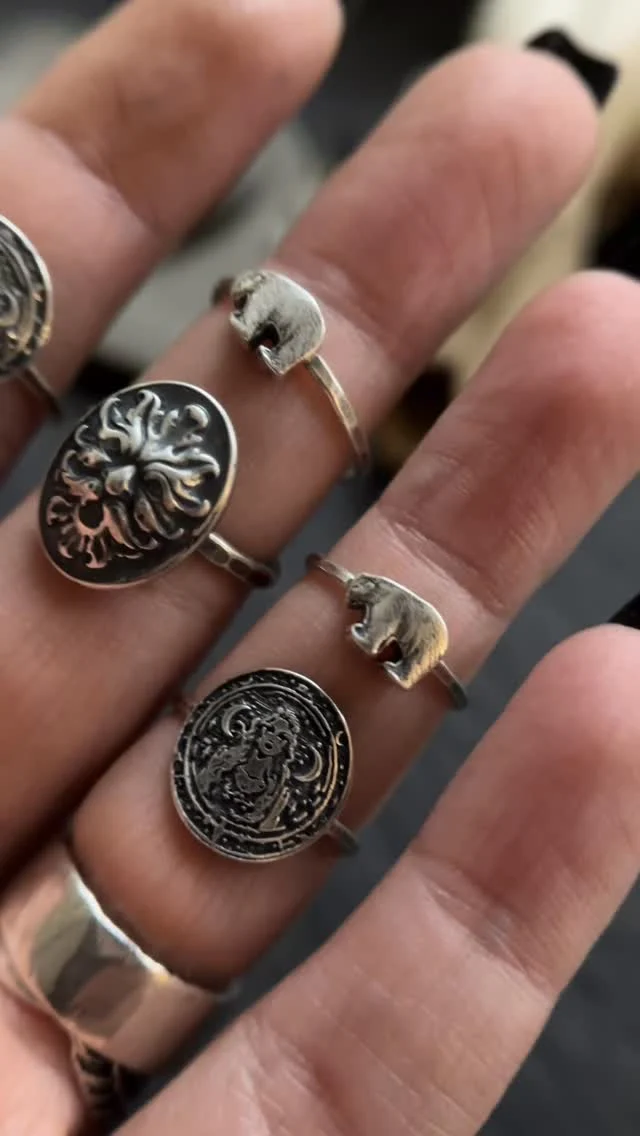
Happy washing day 🙃
A few rings I’ve worked on the last couple days…
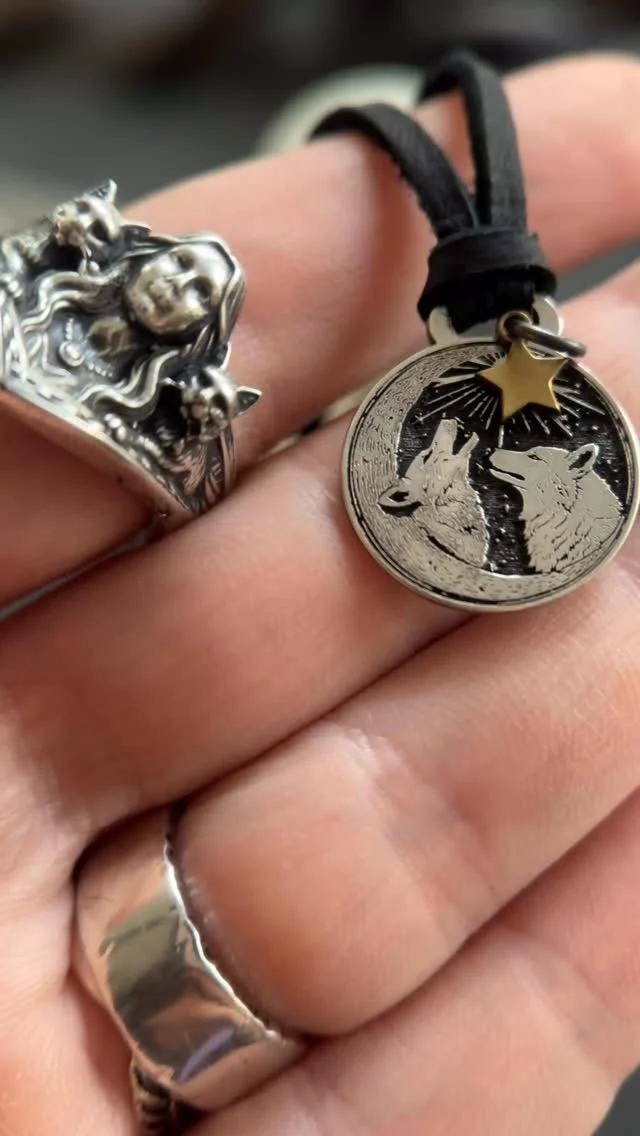
Freya’s cats rule and dogs drool?
Or was that the other way around? 🙃

Garm barely shows up in the old Norse stories.
Still… he leaves a mark.
A...
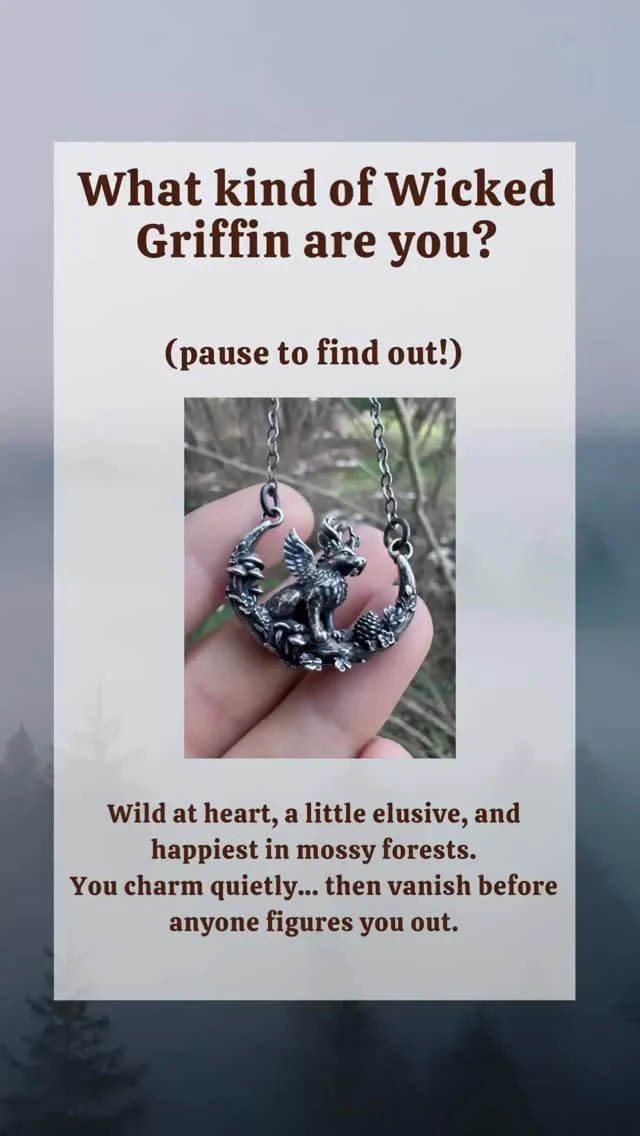
Leave a comment with your result ❤️
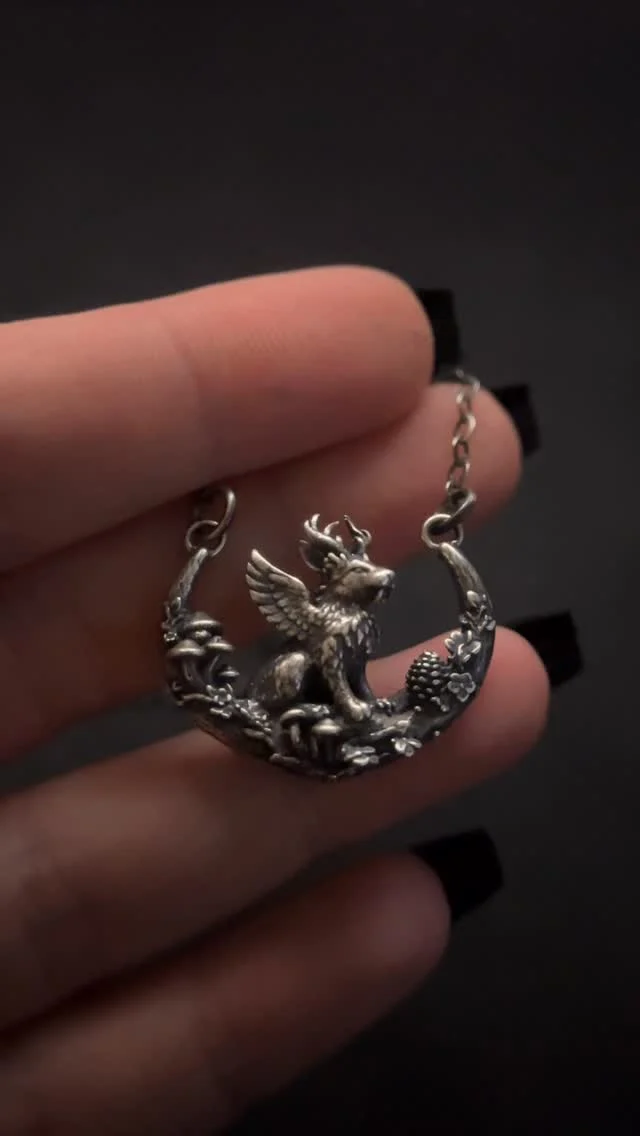
Bavarian Folklore says that you might just cross paths with a Wolpertinger in the alpine...

🐇🌲✨
He finally stepped out of the forest…
The Wolpertinger Pendant has arrived.
Inspired by...

I don’t often sell them, but love it when I do!
Vinca symbol bracelets ❤️...

Rooted in strength + guarded by ravens

The serpent waits 🖤
(Handcrafted Jörmungandr ring made to order in my shop)

Stay warm, everyone ❤️

😑😑😑🤮

I thought I had closed the book on the Alice in Wonderland rings…
But you...

Can this be over now, please?

In case you forgot 💜

Something I’ve been thinking about lately.
If there’s one thing I would’ve done differently early...

This year, we’re not buying things just to keep up.
If you need the reminder:...

My husband is from Bavaria (southern Germany) and I originally made this Krampus pendant for...

Some of the items I’m shipping out today ❤️
Please forgive my dirty nails 😂...

A few items shipping out today 🥰

This mornings rings shipping out ❤️

A few of the rjngs I’m shipping out this morning ❤️
How do you like...

Krampus is coming 🫶🏻

Getting ready to pack up these pretties and ship to their owners ❤️

Freya, cats and pentacles. Doesn’t get any better ❤️

You all got me going crazy making all these fairytale + storybook rings.
But I’ll...

Just launched these pretties ❤️
Size 9 amethyst ring + size 7.25 green kyanite

What would you trade to learn Baba Yaga’s secrets?

It *finally* looks, feels and smells like October!
And here are some items I’m packing...

This mornings pretties getting ready to ship :)

Getting ready to pack up these pretties and ship to their owners ❤️

You bet I’m hopping on this trend 😂
Thank you @shes_sinister for the prompt!

While I welcome the seasonal darkness…it sure is going to make my morning quick videos...

Finally finished the rings I’ve been working on in my stories ❤️
I think I...

Was going to post this update to my stories but it’s too long.

“How do you know I’m mad?” said Alice.
“You must be,” said the Cat, “or...

Some of this mornings orders getting ready to ship. Those little bats are so cute...

Here is the finished ring I was working on in my stories yesterday, along with...

A few of today’s orders shipping out this morning ❤️

The two silver raven rings I was working on in my stories yesterday.
…as well...

Eeeek! I’m so happy to add these to my shop ❤️
I’ve gotten so many...

I had 6 clamshells ready to ship this morning but I dropped and lost my...

Not the story you were told.
The girl didn’t run.
The wolf didn’t win.
This...

I love these raven rings so much 🖤
This mornings pretties shipping out.
All items...

Sleek + minimal Mjölnir ring ⚒️


About the author Jacqueline Fatica


