No products in the cart.
January 29, 2026 2:36 pm

Free USA shipping on orders $35+
January 29, 2026 2:36 pm
If you’ve searched for troll names in Norse mythology, you’re probably hoping for a neat list of famous trolls. e.g., named characters, like Odin or Thor, with clear stories and identities.
What you’ll quickly discover is that the medieval sources don’t really work that way.
In Old Norse literature and later Norwegian and Scandinavian tradition, the troll is often more of a category than a character: a label for dangerous supernatural beings, mountain monsters, or uncanny outsiders.
A few troll names do exist in historical material, but they are rare, and they often appear in very specific contexts.
This article lays out what we can actually document from primary sources, Icelandic manuscripts, and academic scholarship, without making up modern fantasy lists.
The first thing to understand is that troll names are not abundant in medieval Norse myth.
In most Old Norse texts, a troll is not introduced like a god or hero. Instead, the troll appears as “a troll woman,” “a mountain troll,” or simply a hostile presence in the wilderness.
Scholars emphasize that the troll is often defined by its opposition to gods and humans, rather than by a stable identity (Jakobsson, 2017, pp. 12–13).
In other words, we need to approach the topic carefully:
The sources preserve only a handful of actual troll names, and many modern lists quietly substitute giant names instead.
The troll is less a person, more a threat, i.e., a figure of the outside.
In modern Scandinavian culture, everyone knows what a troll is: a hulking creature with stubby arms and legs, lurking in forests or caves.
But the medieval word troll (trǫll) is far broader.
It can refer to:
Ármann Jakobsson stresses that trolls in medieval texts are flexible categories rather than a single species, which is why naming is inconsistent (Jakobsson, 2017, pp. 18–20).
That’s why trolls are also hard to separate cleanly from other beings in Germanic mythology. The troll belongs to mythology and folklore, not a tidy monster taxonomy.
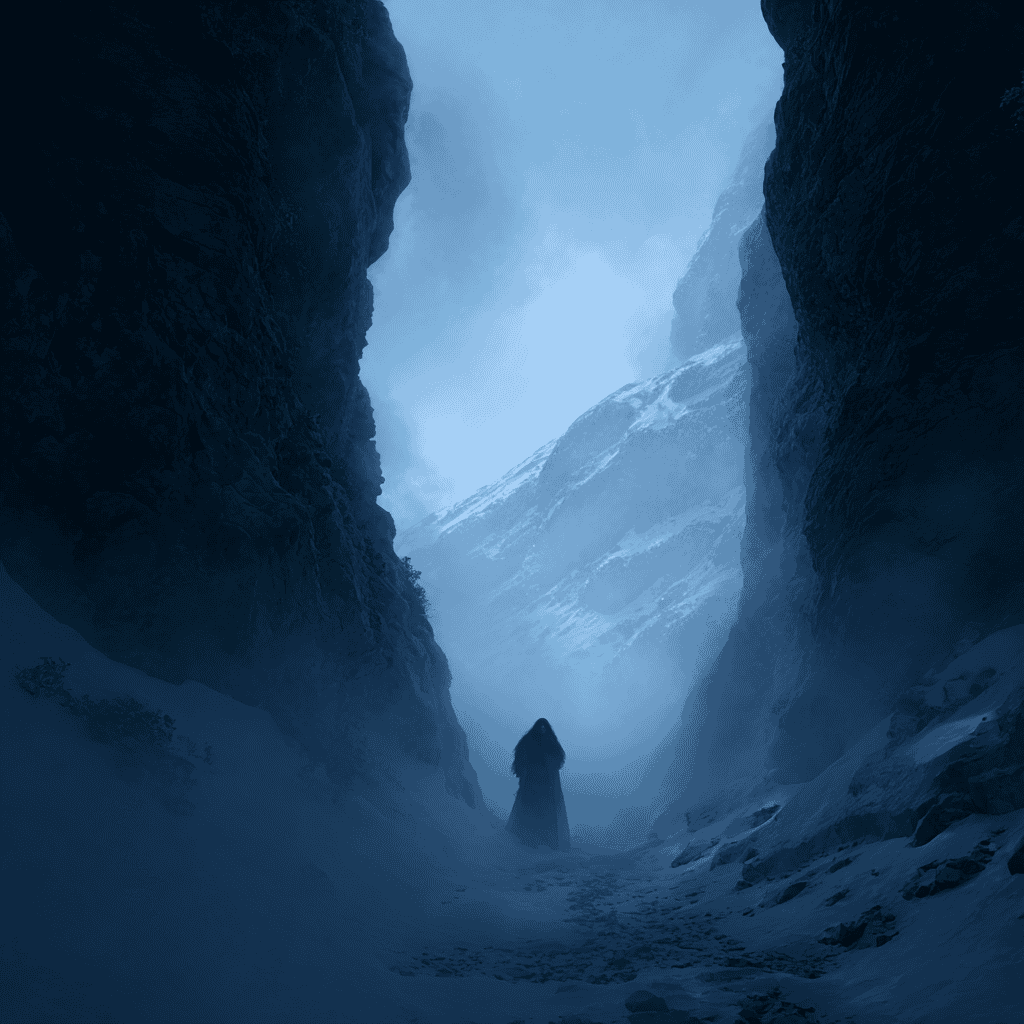
One of the most important medieval sources for Norse myth is Snorri Sturluson’s Prose Edda.
Snorri preserves stories of giants, monsters, and enemies of the gods, but trolls appear mostly as part of the broader monstrous world rather than as named individuals.
The prose edda gives us mythic landscapes filled with hostile beings, forces of nature opposing the Æsir and the Norse gods.
Snorri’s system is valuable, but it does not provide a catalog of troll names.
Instead, it shows trolls in Norse mythology as part of the mythic “outside.”
This is why the question of famous trolls is complicated: the texts do not treat trolls like personal characters.
Many readers assume trolls are separate from giants, but in Old Norse texts the boundary is blurry.
Terms like jötnar and jötunn overlap heavily with troll mythology. Many beings modern readers would call trolls are labeled giants instead.
Jakobsson explains that trolls often represent “the other” in opposition to gods and humans, and that naming conventions reflect this fluidity (Jakobsson, 2017, pp. 12–13).
So if you want a “type of troll,” you often end up discussing giants.
This overlap is one reason why troll names in medieval myth are scarce: the troll is not always a distinct category.
If there is one genuinely attested named troll figure, it is Grýla.
Grýla is a troll woman associated with mountains, winter danger, and child-stealing traditions.
Her name appears in medieval learned contexts as part of trollwife naming material.
William Sayers notes that Grýla appears as a troll-woman name preserved in skaldic heiti traditions (Sayers, 2009, p. 14).
Later Icelandic manuscripts preserve Grýla far more richly.
Karen Parsons shows how Grýla becomes central in the manuscript tradition of Grýlukvæði, tied to early modern Icelandic verse (Parsons, 2013, pp. 211–214).
Grýla is the strongest example of a troll name grounded in real Scandinavian folklore rather than modern invention.
Grýla is not alone in later tradition. She is paired with her husband, Leppalúði, who becomes part of a troll family complex.
Parsons traces Leppalúði’s place in Icelandic poetic tradition and manuscript transmission (Parsons, 2013, pp. 226–229).
This is important for troll names: once you enter later Nordic folklore, trolls begin to appear as family figures such as troll kings, troll households, even domestic monsters.
Sayers discusses trollwives as nuclear family structures in Old Norse-Icelandic tradition (Sayers, 2009, pp. 13–16).
This is where trolls in folklore become closer to the creatures of Norwegian folk tales.
In the Poetic Edda, we do find named monstrous female figures, though they are not always labeled trolls directly.
One example is Hrímgerðr, who appears as a hostile being in Helgakviða Hjǫrvarðssonar.
Bellows translates her encounter in ways that frame her as a witch-like adversary (Bellows, 1936, p. 279).
This is a case where a troll-like figure has a personal name, but the safest scholarly approach is to call her a giantess or witch-being rather than forcing the label troll.
Still, she belongs to the same world of supernatural beings.

Troll names become more common in the legendary saga tradition.
These sagas are later and more folkloric, but they preserve important material about Scandinavian trolls as narrative beings.
In fornaldarsögur, trolls appear as named adversaries, troll women, or mountain dwellers.
This is where naming begins to flourish.
Scholars caution that these texts sit between myth and folktale, which explains why they contain more named trolls than the Edda tradition (Jakobsson, 2017, pp. 18–20).
The saga material gives evidence, but it is not as early as the core myth poems.
When people imagine Norwegian trolls, they often think of mountain trolls lurking near a rock formation like Trolltunga or Trollstigen.
In Norwegian folklore, trolls are often tied to:
A central motif is that trolls turn to stone when exposed to sunlight, i.e., they turn to stone when exposed, becoming stone when exposed to sunlight.
These ideas dominate Scandinavian folktales and Norwegian folk tales, shaping the iconic image of Scandinavian trolls.
This is the realm of nordic folklore and Norwegian folktales, where trolls feature trolls constantly.

The medieval troll is not the same as the movie troll.
Over centuries, Scandinavian culture transformed trolls from vague supernatural threats into iconic mythical beings with names, families, and personalities.
Artists like Kittelsen shaped the modern Norwegian troll image, while collectors like Theodor preserved Norwegian folklore traditions.
In modern Scandinavia, trolls are part of myths and legends, tourist branding, and folk tales.
But historically, troll names are rare, and the medieval record is thin.
The troll king and named forest trolls belong more to later tradition than to early Norse myths.
Bellows, H. A. (Trans.). (1936). The Poetic Edda: Translated from the Icelandic with an introduction and notes. Princeton University Press.
Jakobsson, Á. (2017). The troll inside you: Paranormal activity in the medieval North. punctum books.
Parsons, K. M. (2013). Grýla in Sléttuhlíð. Gripla, 24, 211–233.
Sayers, W. (2009). Snorri’s Trollwives. Scandinavian–Canadian Studies. 18, (Dec. 2009), 12–22.

ᛉ 100% handcrafted artisan pagan , viking, witchcraft and shamanic inspired jewelry.
ᛉ Runes, Symbolism & European Folklore
Get 20% off👇🏻

Five witches dance around a blazing bonfire beneath a citrine cabochon in this Walpurgisnacht pendant....
Happy washing day 🙃
A few rings I’ve worked on the last couple days…
Freya’s cats rule and dogs drool?
Or was that the other way around? 🙃

Garm barely shows up in the old Norse stories.
Still… he leaves a mark.
A...
Leave a comment with your result ❤️
Bavarian Folklore says that you might just cross paths with a Wolpertinger in the alpine...

🐇🌲✨
He finally stepped out of the forest…
The Wolpertinger Pendant has arrived.
Inspired by...

I don’t often sell them, but love it when I do!
Vinca symbol bracelets ❤️...

Rooted in strength + guarded by ravens

The serpent waits 🖤
(Handcrafted Jörmungandr ring made to order in my shop)

Stay warm, everyone ❤️

😑😑😑🤮

I thought I had closed the book on the Alice in Wonderland rings…
But you...

Can this be over now, please?

In case you forgot 💜

Something I’ve been thinking about lately.
If there’s one thing I would’ve done differently early...

This year, we’re not buying things just to keep up.
If you need the reminder:...

My husband is from Bavaria (southern Germany) and I originally made this Krampus pendant for...

Some of the items I’m shipping out today ❤️
Please forgive my dirty nails 😂...

A few items shipping out today 🥰

This mornings rings shipping out ❤️

A few of the rjngs I’m shipping out this morning ❤️
How do you like...

Krampus is coming 🫶🏻

Getting ready to pack up these pretties and ship to their owners ❤️

Freya, cats and pentacles. Doesn’t get any better ❤️

You all got me going crazy making all these fairytale + storybook rings.
But I’ll...

Just launched these pretties ❤️
Size 9 amethyst ring + size 7.25 green kyanite

What would you trade to learn Baba Yaga’s secrets?

It *finally* looks, feels and smells like October!
And here are some items I’m packing...

This mornings pretties getting ready to ship :)

Getting ready to pack up these pretties and ship to their owners ❤️

You bet I’m hopping on this trend 😂
Thank you @shes_sinister for the prompt!

While I welcome the seasonal darkness…it sure is going to make my morning quick videos...

Finally finished the rings I’ve been working on in my stories ❤️
I think I...

Was going to post this update to my stories but it’s too long.

“How do you know I’m mad?” said Alice.
“You must be,” said the Cat, “or...

Some of this mornings orders getting ready to ship. Those little bats are so cute...

Here is the finished ring I was working on in my stories yesterday, along with...

A few of today’s orders shipping out this morning ❤️

The two silver raven rings I was working on in my stories yesterday.
…as well...

Eeeek! I’m so happy to add these to my shop ❤️
I’ve gotten so many...

I had 6 clamshells ready to ship this morning but I dropped and lost my...

Not the story you were told.
The girl didn’t run.
The wolf didn’t win.
This...

I love these raven rings so much 🖤
This mornings pretties shipping out.
All items...

Sleek + minimal Mjölnir ring ⚒️


About the author Jacqueline Fatica


