No products in the cart.
February 22, 2026 8:35 pm

Free USA shipping on orders $35+
February 22, 2026 8:35 pm
Greek male names preserve one of the longest continuous naming traditions in Europe.
Many of these names were already in use during the first millennium BCE, when epic poetry, mythology, and early Greek city-states defined the cultural identity of ancient Greece.
Unlike many ancient naming traditions that disappeared or were replaced, Greek naming practices survived the classical period, the Roman Empire, the Byzantine Empire, and into modern Greek society without interruption (Horrocks, 2010, p. 56).
If you are searching for a meaningful baby boy name, Greek naming traditions offer a rare combination of linguistic beauty, mythological depth, and cultural continuity.
A Greek name is not merely a label.
It often reflects ancient religious beliefs, heroic ideals, and the legacy of important male figures who shaped Greek history and mythology.
So let us now have a closer look at the origins of Greek male names from mythological heroes, gods, and historical individuals.
I’ll try to explain their meanings, and show how ancient Greek names remain part of modern Greek life today.

Authentic Greek male names originate directly from the Greek language and cultural tradition.
These names often derive from Greek words describing virtues such as strength, wisdom, protection, or divine favor.
For example, Alexandros combines the Greek words alexein, meaning to defend, and aner, meaning man, creating the meaning defender of men (Beekes, 2010, p. 62).
These names were not just simple inventions.
They reflected real social values.
In ancient Greek society, a name often expressed the hopes parents had for their child.
A strong or protective name symbolized survival, leadership, or honor.
Greek naming practices also preserved family lineage.
Children were frequently named after grandparents, ensuring continuity across generations.
This tradition remains part of Greek culture today.
Modern Greek naming practices reflect continuity with earlier historical periods.
According to the Hellenic Statistical Authority, the most common male names in Greece today include Giorgos, Giannis, Dimitris, Kostas, and Nikos (elstat, 2018, p. 15).
Each of these names has deep linguistic or historical roots:
These modern Greek male names demonstrate how ancient naming traditions evolved naturally over centuries.
The Greek version of a name may differ slightly from its English version, but its linguistic origin remains intact.
Greek mythology played a central role in shaping Greek naming traditions.
Many Greek names originated from mythological heroes and divine figures who represented courage, intelligence, and divine favor.
For example, Achilles is one of the most famous heroes in Greek mythology.
He appears in Homer’s Iliad as the greatest warrior among the Greek forces during the Trojan War (Homer, Iliad, Book 1).
His name remains associated with strength, courage, and heroic identity.
Similarly, Iason was the leader of the Argonauts, the group of heroes who searched for the Golden Fleece (Apollodorus, Bibliotheca, 1.9).
His name derives from the Greek word meaning healer (Beekes, 2010, p. 590).
These mythological names became part of everyday Greek naming tradition.
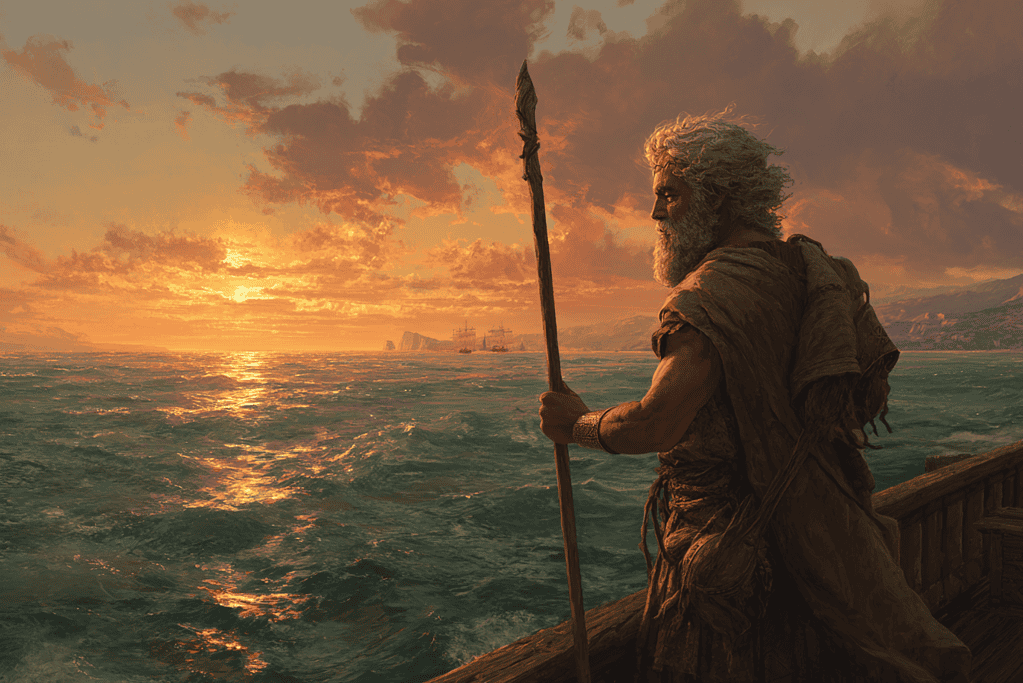
Some of the most powerful Greek male names come directly from heroic mythological figures.
Leonidas, meaning son of the lion, was the Spartan king who led Greek forces against the Persians at Thermopylae (Herodotus, Histories, 7.204).
His bravery made the name synonymous with courage and leadership.
Perseus, another mythological hero, defeated Medusa and saved Andromeda (Apollodorus, Bibliotheca, 2.4).
Herakles, known for his twelve labors, became one of the most important heroes in Greek mythology.
These ancient Greek names for boys preserve the heroic ideals that shaped Greek civilization.
Some Greek gods originate directly from Greek gods.
Dimitrios derives from Demeter, the goddess of agriculture and fertility (Burkert, 1985, p. 160). The name originally meant follower of Demeter.
Names such as Dionysios derive from Dionysus, the god of wine and ritual ecstasy.
Poseidon, the god of the sea, also appears as a mythological name, though it is rare as a modern personal name.
These names demonstrate how religion influenced Greek naming traditions.
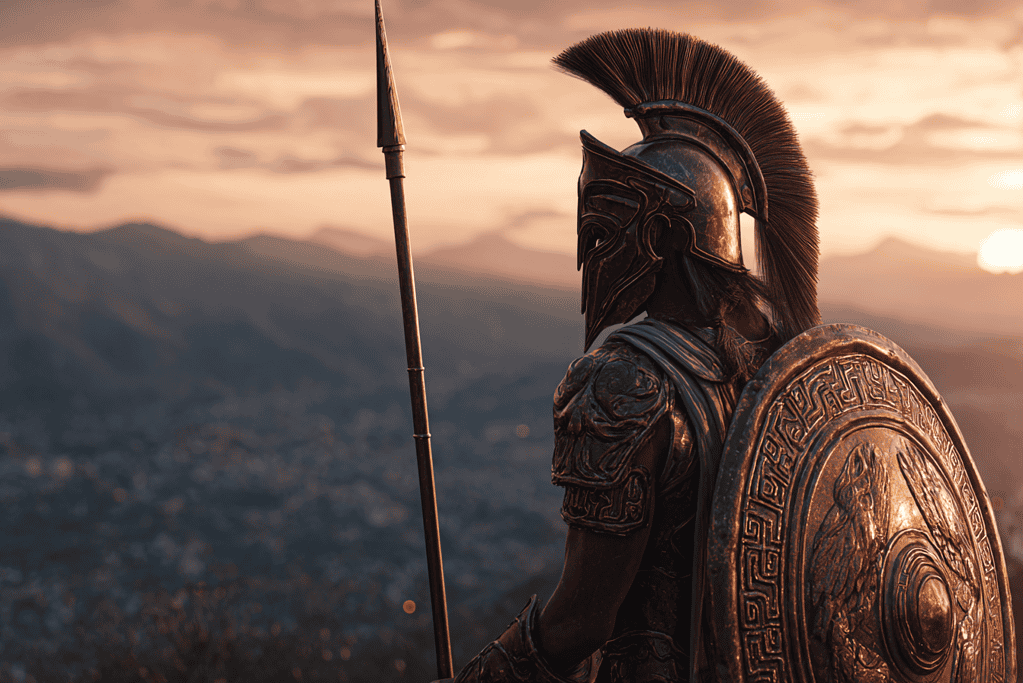
There is no doubts that Greek history also shaped male naming traditions.
For instance, Alexandros became famous through Alexander the Great, a military leader ranking in world history.
His conquests spread Greek culture across Asia, Egypt, and the Near East.
Leonidas became a symbol of resistance and sacrifice.
Miltiadis, the Athenian general who defeated the Persians at Marathon, also contributed to Greek historical identity.
These names reflect historical leadership and cultural identity.
Greek male names often derive directly from Greek words.
Nikolaos combines the words nike (victory) and laos (people) (Beekes, 2010, p. 1045).
Andreas derives from aner, meaning man.
Athanasios means immortal.
These linguistic meanings explain why Greek naming traditions remain powerful.
Greek naming traditions survived because the Greek language itself never disappeared.
Unlike Latin, which evolved into multiple languages, Greek remained a continuous linguistic tradition.
Ancient Greek evolved into medieval Greek and eventually modern Greek, preserving vocabulary and naming patterns (Horrocks, 2010, p. 89).
The Byzantine Empire also helped preserve Greek names.
And of course, Greek Orthodox Christianity played a major role in maintaining naming traditions.
Some mythological names remain rare but culturally significant.
Atlas, the Titan who held up the sky
Orion, the legendary hunter
Odysseus, the hero of Homer’s Odyssey
Theseus, the founder hero of Athens
These rare Greek names preserve ancient mythological tradition.
Choosing a Greek name for your baby boy allows you to connect your child to one of the oldest continuous cultural traditions in human history.
A Greek male name may reflect:
Mythological strength
Historical leadership
Religious devotion
Linguistic beauty
Greek names combine cultural heritage with timeless meaning.
These names appear directly in Homer, Hesiod, and Apollodorus.
Achilles (Αχιλλεύς)
Odysseus (Οδυσσεύς)
Perseus (Περσεύς)
Theseus (Θησεύς)
Herakles (Ηρακλής)
Jason / Iason (Ιάσων)
Hector (Έκτωρ)
Ajax (Αίας)
Paris (Πάρις)
Agamemnon (Αγαμέμνων)
Menelaos (Μενέλαος)
Patroklos (Πάτροκλος)
Zeus (Ζεύς)
Apollo (Απόλλων)
Hermes (Ερμής)
Ares (Άρης)
Poseidon (Ποσειδών)
Dionysios (Διονύσιος)
Helios (Ήλιος)
These appear in modern Greece frequently.
Alexandros (Αλέξανδρος)
Nikolaos (Νικόλαος)
Nikos (Νίκος)
Ioannis (Ιωάννης)
Giannis (Γιάννης)
Dimitrios (Δημήτριος)
Dimitris (Δημήτρης)
Georgios (Γεώργιος)
Giorgos (Γιώργος)
Konstantinos (Κωνσταντίνος)
Kostas (Κώστας)
Panagiotis (Παναγιώτης)
Athanasios (Αθανάσιος)
Christos (Χρήστος)
Andreas (Ανδρέας)
Stefanos (Στέφανος)
Vasileios (Βασίλειος)
Pavlos (Παύλος)
Leonidas (Λεωνίδας) – Spartan king
Miltiadis (Μιλτιάδης) – Athenian general
Perikles (Περικλής) – Athenian leader
Solon (Σόλων) – lawgiver
Platon (Πλάτων) – philosopher
Aristoteles (Αριστοτέλης) – philosopher
Themistokles (Θεμιστοκλής) – general
Nestor (Νέστωρ)
Diomedes (Διομήδης)
Telemachos (Τηλέμαχος)
Laertes (Λαέρτης)
Priamos (Πρίαμος)
Anchises (Αγχίσης)
Atlas (Άτλας)
Orion (Ωρίων)
Castor (Κάστωρ)
Pollux / Polydeukes (Πολυδεύκης)
Prometheus (Προμηθεύς)
Epimetheus (Επιμηθεύς)
Cadmus (Κάδμος)
Christoforos (Χριστόφορος)
Theodoros (Θεόδωρος)
Manolis (Μανώλης)
Nikiforos (Νικηφόρος)
Anastasios (Αναστάσιος)
Lysander (Λύσανδρος)
Alkibiades (Αλκιβιάδης)
Menandros (Μένανδρος)
Antigonos (Αντίγονος)
Euphemios (Ευφήμιος)
These are extremely common:
Nikos
Giannis
Giorgos
Dimitris
Kostas
Panagiotis
Vasileios
Christos
Alexandros
Achilles
Odysseus
Leonidas
Iason
Perseus
Nikolaos
Dimitrios
Ioannis
Theseus
Apollodorus. (1921). Bibliotheca. Harvard University Press.
Beekes, R. (2010). Etymological Dictionary of Greek. Brill.
Burkert, W. (1985). Greek Religion. Harvard University Press.
ELSTAT. (2018). Young People in Greece. Hellenic Statistical Authority.
Herodotus. (1920). Histories. Harvard University Press.
Homer. (1924). The Iliad. Harvard University Press.
Horrocks, G. (2010). Greek: A History of the Language and Its Speakers. Wiley-Blackwell.

ᛉ 100% handcrafted artisan pagan , viking, witchcraft and shamanic inspired jewelry.
ᛉ Runes, Symbolism & European Folklore
Get 20% off👇🏻

Five witches dance around a blazing bonfire beneath a citrine cabochon in this Walpurgisnacht pendant....
Happy washing day 🙃
A few rings I’ve worked on the last couple days…
Freya’s cats rule and dogs drool?
Or was that the other way around? 🙃

Garm barely shows up in the old Norse stories.
Still… he leaves a mark.
A...

Leave a comment with your result ❤️
Bavarian Folklore says that you might just cross paths with a Wolpertinger in the alpine...

🐇🌲✨
He finally stepped out of the forest…
The Wolpertinger Pendant has arrived.
Inspired by...

I don’t often sell them, but love it when I do!
Vinca symbol bracelets ❤️...

Rooted in strength + guarded by ravens

The serpent waits 🖤
(Handcrafted Jörmungandr ring made to order in my shop)

Stay warm, everyone ❤️

😑😑😑🤮

I thought I had closed the book on the Alice in Wonderland rings…
But you...

Can this be over now, please?

In case you forgot 💜

Something I’ve been thinking about lately.
If there’s one thing I would’ve done differently early...

This year, we’re not buying things just to keep up.
If you need the reminder:...

My husband is from Bavaria (southern Germany) and I originally made this Krampus pendant for...

Some of the items I’m shipping out today ❤️
Please forgive my dirty nails 😂...

A few items shipping out today 🥰

This mornings rings shipping out ❤️

A few of the rjngs I’m shipping out this morning ❤️
How do you like...

Krampus is coming 🫶🏻

Getting ready to pack up these pretties and ship to their owners ❤️

Freya, cats and pentacles. Doesn’t get any better ❤️

You all got me going crazy making all these fairytale + storybook rings.
But I’ll...

Just launched these pretties ❤️
Size 9 amethyst ring + size 7.25 green kyanite

What would you trade to learn Baba Yaga’s secrets?

It *finally* looks, feels and smells like October!
And here are some items I’m packing...

This mornings pretties getting ready to ship :)

Getting ready to pack up these pretties and ship to their owners ❤️

You bet I’m hopping on this trend 😂
Thank you @shes_sinister for the prompt!

While I welcome the seasonal darkness…it sure is going to make my morning quick videos...

Finally finished the rings I’ve been working on in my stories ❤️
I think I...

Was going to post this update to my stories but it’s too long.

“How do you know I’m mad?” said Alice.
“You must be,” said the Cat, “or...

Some of this mornings orders getting ready to ship. Those little bats are so cute...

Here is the finished ring I was working on in my stories yesterday, along with...

A few of today’s orders shipping out this morning ❤️

The two silver raven rings I was working on in my stories yesterday.
…as well...

Eeeek! I’m so happy to add these to my shop ❤️
I’ve gotten so many...

I had 6 clamshells ready to ship this morning but I dropped and lost my...

Not the story you were told.
The girl didn’t run.
The wolf didn’t win.
This...

I love these raven rings so much 🖤
This mornings pretties shipping out.
All items...

Sleek + minimal Mjölnir ring ⚒️


About the author Jacqueline Fatica


