No products in the cart.
March 22, 2026 8:46 pm

Free USA shipping on orders $35+
March 22, 2026 8:46 pm
Italian folklore represents a complex world of traditional narratives, ritual actions, and symbolic interpretations shaped by centuries of regional experience.
Rather than existing only in written collections of fairy tales or literary folktale anthologies, Italian folklore survives through everyday practices, seasonal customs, and shared beliefs about misfortune, protection, and supernatural presence.
Academic research shows that traditional storytelling and ritual life formed an integrated cultural system in which folktales, healing practices, and communal memory worked together to shape identity across the regions of Italy.
In scholarly research, Italian folklore is understood as a living network of cultural expression rooted in social interaction.
Glauco Sanga emphasizes that folklore traditions are embedded in everyday relationships and local environments rather than existing as isolated narrative texts (Sanga, 2022, p. 214).
Through storytelling, ritual participation, and symbolic gestures, communities created shared frameworks for interpreting the world around them.
The folktale plays a particularly important role within this system.
Traditional stories about danger, transformation, and moral testing provided narrative structure to experiences of uncertainty.
In this way, Italian folklore functioned as a form of collective reflection, allowing communities to explore ethical dilemmas and emotional tensions through symbolic storytelling.
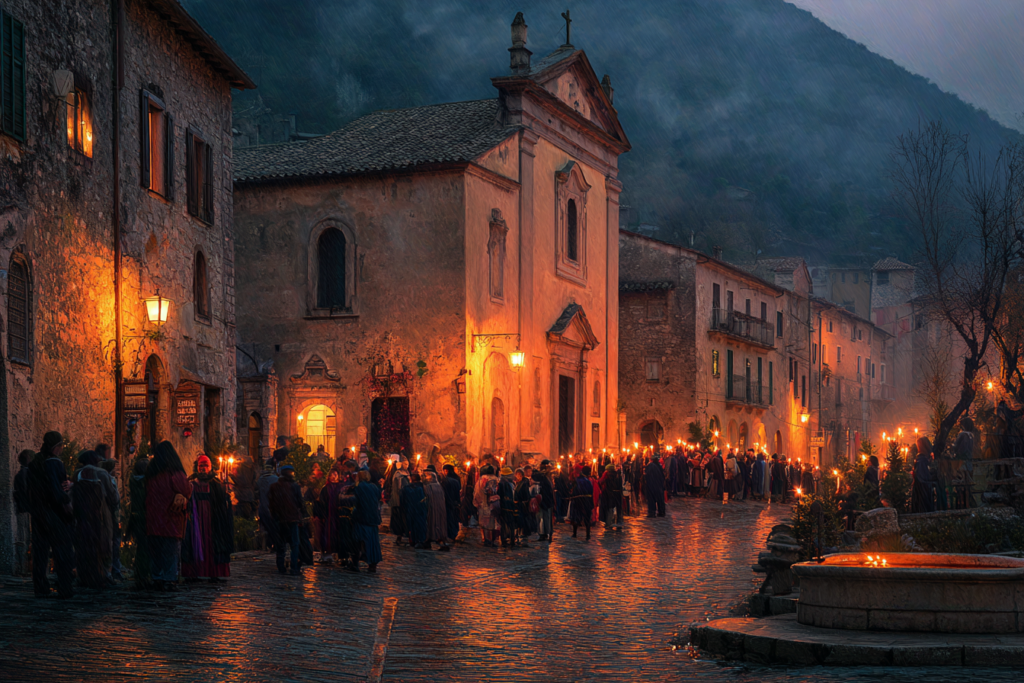
The academic study of Italian folklore developed alongside broader European interest in documenting popular tradition.
Early folklorists believed that oral narratives preserved cultural knowledge absent from official historical sources.
William E. Simeone notes that scholars systematically collected folk tales and ritual descriptions in order to reconstruct aspects of rural life that might otherwise disappear (Simeone, 1961, p. 345).
This scholarly movement coincided with growing awareness of regional diversity within Italian culture.
Researchers observed that storytelling traditions varied significantly between different linguistic and environmental contexts.
As a result, Italian folklore studies became closely tied to questions of local identity and cultural memory.
Italian folklore is profoundly shaped by geography.
Mountain communities, coastal settlements, and isolated valleys developed distinctive traditions reflecting their economic activities and historical experiences.
Sanga argues that folklore traditions must always be interpreted within the social environments in which they emerged (Sanga, 2022, p. 218).
Ethnographic documentation from Abruzzo illustrates how local landscape influenced narrative imagination.
Estella Canziani records legends associated with particular mountain paths and ruined structures that villagers regarded as places of supernatural significance (Canziani, 1928, p. 212).
These stories transformed physical terrain into symbolic space, reinforcing communal attachment to the land.
Agricultural life provided the social foundation for the transmission of folktales.
Storytelling often took place during communal gatherings connected with seasonal labor cycles, creating opportunities for reflection on fortune, hardship, and moral responsibility.
Within this context, traditional stories functioned as shared interpretations of the relationship between human effort and the unpredictability of nature.
The peasant worldview emphasized the presence of unseen forces capable of influencing daily events.
Folktales frequently dramatized encounters with supernatural figures who tested human resilience or rewarded ethical behavior.
Through narrative performance, communities articulated values that shaped social cohesion and survival.
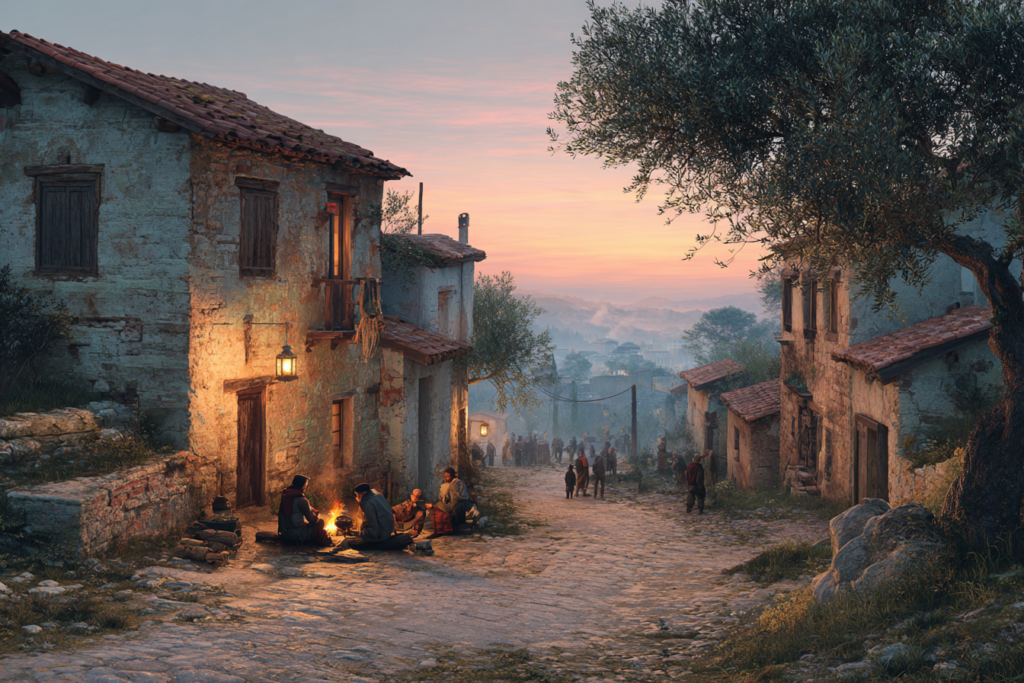
One of the most vivid ethnographic dimensions of Italian folklore appears in traditional healing practices.
Fieldwork conducted in a rural community of southern Italy demonstrates that villagers often interpreted illness through symbolic frameworks involving spiritual imbalance or harmful magic (Moss & Cappannari, 1960, p. 97).
Rather than relying exclusively on biomedical treatment, individuals sought ritual remedies that addressed emotional and communal aspects of suffering.
Healing ceremonies could involve the quiet recitation of prayers, the tracing of protective gestures, or the use of objects believed to restore equilibrium between the afflicted person and unseen influences.
These practices reveal how narrative belief and practical action were inseparable within everyday life.
Ritual healing not only aimed to cure physical symptoms but also reaffirmed the shared worldview through which communities understood misfortune.
Canziani’s observations in Abruzzo provide striking examples of how Italian folklore shaped domestic space.
She describes households preserving fragments of charcoal taken from blessed fires and positioning them within living areas as safeguards against supernatural danger (Canziani, 1928, pp. 214–216).
Such objects were often placed near doorways or hearths, locations perceived as vulnerable thresholds between safety and threat.
Candles and other sacred items were treated with similar reverence.
Their presence reflected a belief that material substances could mediate between visible and invisible worlds.
Through these protective rituals, ordinary homes became symbolically fortified environments, illustrating the integration of religious symbolism and local custom within traditional Italian life.
Beliefs concerning witchcraft formed part of a broader framework for interpreting uncertainty and social tension.
Ethnographic evidence shows that villagers sometimes attributed unexplained illness or economic hardship to the influence of individuals suspected of possessing harmful supernatural power (Moss & Cappannari, 1960, p. 96).
Stories circulated about witches exhausting livestock or weakening human vitality during nocturnal encounters.
Such narratives functioned as mechanisms for expressing collective anxiety and negotiating moral responsibility.
Within the symbolic language of Italian folklore, supernatural explanation offered a way to transform fear into structured understanding.
Ritual responses to perceived magical aggression helped restore confidence in communal stability.
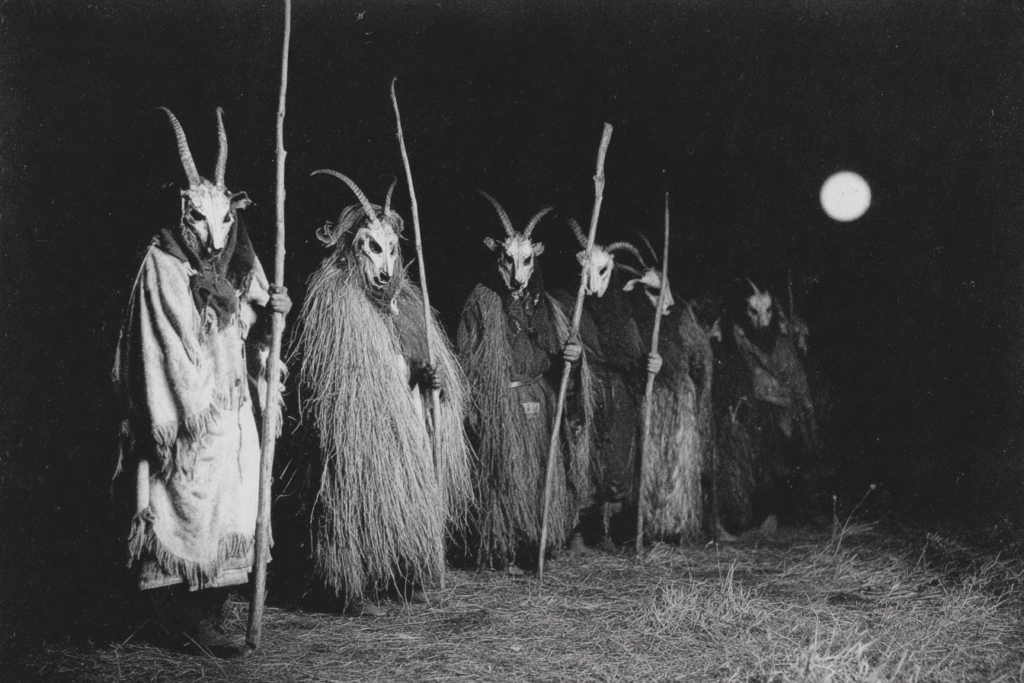
Comparative scholarship demonstrates that motifs involving nocturnal gatherings or spectral processions appear across many European traditions.
Comparative research into European folklore highlights recurring images of nocturnal processions and supernatural gatherings, as worked out by the Italian historian Carlo Ginzburg in ‘The Night Battles’ (1966) and ‘Ecstasies’ (1989).
Such folkloric elements are a window into older cosmological conceptions, where harvest, crops and the health of the village community, including livestock, was threatened by supernatural forces and in need of protection.
This ritualistic work was done by the Italian Benandanti in the Italian region of Friuli.
Ronald Hutton argues that these visionary themes contributed to the imaginative environment in which witchcraft narratives developed (Hutton, 2014, p. 165).
Although not confined to a single region, they influenced the symbolic repertoire of local storytelling, including in Italy.
In folktales, images of movement through darkness often signify liminality and transition between worlds.
Such motifs invite reflection on mortality and spiritual authority, revealing the philosophical depth embedded within traditional narratives.
The perception of time in traditional communities was structured by seasonal observances and agricultural necessity.
Canziani describes communal festivals marking transitions in the natural year, during which storytelling and ritual participation reinforced social cohesion (Canziani, 1928, pp. 210–212).
These moments were experienced as periods of heightened symbolic significance.
Italian folklore frequently situates narrative episodes within such seasonal turning points.
The cyclical rhythm of ritual time emphasized continuity between generations, linking present experience with ancestral memory.
Through these customs, communities affirmed their place within a larger cosmological order.
Modernization has transformed the social contexts in which folklore traditions are practiced, yet it has not eliminated their cultural relevance.
Sanga notes that contemporary expressions of Italian folklore often emerge through revived festivals, heritage initiatives, and renewed interest in storytelling (Sanga, 2022, p. 224).
These developments demonstrate the adaptability of traditional narratives.
Folktales continue to provide symbolic frameworks for interpreting human experience.
By preserving cultural memory while responding creatively to changing conditions, Italian folklore remains a dynamic force within modern society.
Canziani, E. (1928). Abruzzese folklore. Folklore, 39(3), 209–247. https://www.jstor.org/stable/1256186
Ginzburg, C. (1983). The night battles: Witchcraft and agrarian cults in the sixteenth and seventeenth centuries. Johns Hopkins University Press.
Ginzburg, C. (1991). Ecstasies: Deciphering the witches’ sabbath. Pantheon Books.
Hutton, R. (2014). The Wild Hunt and the witches’ Sabbath. Folklore, 125(2), 161–178. https://www.jstor.org/stable/43297752
Moss, L. W., & Cappannari, S. C. (1960). Folklore and medicine in an Italian village. The Journal of American Folklore, 73(288), 95–102. https://www.jstor.org/stable/537890
Sanga, G. (2022). Il folklore italiano. La Ricerca Folklorica, 77, 213–228. https://www.jstor.org/stable/10.2307/27417422
Simeone, W. E. (1961). Italian folklore scholars. The Journal of American Folklore, 74(294), 344–353. https://www.jstor.org/stable/538257

ᛉ 100% handcrafted artisan pagan , viking, witchcraft and shamanic inspired jewelry.
ᛉ Runes, Symbolism & European Folklore
Get 20% off👇🏻

Five witches dance around a blazing bonfire beneath a citrine cabochon in this Walpurgisnacht pendant....
Happy washing day 🙃
A few rings I’ve worked on the last couple days…
Freya’s cats rule and dogs drool?
Or was that the other way around? 🙃

Garm barely shows up in the old Norse stories.
Still… he leaves a mark.
A...
Leave a comment with your result ❤️
Bavarian Folklore says that you might just cross paths with a Wolpertinger in the alpine...

🐇🌲✨
He finally stepped out of the forest…
The Wolpertinger Pendant has arrived.
Inspired by...

I don’t often sell them, but love it when I do!
Vinca symbol bracelets ❤️...

Rooted in strength + guarded by ravens

The serpent waits 🖤
(Handcrafted Jörmungandr ring made to order in my shop)

Stay warm, everyone ❤️

😑😑😑🤮

I thought I had closed the book on the Alice in Wonderland rings…
But you...

Can this be over now, please?

In case you forgot 💜

Something I’ve been thinking about lately.
If there’s one thing I would’ve done differently early...

This year, we’re not buying things just to keep up.
If you need the reminder:...

My husband is from Bavaria (southern Germany) and I originally made this Krampus pendant for...

Some of the items I’m shipping out today ❤️
Please forgive my dirty nails 😂...

A few items shipping out today 🥰

This mornings rings shipping out ❤️

A few of the rjngs I’m shipping out this morning ❤️
How do you like...

Krampus is coming 🫶🏻

Getting ready to pack up these pretties and ship to their owners ❤️

Freya, cats and pentacles. Doesn’t get any better ❤️

You all got me going crazy making all these fairytale + storybook rings.
But I’ll...

Just launched these pretties ❤️
Size 9 amethyst ring + size 7.25 green kyanite

What would you trade to learn Baba Yaga’s secrets?

It *finally* looks, feels and smells like October!
And here are some items I’m packing...

This mornings pretties getting ready to ship :)

Getting ready to pack up these pretties and ship to their owners ❤️

You bet I’m hopping on this trend 😂
Thank you @shes_sinister for the prompt!

While I welcome the seasonal darkness…it sure is going to make my morning quick videos...

Finally finished the rings I’ve been working on in my stories ❤️
I think I...

Was going to post this update to my stories but it’s too long.

“How do you know I’m mad?” said Alice.
“You must be,” said the Cat, “or...

Some of this mornings orders getting ready to ship. Those little bats are so cute...

Here is the finished ring I was working on in my stories yesterday, along with...

A few of today’s orders shipping out this morning ❤️

The two silver raven rings I was working on in my stories yesterday.
…as well...

Eeeek! I’m so happy to add these to my shop ❤️
I’ve gotten so many...

I had 6 clamshells ready to ship this morning but I dropped and lost my...

Not the story you were told.
The girl didn’t run.
The wolf didn’t win.
This...

I love these raven rings so much 🖤
This mornings pretties shipping out.
All items...

Sleek + minimal Mjölnir ring ⚒️


About the author Jacqueline Fatica


