No products in the cart.
February 22, 2026 9:00 pm

Free USA shipping on orders $35+
February 22, 2026 9:00 pm
The name Homer stands at the very beginning of Western literature.
He, who is often considered one of the world’s most influential ancient poet, epic writer and philosopher.
His legacy didn’t come out of nowhere.
Indeed, this mysterious Greek poet is credited with composing the Iliad and the Odyssey, two epic works that preserved the heroic age of ancient Greece.
He likewise shaped Greek myth, education, and cultural identity for nearly three thousand years.
These epic poems tell stories of war, loss, heroism, and homecoming, and they remain foundational texts in both Greek and Roman intellectual life.
Understanding Homer matters because his works preserve the earliest complete narratives from the ancient Greek world.
Through the Iliad and the Odyssey, we gain insight into early Greek society, religious beliefs, warfare, kingship, and moral values.
These poems were not simply stories. They formed the backbone of education, religion, and identity in classical Greek civilization (Graziosi, 2002, p. 4).
Homer is traditionally regarded as the earliest and greatest Greek poet.
He is credited as the author of the Iliad and the Odyssey, the two epic poems that defined Greek literature and preserved the memory of the Trojan War.
In other words, these works represent the earliest complete examples of Greek epic poetry and were foundational to ancient Greek culture (Graziosi, 2002, p. 4).
The figure of Homer himself is difficult to reconstruct historically.
Ancient sources treated him as a real individual, yet even in antiquity his life was surrounded by uncertainty.
In short: His life still remains somewhat of a mystery.
Herodotus, writing in the fifth century BCE, stated that Homer lived approximately four hundred years before his own time and was responsible for shaping Greek understanding of the gods and divine order (Herodotus, trans. Godley, 1920, 2.53).
However, Homer’s influence extended far beyond poetry.
His works preserved cultural memory, heroic values, and religious beliefs that defined Greek civilization. For this reason, he became the central figure in Greek education and intellectual life.
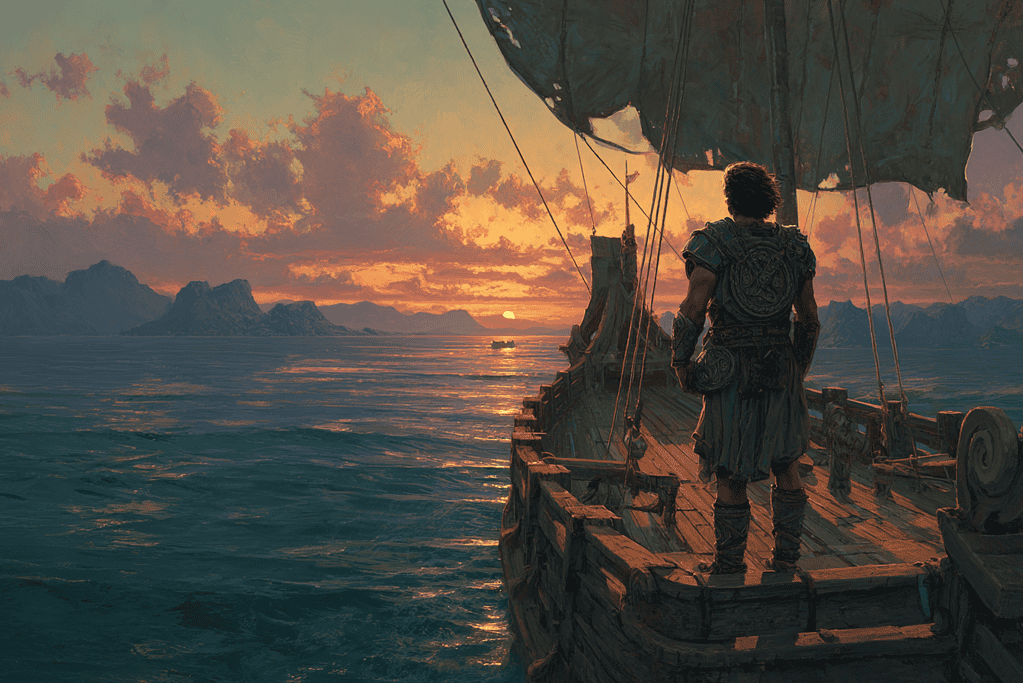
Most scholars place Homer’s life in the eighth century BCE, during the early archaic Greek period.
This was a time when Greek society was transitioning from an oral culture into a literate one, following the adoption of the Greek alphabet from Phoenician writing systems (Horrocks, 2010, p. 56).
This historical context is crucial. Homer’s epic poems emerged at a moment when oral traditions were being preserved in written text for the first time.
The stories themselves were older, but the versions attributed to Homer represent the earliest surviving literary form.
Herodotus’ estimate places Homer roughly four centuries before his own lifetime, reinforcing the idea that Homer belonged to the early archaic Greek world, when epic poetry was the primary medium for preserving historical memory and mythological tradition (Herodotus, trans. Godley, 1920, 2.53).
The Iliad and the Odyssey are the two epic poems attributed to Homer, and they represent the earliest surviving works of Greek literature.
The Iliad focuses on the Trojan War, specifically the conflict between Achilles and Agamemnon during the final year of the war.
This epic poem explores themes of honor, rage, mortality, and heroic identity.
Achilles, the central hero, on the other hand represents both the power and vulnerability of human greatness (Homer, trans. Murray, 1924, Book 1, line 1).
The Odyssey, by contrast, tells the story of Odysseus and his long journey home after the war.
His travels across the ancient world, including encounters with monsters, gods, and supernatural forces, represent the challenges of survival and identity.
Together, these two epic poems preserve the heroic tradition of ancient Greece and provide the earliest comprehensive view of Greek myth and cultural values.
The Iliad is set during the final year of the Trojan War, a legendary conflict between Greek and Trojan forces centered around the city of Troy.
The poem however does not narrate the entire war.
Instead, it focuses on a specific moment: the anger of Achilles.
The opening line of the Iliad explicitly introduces this theme, asking the Muse to sing of Achilles’ destructive rage (Homer, trans. Murray, 1924, Book 1, line 1).
Through its narrative, the Iliad explores heroism, mortality, and the inevitability of death.
Achilles is often portrayed as both the greatest warrior and a deeply human figure capable of grief and compassion.
The Trojan War itself became one of the central mythological events in Greek cultural memory.
The Odyssey tells the story of Odysseus and his ten-year journey home to Ithaca following the fall of Troy.
Unlike Achilles, whose story centers on battlefield heroism, Odysseus represents intelligence, endurance, and adaptability.
His journey includes encounters with the Cyclops Polyphemus, the enchantress Circe, and the deadly Sirens.
The Odyssey explores themes of identity, loyalty, and homecoming.
Odysseus’ ultimate goal is to return to Ithaca and reclaim his place as king.
This epic poem presents a different model of heroism, focused on survival rather than combat.
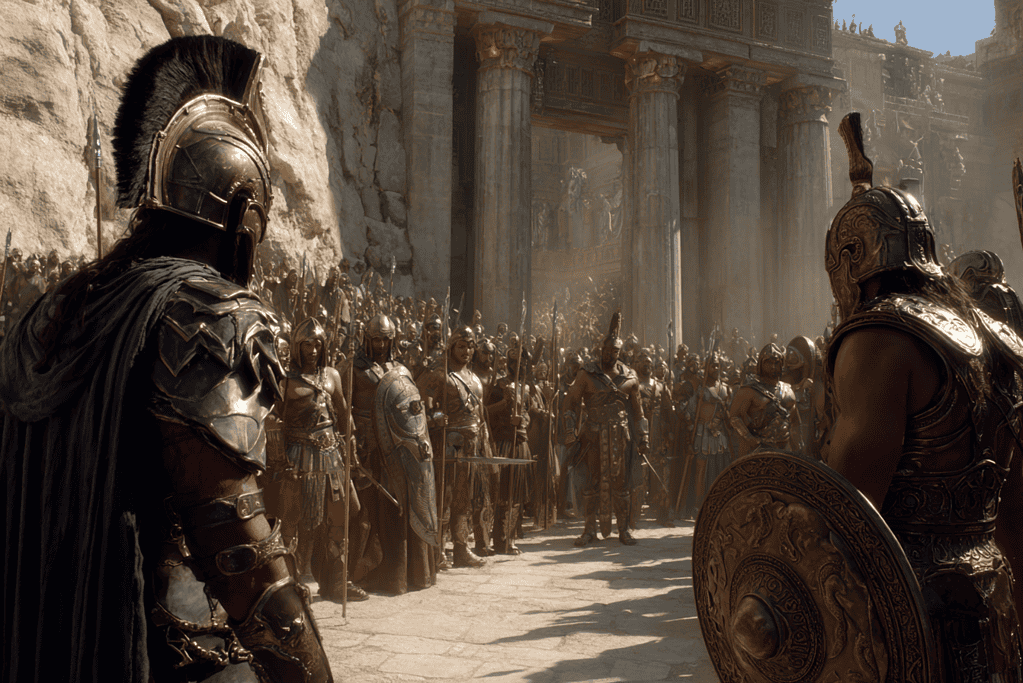
Ancient traditions frequently described Homer as a blind bard, a traveling poet who recited epic poetry orally.
The Homeric Hymn to Apollo refers to a blind man living on the island of Chios, whom many ancient Greeks identified with Homer (see e.g., Homeric Hymn to Apollo, lines 171–178).
This tradition contributed to the image of Homer as an oral poet who composed his works through performance rather than writing.
Modern scholars recognize that the Iliad and the Odyssey originated within an oral poetic tradition, in which epic poetry was transmitted through memorization and recitation (Parry, 1971, pp. 79–80).
Ancient Greek tradition associated Homer with several possible birthplace locations, including Chios, Smyrna, and other cities in Ionia.
What we can see here is that there is still many unknowns surrounding Homer and his life. Some have even wondered if he was a real person to begin with.
The Homeric Hymn to Apollo explicitly mentions Chios, reinforcing its association with Homer’s life and identity.
This uncertainty reflects the deep antiquity of Homer’s tradition and the lack of reliable historical records.
Homer’s epic poems originated in an oral tradition.
The poet used formulaic phrases and repeated patterns to aid memorization and performance.
Milman Parry demonstrated that Homeric poetry relied on formulaic composition, which allowed oral poets to perform lengthy epic poems without written text (Parry, 1971, pp. 79–80).
This oral tradition preserved cultural memory across generations before the poems were written down.
Homer’s works formed the foundation of Greek education.
Greek students learned moral values, history, and religious beliefs through the Iliad and the Odyssey.
Herodotus explicitly credited Homer with shaping Greek understanding of the gods (Herodotus, trans. Godley, 1920, 2.53).
Homer’s influence extended across literature, philosophy, and cultural identity.
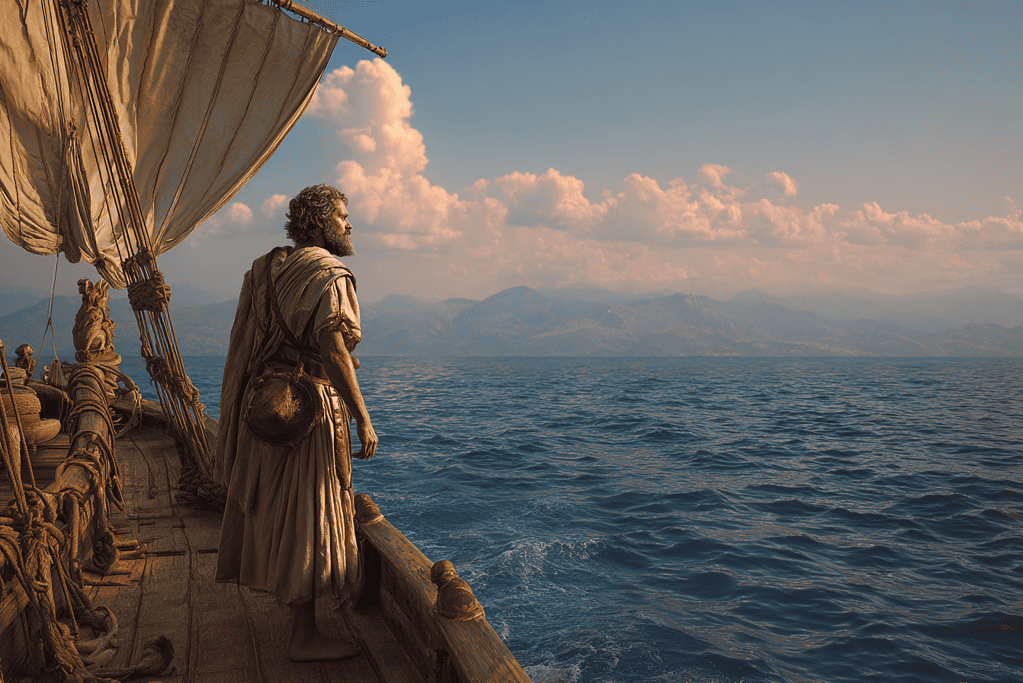
Homer’s epic poems shaped Western literature.
The Iliad and the Odyssey established narrative structures, literary themes, and storytelling techniques still used today.
They represent the earliest surviving examples of literary storytelling in European history.
In other words, despite all the uncertainty surrounding his life, Homer remains one of the most influential authors in history.
Graziosi, B. (2002). Inventing Homer. Cambridge University Press.
Herodotus. (1920). Histories. Harvard University Press.
Homer. (1924). Iliad. Harvard University Press.
Homeric Hymn to Apollo. (2003). Harvard University Press.
Horrocks, G. (2010). Greek: A History of the Language and Its Speakers. Wiley-Blackwell.
Parry, M. (1971). The Making of Homeric Verse. Oxford University Press.

ᛉ 100% handcrafted artisan pagan , viking, witchcraft and shamanic inspired jewelry.
ᛉ Runes, Symbolism & European Folklore
Get 20% off👇🏻
Leave a comment with your result ❤️
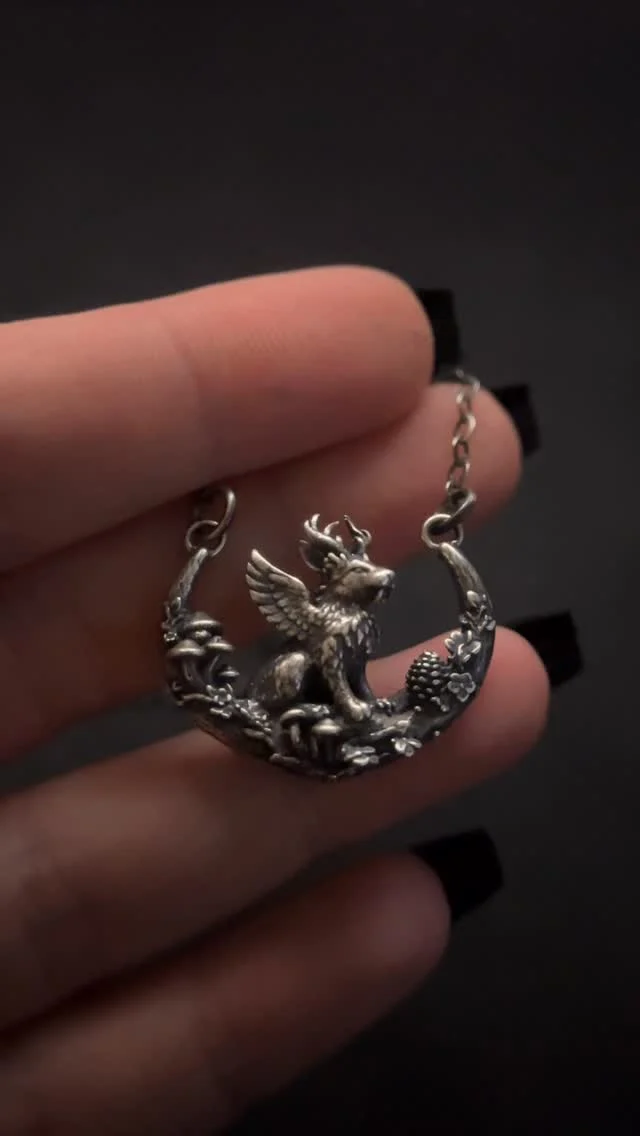
Bavarian Folklore says that you might just cross paths with a Wolpertinger in the alpine...

🐇🌲✨
He finally stepped out of the forest…
The Wolpertinger Pendant has arrived.
Inspired by...

I don’t often sell them, but love it when I do!
Vinca symbol bracelets ❤️...

Rooted in strength + guarded by ravens

The serpent waits 🖤
(Handcrafted Jörmungandr ring made to order in my shop)

Stay warm, everyone ❤️

😑😑😑🤮

I thought I had closed the book on the Alice in Wonderland rings…
But you...

Can this be over now, please?

In case you forgot 💜

Something I’ve been thinking about lately.
If there’s one thing I would’ve done differently early...

This year, we’re not buying things just to keep up.
If you need the reminder:...

My husband is from Bavaria (southern Germany) and I originally made this Krampus pendant for...

Some of the items I’m shipping out today ❤️
Please forgive my dirty nails 😂...

A few items shipping out today 🥰

This mornings rings shipping out ❤️

A few of the rjngs I’m shipping out this morning ❤️
How do you like...

Krampus is coming 🫶🏻

Getting ready to pack up these pretties and ship to their owners ❤️

Freya, cats and pentacles. Doesn’t get any better ❤️

You all got me going crazy making all these fairytale + storybook rings.
But I’ll...

Just launched these pretties ❤️
Size 9 amethyst ring + size 7.25 green kyanite

What would you trade to learn Baba Yaga’s secrets?

It *finally* looks, feels and smells like October!
And here are some items I’m packing...

This mornings pretties getting ready to ship :)

Getting ready to pack up these pretties and ship to their owners ❤️

You bet I’m hopping on this trend 😂
Thank you @shes_sinister for the prompt!

While I welcome the seasonal darkness…it sure is going to make my morning quick videos...

Finally finished the rings I’ve been working on in my stories ❤️
I think I...

Was going to post this update to my stories but it’s too long.

“How do you know I’m mad?” said Alice.
“You must be,” said the Cat, “or...

Some of this mornings orders getting ready to ship. Those little bats are so cute...

Here is the finished ring I was working on in my stories yesterday, along with...

A few of today’s orders shipping out this morning ❤️

The two silver raven rings I was working on in my stories yesterday.
…as well...

Eeeek! I’m so happy to add these to my shop ❤️
I’ve gotten so many...

I had 6 clamshells ready to ship this morning but I dropped and lost my...

Not the story you were told.
The girl didn’t run.
The wolf didn’t win.
This...

I love these raven rings so much 🖤
This mornings pretties shipping out.
All items...

Sleek + minimal Mjölnir ring ⚒️

Today’s orders getting ready to ship.
…And I finally got some time to work on...

That ant ring is so out of place 😂
Not that the mail is coming...

If you had this, which runes would you choose? Or would you accept the runes...

I love making these fun Halloween coffin pendants 🎃
All items you see are always...


About the author Jacqueline Fatica


