No products in the cart.
March 14, 2026 8:34 pm

Free USA shipping on orders $35+
March 14, 2026 8:34 pm
The name Hans Christian Andersen still carries a strange kind of brightness.
His work belongs to the world of the fairy tale, yet it never stays safely inside the boundaries people expect from nursery literature.
The best tales of Hans Christian Andersen are lyrical, unsettling, funny, sorrowful, and often sharper than readers remember.
This article is worth reading if you’d like to know what Andersen wrote, and more importantly, why his stories mattered, how they changed the literary history of the fairy tale, and why they still shape how modern readers imagine enchantment, childhood, suffering, and beauty.
Hans Christian Andersen was far more than a writer of charming children’s literature.
Research repeatedly shows that he should be understood as a major Danish author whose work moved across genres, including novels, plays, poems, and travel writing, even though his reputation now rests most heavily on the fairy tale (Bøggild, 2018, p. 10).
That narrowing of his public image is one of the central issues in Andersen scholarship. A handful of famous texts became so dominant that they partly obscured the range of the writer behind them.
That matters because Hans Christian Andersen’s place in literary history is not accidental.
Scholars describe him as one of the decisive makers of the literary fairy tale, a form that borrows from folk tradition but bears the unmistakable mark of an individual author’s style, imagination, and historical moment (Bøggild, 2018, pp. 10–11).
His stories do not merely repeat old material. They transform it. They take inherited motifs and infuse them with irony, longing, pain, wit, and an often unsettling awareness of social reality.
This is why Andersen’s fairy tales continue to draw scholarly attention. They feel old and new at once.
They come wrapped in the language of wonder, yet they often expose vanity, exclusion, humiliation, hunger, or desire with remarkable clarity. Read carefully, they do not sit quietly on the shelf beside decorative bedtime tales. They still move, sting, and surprise.
One of the most useful findings in the research is that Hans Christian Andersen did not simply gather folk narratives and write them down.
Holbek shows that Andersen, by his own count, published 156 fairy tales and stories, though only a relatively small number were directly taken from Danish oral tradition (Holbek, 2002, pp. 149–158).
In many cases, Andersen invented plots of his own or reworked a wide web of influences rather than transcribing a tale from the mouth of the folk.
That distinction is crucial. It explains why Andersen’s work often feels different from older oral narrative.
He keeps some of the structure, compression, and archetypal force of traditional tale forms, yet he also introduces a highly personal narrative voice.
His prose can sound intimate, teasing, melancholy, or piercingly ironic. A story by Andersen is never just a vessel for plot. The telling itself matters.
In this sense, Hans Christian Andersen fairy tales helped redefine what a literary fairy tale could be.
Instead of functioning only as inherited narrative material, the genre became a space where an author could think about modernity, spiritual longing, social cruelty, material desire, and personal estrangement.
That is one reason Andersen wrote stories that still feel alive. They do not survive only because they are old. They survive because they are artistically shaped.
The early booklets were marketed as texts “told for children,” and that subtitle influenced generations of reception.
Yet one of the strongest arguments in the research is that Andersen’s work always carried a double audience.
Bøggild describes this as a form of “double articulation,” where a child can follow the narrative movement, but an adult reader catches more irony, more tension, and more emotional complexity (Bøggild, 2018, pp. 11–12).
That helps explain why so many readers return to Andersen’s stories later in life and discover an entirely different register.
As children, they may remember the image. As adults, they begin to hear the tonal shifts.
They begin to notice how a sentence can sound warm and cutting at the same time. They notice how often sorrow enters the tale, and how often moral clarity does not arrive in a neat package.
This is where the phrase tales and stories becomes useful.
The Hans Christian Andersen Centre notes that the corpus includes more than what Andersen himself counted among the 156 pieces published in that category, and that the category resists simple labels (The Hans Christian Andersen Centre, 2023).
These are not only told fairy tales in the narrow sense.
They are literary constructions that work across age boundaries. That is one reason the best of them remain among the most wonderful fairy tales in European literature.
This post contains affiliate links. This means that I may receive a small commission if you decide to purchase and not additional cost to you 🙂 This supports my small, handmade jewelry business.
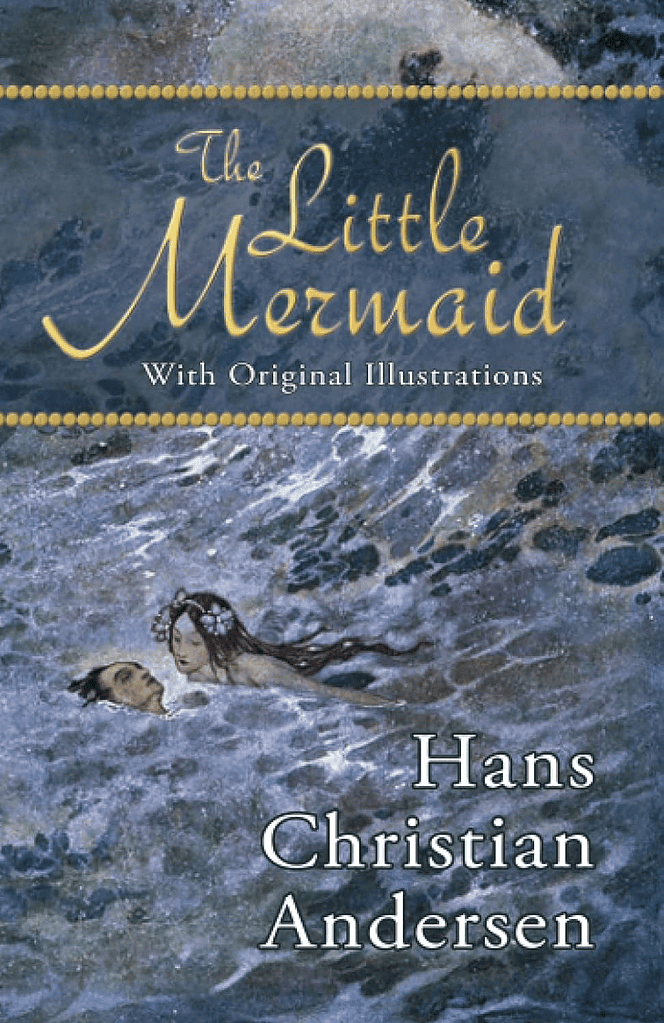
image source www.amazon.com
The little mermaid stands at the center of Andersen scholarship for good reason.
It is one of the most famous texts in the Andersen canon, one of the most adapted, and one of the clearest examples of how he turned the fairy tale into a modern literary form.
Holbek argues that the story is Andersen’s own invention, though built from a dense mix of literary precedents, doctrinal ideas, and folk materials rather than from a single oral source (Holbek, 2002, pp. 149–158).
Easterlin’s reading helps explain why the story feels so memorable.
She points to the elaborate opening description of the undersea realm, which gives the tale a richer and more sustained imaginative setting than many short traditional narratives would provide (Easterlin, 2001, pp. 268–269).
This is not a quick entry into plot. It is atmospheric world building. The result feels less like a generic folktale opening and more like the deliberate threshold of a literary creation.
The emotional power of the little mermaid also lies in its treatment of outsiderhood.
Easterlin notes the heroine’s bodily otherness and her difficult relationship to belonging, which makes the tale far more than a simple romance or sea fantasy (Easterlin, 2001, p. 266).
This is one reason the story stays with readers. It speaks to longing, change, and the pain of crossing between worlds. In that sense, it is not merely like a fairy tale. It is one of the defining literary examples of what a fairy tale can do.

image source www.amazon.com
If readers want to see how differently Andersen could handle form, the princess and the pea and new clothes make an excellent pair.
The first is tiny, almost crystalline in its brevity. The second is broader in its social satire. Both are enduringly memorable. Both have helped shape the common image of Andersen in public culture.
Princess and the pea condenses aristocratic testing, sensitivity, and legitimacy into a nearly absurd experiment.
It is funny on the surface, yet the joke carries a social edge.
Bøggild’s work on double articulation makes it easier to see why the story survived so well: a child can delight in the oddity of the pea beneath the mattresses, but an adult can hear a satire about signs of rank and the logic of credentialed refinement (Bøggild, 2018, pp. 11–12).
New clothes, or more fully The Emperor’s New Clothes, remains one of Andersen’s sharpest social tales.
The story exposes vanity, fear, performance, and collective dishonesty. Its simplicity gave it extraordinary portability across cultures.
The phrase emperor’s new clothes became larger than the tale itself. Yet this ease of circulation has a consequence.
It helps keep Andersen visible, but it can make him appear simpler than he was. The tale’s endurance is deserved, though it should not eclipse the complexity of the broader fairy tales of hans christian.
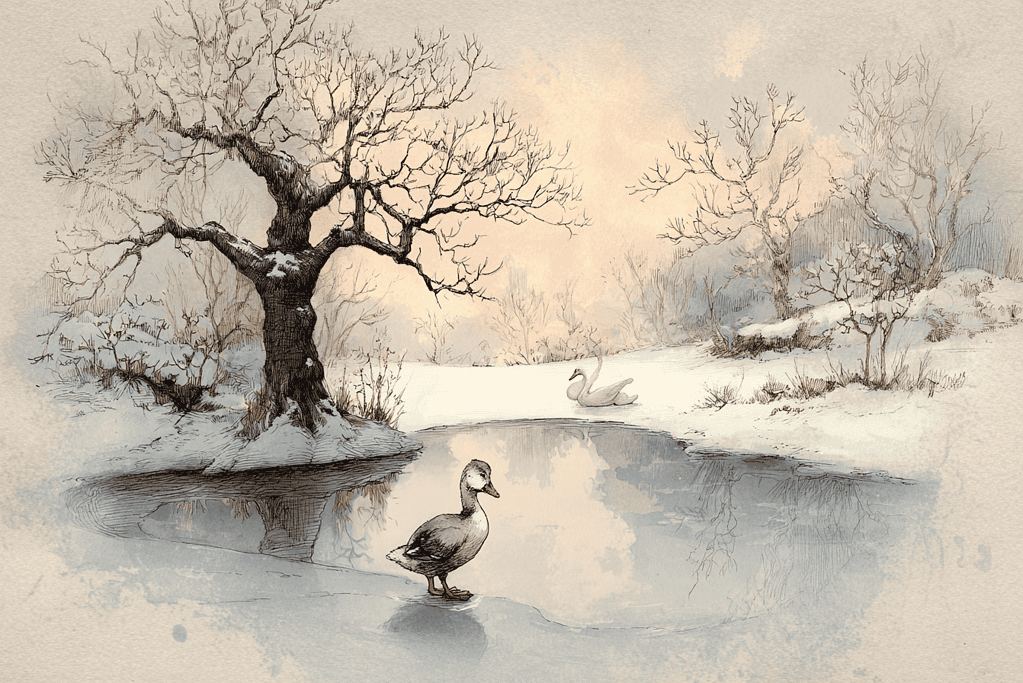
The ugly duckling is often treated as if it were a transparent allegory of Andersen’s own life. Scholars are more cautious.
Zipes warns against making the tale a neat biographical equation, since such readings can turn a difficult literary work into a comforting myth about delayed recognition (Zipes, 2006, p. 224).
That warning is worth keeping in mind, even though the autobiographical temptation is easy to understand.
The story is powerful because it dramatizes exclusion with unusual emotional clarity. The humiliations accumulate. The creature’s loneliness is not decorative. It is felt.
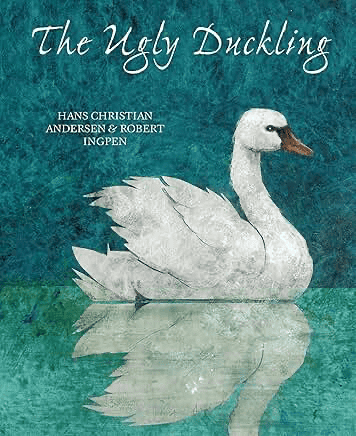
image source www.amazon.com
That is one reason the final revelation of the swan carries such force. The transformation is not merely visual. It resolves a long experience of being misread, rejected, and wounded by the world.
Among many more classic stories, this one endures because it speaks to the human desire to become visible in one’s true form.
It is one of those rare pieces that almost everyone thinks they know, yet it still deepens when read carefully.
In the long line of Andersen stories, the ugly duckling remains one of the clearest examples of how a simple narrative movement can carry emotional and symbolic weight.
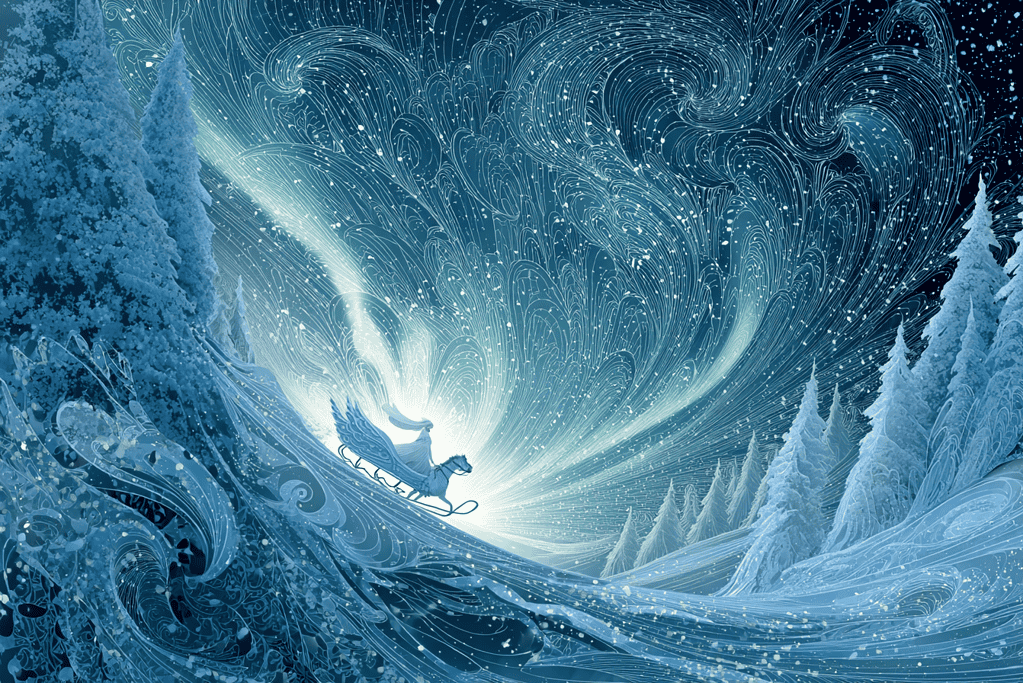
The snow queen is often singled out as one of Andersen’s most ambitious works, and the research supports that judgment.
It is not a brief anecdotal tale but an extended composition “in seven stories,” with a larger architecture than many readers expect from the fairy tale form (The Hans Christian Andersen Centre, 2023). That structure alone makes it important.
Its greatness, though, does not lie only in length.
The story shifts tone repeatedly. It moves from the uncanny to the tender, from sharp imagery to spiritual resonance.
Bøggild’s discussion of Andersen’s global iconography helps explain why the snow queen became such a fertile source for later adaptation: it contains images and tensions that can be extracted, reworked, and reframed in many ways (Bøggild, 2018, p. 10). Yet the original tale is richer than most of its afterlives.
This is where translation becomes especially important.
image source www.amazon.com
Bøggild argues that English-language traditions have often smoothed out Andersen’s strangeness and stylistic difficulty (Bøggild, 2018, pp. 21–22).
In a tale like the snow queen, that smoothing can reduce formal friction that is actually part of the artistry.
The story deserves to be read not just as source material for later fantasy, but as one of Andersen’s most fully realized literary achievements.
If readers think Andersen only wrote airy or sentimental classic fairy tales, red shoes will correct that assumption very quickly.
Felcht’s article is especially important here.
She shows that the tale can be read in relation to modern commodity culture, display, and the disturbing power of objects in nineteenth-century life (Felcht, 2013, p. 5).
The shoes do not merely symbolize temptation. They become agents within the narrative.
That interpretation matters because it places Andersen inside modernity rather than outside it. He is not simply a nostalgic writer preserving old wonder against the modern world.
He is a writer thinking through how things, desires, and social forms shape human experience. In red shoes, enchantment is bound up with consumption, shame, and loss of control.
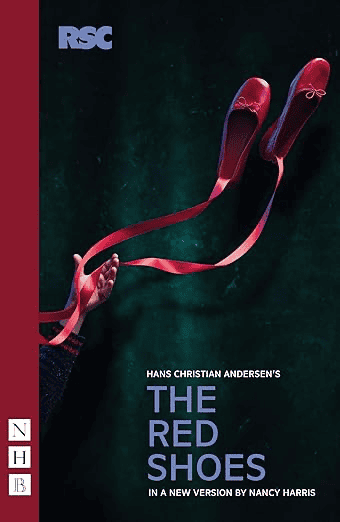
image source www.amazon.com
This tale is a good example of why scholars keep returning to Andersen. He could make an object glow with symbolic power, but he could also make that power frightening.
The result is not a moral fable in any flat sense. It is a literary narrative where desire becomes visible, and where the material world presses back against the human subject.
The nightingale is not analyzed at length in every source above, yet it belongs among Andersen’s major works because it illuminates one of his recurring concerns: the tension between living truth and lifeless imitation.
In literary terms, the contrast between the real bird and its artificial substitute helps show Andersen’s ongoing interest in authenticity, performance, and value.
These are not minor questions in his writing. They run quietly through many texts.
The match girl, by contrast, reveals how much sorrow Andersen could compress into a very short form.
The tale stages poverty, indifference, fragile vision, and death without softening the blow.
Bøggild’s work on audience helps explain why the tale unsettles so strongly: it can be read by children, but it is structured to wound the adult conscience as well (Bøggild, 2018, pp. 10–12).
Erslew’s bibliographic record adds another important detail by showing the story’s first appearance in a calendar context, which reminds us that Andersen’s work circulated in varied print settings rather than only in canonical collections (Erslew, 1843–1868, p. 27).
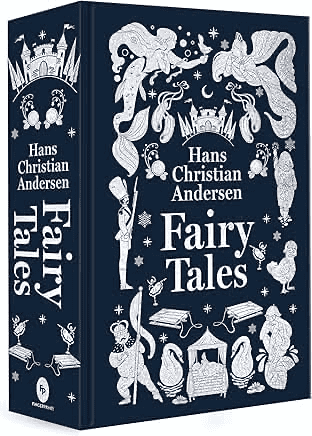
image source www.amazon.com
These pieces help show the breadth of the corpus.
Alongside the little mermaid, the snow queen, the ugly duckling, and the princess and the pea, they form part of a wider constellation of delightful stories and troubling visions.
A reader who begins with three tales soon discovers many others waiting behind them.
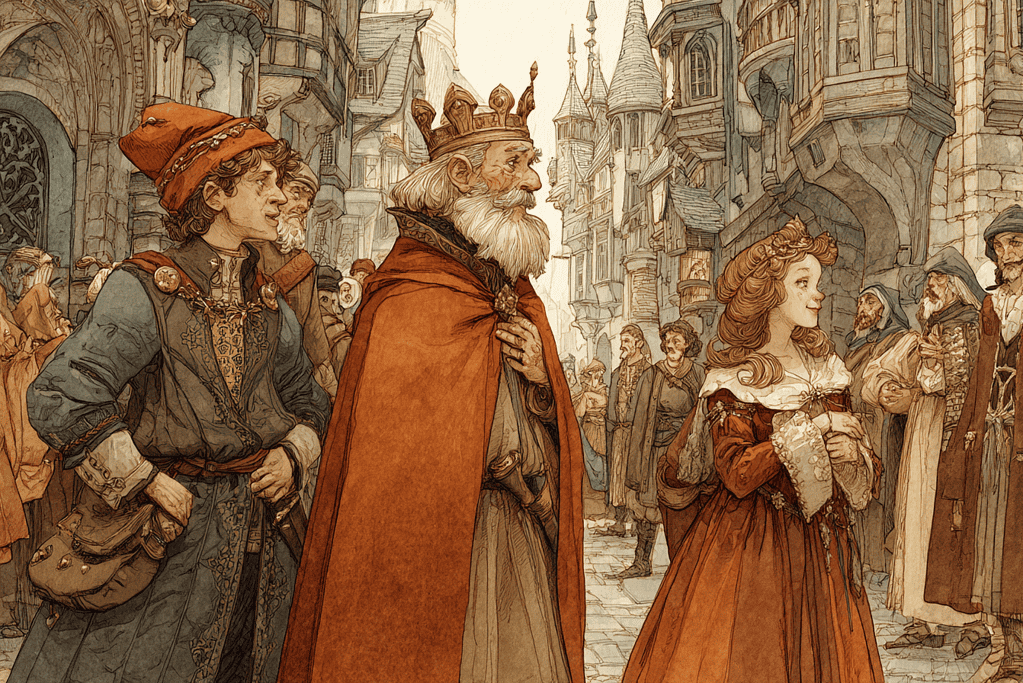
One of the strongest conclusions in the research is that the global image of Hans Christian Andersen fairy tale writing has been shaped as much by translation and adaptation as by direct reading.
Bøggild argues that English translation has often normalized Andersen’s stylistic oddities, toning down the qualities that make the original prose so singular (Bøggild, 2018, pp. 17–22).
That process helped create a more domesticated author, easier to market as a benign children’s classic.
Adaptation has done something similar. Screen versions of the little mermaid, loose reimaginings of the snow queen, and the continued circulation of new clothes in popular culture all keep Andersen famous. Yet fame can distort.
Zipes points out that public images of Andersen have often drifted away from the documentary writer and toward a more pleasant and simplified figure (Zipes, 2006, p. 224).
That simplification has consequences for how the texts are taught, marketed, and remembered.
At the same time, the public domain status of Andersen’s work keeps the stories alive in new ways. Artists, translators, publishers, and teachers continue to reshape them.
That openness has real value. It lets Hans Christian Andersen fairy tales travel widely.
Still, the literary originals deserve careful reading.
They are richer, stranger, and more intellectually alive than their flattened reputation suggests. That is why the tales from Hans Christian Andersen still reward serious attention.
To read Andersen well is to recognize that he stands between folklore and literature, between oral echo and crafted prose, between childhood memory and adult unease.
His stories remain central not only because they are beautiful, but because they ask difficult questions in forms that appear deceptively simple.
They can look small on the page and still open into enormous moral and emotional space.
That is why Hans Christian Andersen fairy tales continue to matter.
They are part of literary history, part of cultural memory, and part of the living afterlife of the European fairy tale.
The best way to honor that legacy is not to turn the author into a harmless icon, but to read him closely, patiently, and with full attention to the research, the language, and the strange light in the stories.
Bøggild, J. (2018). Hans Christian Andersen: A cultural icon lost in translation. Forum for World Literature Studies, 10(1), 10–22.
Easterlin, N. (2001). Hans Christian Andersen’s fish out of water. Philosophy and Literature, 25(2), 251–277. https://doi.org/10.1353/phl.2001.0028
Erslew, T. H. (1843–1868). Almindeligt Forfatter-Lexicon for Kongeriget Danmark med tilhørende Bilande, fra 1814 til 1840 (Supplement. Første Bind. A—J, p. 27). Project Runeberg facsimile.
Felcht, F. (2013). Fairy-tale realism: Hans Christian Andersen and the modern world of things. Sociología y tecnociencia / Sociology and Technoscience, 3(1), 1–11.
Holbek, B. (2002). Hans Christian Andersen’s use of folktales. In H. R. Ellis Davidson & A. Chaudhri (Eds.), A Companion to the Fairy Tale (pp. 149–158). Boydell & Brewer.
The Hans Christian Andersen Centre. (2023). Hans Christian Andersen: Fairy tales – 213 titles (work register index) and individual work-info entries. University of Southern Denmark.
Zipes, J. (2006). Critical reflections about Hans Christian Andersen, the failed revolutionary. Marvels & Tales, 20(2), 224–237. https://doi.org/10.1353/mat.2007.0021

ᛉ 100% handcrafted artisan pagan , viking, witchcraft and shamanic inspired jewelry.
ᛉ Runes, Symbolism & European Folklore
Get 20% off👇🏻

Five witches dance around a blazing bonfire beneath a citrine cabochon in this Walpurgisnacht pendant....
Happy washing day 🙃
A few rings I’ve worked on the last couple days…
Freya’s cats rule and dogs drool?
Or was that the other way around? 🙃

Garm barely shows up in the old Norse stories.
Still… he leaves a mark.
A...
Leave a comment with your result ❤️
Bavarian Folklore says that you might just cross paths with a Wolpertinger in the alpine...

🐇🌲✨
He finally stepped out of the forest…
The Wolpertinger Pendant has arrived.
Inspired by...

I don’t often sell them, but love it when I do!
Vinca symbol bracelets ❤️...

Rooted in strength + guarded by ravens

The serpent waits 🖤
(Handcrafted Jörmungandr ring made to order in my shop)

Stay warm, everyone ❤️

😑😑😑🤮

I thought I had closed the book on the Alice in Wonderland rings…
But you...

Can this be over now, please?

In case you forgot 💜

Something I’ve been thinking about lately.
If there’s one thing I would’ve done differently early...

This year, we’re not buying things just to keep up.
If you need the reminder:...

My husband is from Bavaria (southern Germany) and I originally made this Krampus pendant for...

Some of the items I’m shipping out today ❤️
Please forgive my dirty nails 😂...

A few items shipping out today 🥰

This mornings rings shipping out ❤️

A few of the rjngs I’m shipping out this morning ❤️
How do you like...

Krampus is coming 🫶🏻

Getting ready to pack up these pretties and ship to their owners ❤️

Freya, cats and pentacles. Doesn’t get any better ❤️

You all got me going crazy making all these fairytale + storybook rings.
But I’ll...

Just launched these pretties ❤️
Size 9 amethyst ring + size 7.25 green kyanite

What would you trade to learn Baba Yaga’s secrets?

It *finally* looks, feels and smells like October!
And here are some items I’m packing...

This mornings pretties getting ready to ship :)

Getting ready to pack up these pretties and ship to their owners ❤️

You bet I’m hopping on this trend 😂
Thank you @shes_sinister for the prompt!

While I welcome the seasonal darkness…it sure is going to make my morning quick videos...

Finally finished the rings I’ve been working on in my stories ❤️
I think I...

Was going to post this update to my stories but it’s too long.

“How do you know I’m mad?” said Alice.
“You must be,” said the Cat, “or...

Some of this mornings orders getting ready to ship. Those little bats are so cute...

Here is the finished ring I was working on in my stories yesterday, along with...

A few of today’s orders shipping out this morning ❤️

The two silver raven rings I was working on in my stories yesterday.
…as well...

Eeeek! I’m so happy to add these to my shop ❤️
I’ve gotten so many...

I had 6 clamshells ready to ship this morning but I dropped and lost my...

Not the story you were told.
The girl didn’t run.
The wolf didn’t win.
This...

I love these raven rings so much 🖤
This mornings pretties shipping out.
All items...

Sleek + minimal Mjölnir ring ⚒️


About the author Jacqueline Fatica


