No products in the cart.
March 10, 2026 8:08 pm

Free USA shipping on orders $35+
March 10, 2026 8:08 pm
Across many cultures, the figure of the goddess appears in mythology, religion, and folklore. These divine women represent wisdom, love, fertility, war, nature, and the cosmic forces that shape the world.
From the earliest primordial goddess figures to the complex pantheons of Greece, Rome, Scandinavia, and India, the goddess has remained a central symbol of divine feminine in nature, the human soul and beyond.
Today, many parents searching for meaningful names look toward mythology for inspiration.
Our own daughter was actually named after such a mythological force from a medieval manuscript called Merseburg Charms, an old text in Old High German dating back to the 9th Century.
Indeed, such names can carry tremendous cultural history, heritage, symbolism, and often a poetic meaning connected to nature or the heavens.
Many of these ancient deities left names that are still used today as personal names. Others remain rare but recognizable choices for families interested in mythology.
The following guide explores female goddess names across several mythological traditions and highlights those that also work as modern goddess names.
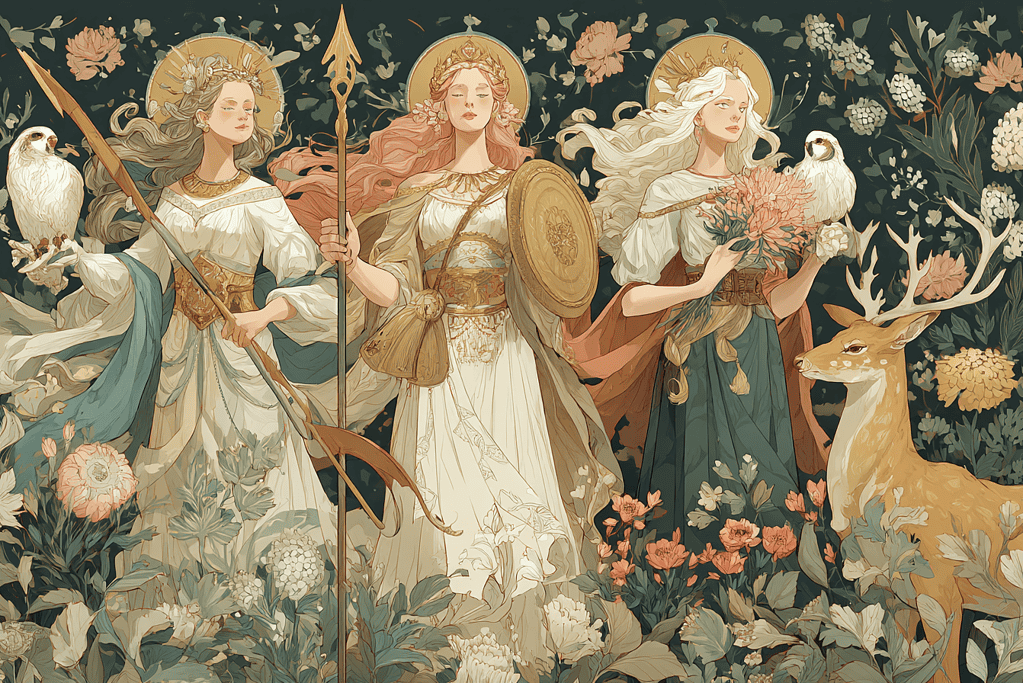
In ancient religions, a goddess often represented natural forces and spiritual ideas.
Some divine women governed agriculture or fertility, while others appeared as the goddess of love, the goddess of war, or the goddess of wisdom.
One of the earliest divine figures is Gaia, the primordial goddess and earth goddess of Greek mythology.
Gaia emerged from chaos and became the personification of mother earth, a primordial mother and a personification of the earth itself.
In myth she is the mother of gods, giving birth to the Titans and shaping the earliest generation of divine beings.
This concept of a mother goddess appears in many cultures across cultures around the world, reflecting humanity’s long-standing reverence for nature and creation.
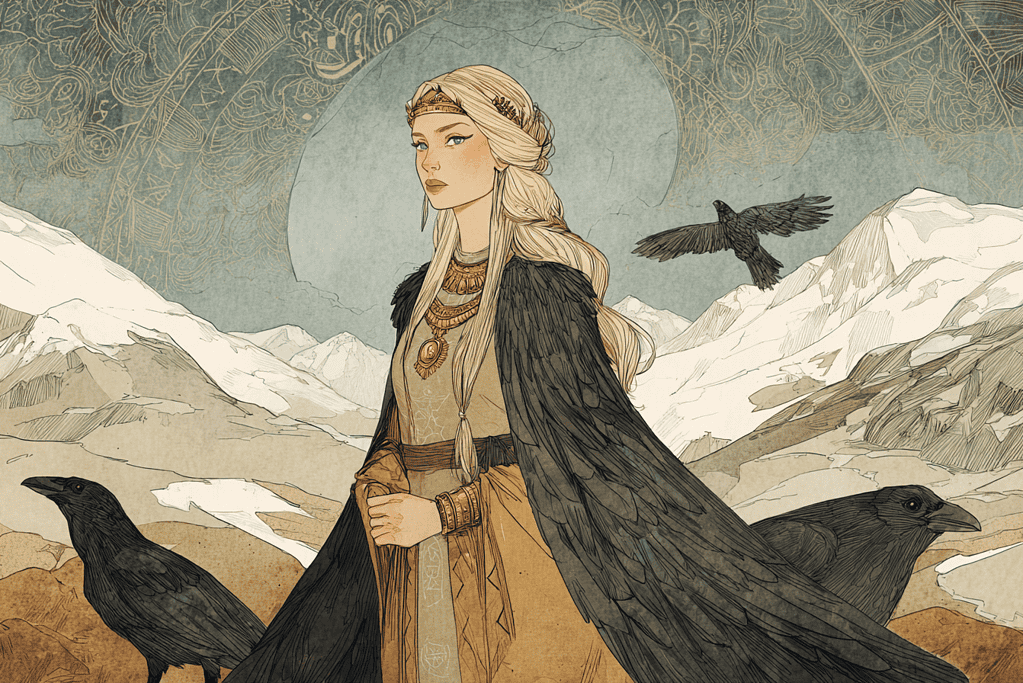
The richest collection of female goddess names comes from Greek mythology, where the Olympian gods ruled the cosmos under the leadership of Zeus.
Athena is the goddess of wisdom, strategy, and intelligent warfare. Born from the head of Zeus, Athena became the patron deity of Athens and symbolized intellect and leadership.
Today, Athena remains a recognizable baby name and one of the most famous Greek goddess names.
Artemis is a virgin goddess associated with the hunt and wilderness. She is also known as a goddess of the moon, guiding the lunar chariot through the night sky.
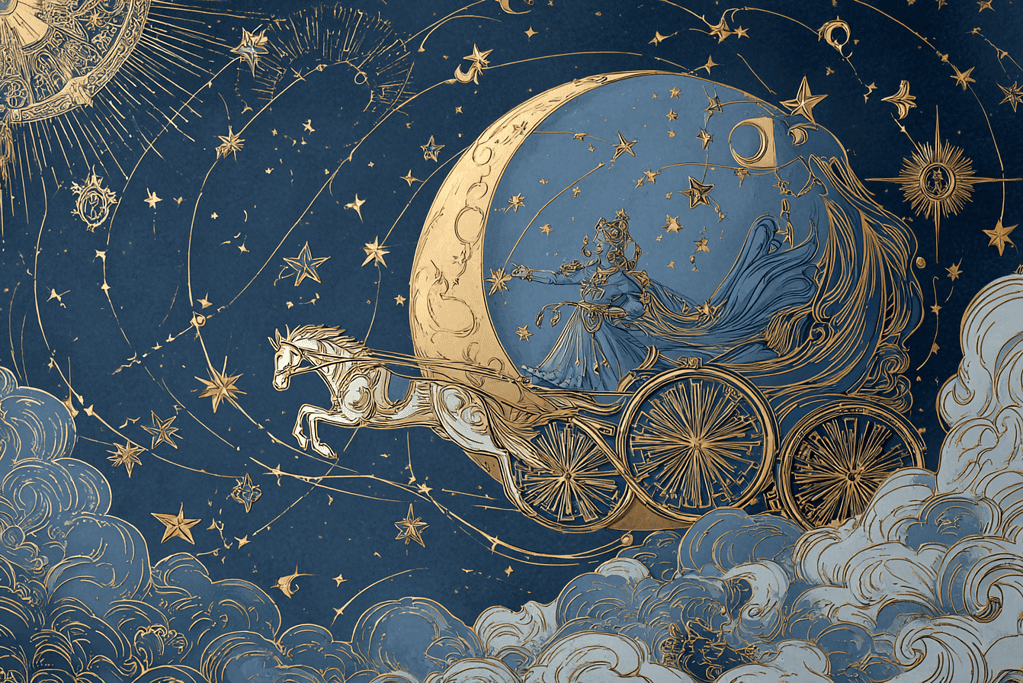
Persephone, daughter of Demeter, became queen of the underworld after being taken by Hades. Her annual return to earth symbolizes rebirth and the arrival of spring.
Because of this myth, Persephone is sometimes described as a goddess of spring.
Selene represents the moon and is the celestial personification of lunar light in Greek myth.
Phoebe was a Titan goddess associated with prophecy and lunar symbolism. Her name means “bright” or “radiant.”
Calliope, also written Kalliope, was the muse of epic poetry among the nine Muses. Another Muse was known as the muse of sacred poetry, representing spiritual inspiration.
Hecate is a mysterious goddess connected with magic, crossroads, and night. In later traditions she appears as a goddess of the moon and guardian of mythical spaces and realms.
Aphrodite, the famous goddess of love, beauty, and desire, plays a major role in many Greek myths.
The religion of ancient Rome preserved many divine figures adapted from Greek traditions but expressed in Roman culture.
Flora is the roman goddess of flowers and spring vegetation. Her festival Floralia celebrated blooming plants and fertility.
Flora remains a popular name today and represents the goddess of flowers and spring.
Aurora is the personification of the dawn and appears each morning bringing sunlight to the world.
Tyche, known in Roman tradition as Fortuna, is the goddess of fortune and luck.
In Norse mythology, divine women also held important roles in shaping fate.
Freya is the most famous norse goddess, associated with fertility, beauty, and magic. She is often described as the norse goddess of love, but also shares dominion over fallen warriors.
Freya remains one of the most widely used norse goddess names today.
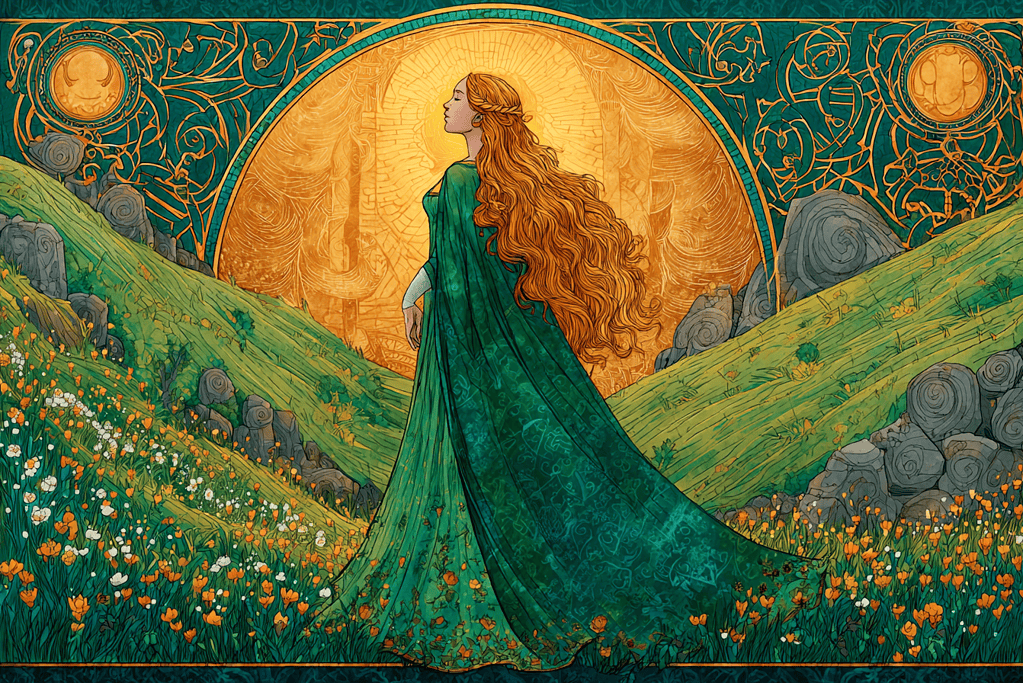
The celtic goddess frequently appears in myths connected with land, fertility, and sovereignty.
Aine is an Irish goddess associated with summer and fertility. The name remains a traditional Irish name.
The divine feminine also plays a central role in hindu traditions.
Lakshmi is a revered hindu goddess associated with wealth and prosperity. In Hindu belief she is a manifestation of the universal feminine principle known as Devi.
Many female goddess names eventually became everyday names. Some remain common today while others are rare but recognizable choices.
Below is a large list of goddess names for baby girls drawn from mythology.
| Goddess Name | Mythology | Association | Used as Personal Name |
|---|---|---|---|
| Athena | Greek | Goddess of wisdom | Yes |
| Artemis | Greek | Goddess of the moon and hunt | Rare |
| Phoebe | Greek | Titan goddess of prophecy | Yes |
| Selene | Greek | Moon goddess | Yes |
| Persephone | Greek | Queen of the underworld | Rare |
| Iris | Greek | Greek goddess of the rainbow | Yes |
| Gaia | Greek | Primordial earth goddess | Yes |
| Demeter | Greek | Goddess of the earth and harvest | Rare |
| Hera | Greek | Queen of the gods | Rare |
| Rhea | Greek | Titan mother goddess | Yes |
| Diana | Roman | Goddess of the moon and hunting | Yes |
| Flora | Roman | Roman goddess of flowers | Yes |
| Aurora | Roman | Goddess of dawn | Yes |
| Maia | Roman | Goddess of growth and fertility | Yes |
| Luna | Roman | Moon goddess | Yes |
| Freya | Norse | Goddess of love and magic | Yes |
| Frigg | Norse | Goddess of marriage | Rare |
| Idunn | Norse | Goddess of youth | Rare |
| Saga | Norse | Goddess of storytelling | Yes |
| Brigid | Celtic | Goddess of poetry and healing | Yes |
| Bridget | Celtic | Later form of Brigid | Yes |
| Rhiannon | Celtic | Horse and sovereignty goddess | Yes |
| Aine | Celtic | Goddess of summer | Yes |
| Lakshmi | Hindu | Goddess of prosperity | Yes |
| Saraswati | Hindu | Goddess of knowledge | Yes |
| Parvati | Hindu | Mother goddess | Yes |
| Durga | Hindu | Warrior goddess | Yes |
| Kali | Hindu | Goddess associated with time | Yes |
The enduring popularity of ancient goddess names reflects humanity’s fascination with mythology.
Across cultures, divine women appear as protectors, creators, and embodiments of natural forces.
Some represent the goddess of justice, others the goddess of war, while still others embody the goddess of the earth or fertility. Meaning depends on cultural and historical contexts.
For parents searching for unique goddess names, mythology often offers a rich source of inspiration.
From the earliest ancient goddess names to the complex mythologies of Greece, Rome, Scandinavia, and India, the goddess has played a central role in religious imagination.
These divine figures symbolized wisdom, love, creativity, fertility, and cosmic order. Their stories shaped the spiritual traditions of ancient civilizations.
Today, parents looking for meaningful goddess names for girls continue to find inspiration in these mythological traditions.
Names such as Athena, Freya, Aurora, and Lakshmi show how ancient mythology still lives on through language and culture.
Choosing a goddess name connects a child with stories that have endured for thousands of years.
Burkert, W. (1985). Greek religion (J. Raffan, Trans.). Harvard University Press.
Hesiod. (2006). Theogony (M. L. West, Trans.). Oxford University Press.
Homer. (1996). The Iliad (R. Fagles, Trans.). Penguin Classics.
Homer. (1996). The Odyssey (R. Fagles, Trans.). Penguin Classics.
Lindow, J. (2002). Norse mythology: A guide to gods, heroes, rituals, and beliefs. Oxford University Press.
MacKillop, J. (1998). A dictionary of Celtic mythology. Oxford University Press.
Macdonell, A. A. (1897). Vedic mythology. Karl J. Trübner.
Simek, R. (1996). Dictionary of Northern mythology (A. Hall, Trans.). D. S. Brewer.
Snorri Sturluson. (1995). Edda (A. Faulkes, Trans.). Everyman.

ᛉ 100% handcrafted artisan pagan , viking, witchcraft and shamanic inspired jewelry.
ᛉ Runes, Symbolism & European Folklore
Get 20% off👇🏻

Happy washing day 🙃
A few rings I’ve worked on the last couple days…
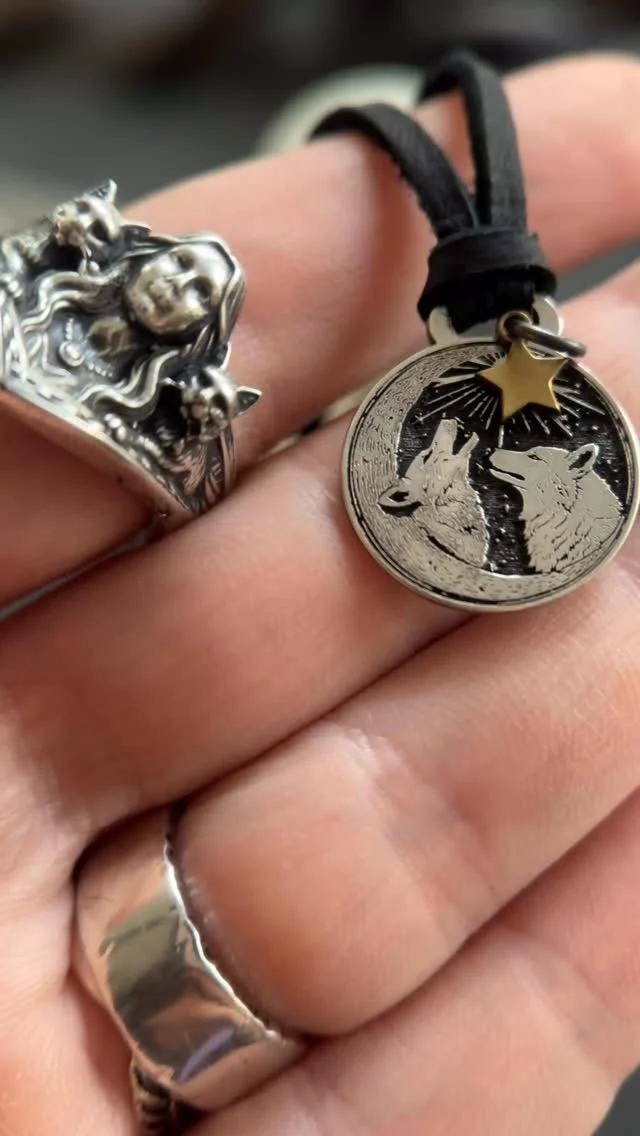
Freya’s cats rule and dogs drool?
Or was that the other way around? 🙃

Garm barely shows up in the old Norse stories.
Still… he leaves a mark.
A...

Leave a comment with your result ❤️
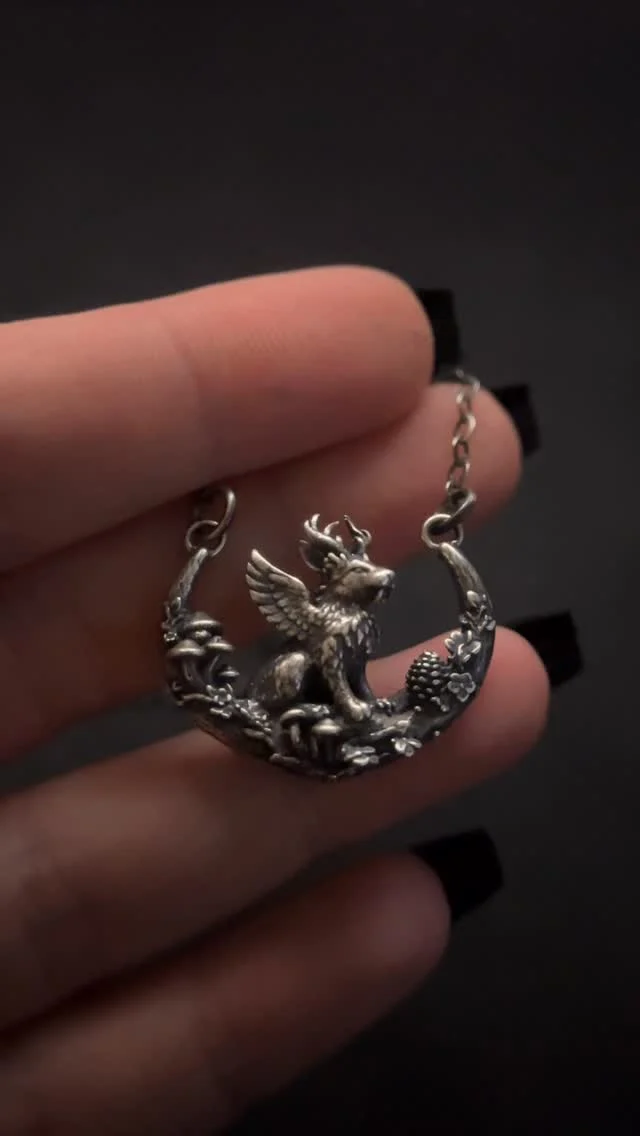
Bavarian Folklore says that you might just cross paths with a Wolpertinger in the alpine...

🐇🌲✨
He finally stepped out of the forest…
The Wolpertinger Pendant has arrived.
Inspired by...

I don’t often sell them, but love it when I do!
Vinca symbol bracelets ❤️...

Rooted in strength + guarded by ravens

The serpent waits 🖤
(Handcrafted Jörmungandr ring made to order in my shop)

Stay warm, everyone ❤️

😑😑😑🤮

I thought I had closed the book on the Alice in Wonderland rings…
But you...

Can this be over now, please?

In case you forgot 💜

Something I’ve been thinking about lately.
If there’s one thing I would’ve done differently early...

This year, we’re not buying things just to keep up.
If you need the reminder:...

My husband is from Bavaria (southern Germany) and I originally made this Krampus pendant for...

Some of the items I’m shipping out today ❤️
Please forgive my dirty nails 😂...

A few items shipping out today 🥰

This mornings rings shipping out ❤️

A few of the rjngs I’m shipping out this morning ❤️
How do you like...

Krampus is coming 🫶🏻

Getting ready to pack up these pretties and ship to their owners ❤️

Freya, cats and pentacles. Doesn’t get any better ❤️

You all got me going crazy making all these fairytale + storybook rings.
But I’ll...

Just launched these pretties ❤️
Size 9 amethyst ring + size 7.25 green kyanite

What would you trade to learn Baba Yaga’s secrets?

It *finally* looks, feels and smells like October!
And here are some items I’m packing...

This mornings pretties getting ready to ship :)

Getting ready to pack up these pretties and ship to their owners ❤️

You bet I’m hopping on this trend 😂
Thank you @shes_sinister for the prompt!

While I welcome the seasonal darkness…it sure is going to make my morning quick videos...

Finally finished the rings I’ve been working on in my stories ❤️
I think I...

Was going to post this update to my stories but it’s too long.

“How do you know I’m mad?” said Alice.
“You must be,” said the Cat, “or...

Some of this mornings orders getting ready to ship. Those little bats are so cute...

Here is the finished ring I was working on in my stories yesterday, along with...

A few of today’s orders shipping out this morning ❤️

The two silver raven rings I was working on in my stories yesterday.
…as well...

Eeeek! I’m so happy to add these to my shop ❤️
I’ve gotten so many...

I had 6 clamshells ready to ship this morning but I dropped and lost my...

Not the story you were told.
The girl didn’t run.
The wolf didn’t win.
This...

I love these raven rings so much 🖤
This mornings pretties shipping out.
All items...

Sleek + minimal Mjölnir ring ⚒️

Today’s orders getting ready to ship.
…And I finally got some time to work on...


About the author Jacqueline Fatica


