No products in the cart.
November 19, 2025 12:16 pm

Free USA shipping on orders $35+
November 19, 2025 12:16 pm
Fairy folklore stretches across Europe in ways most people never imagine. While many associate the fae with Ireland or Scotland, the history of fairies runs far deeper and spans far more territory.
These beings appear in myths and legends, healing and harming, seducing and protecting, blurring the line between the living world and the otherworld.
This article is worth reading if you want a detailed, evidence-based look at the fae folk across Europe, of course rooted in academic research, ethnography, and historical sources.
You’ll see how fairy lore in Scandinavia, Southeastern Europe, and the British Isles emerges from shared mythic structures, pre-Christian goddess traditions, and centuries of communal experience.
The etymology of the term fairy reveals just how ancient these beliefs are. While many today imagine small winged beings resembling Tinkerbell, the older traditions describe powerful spirits deeply embedded in mythology and folklore.
In the Indo-European world including Germanic, Celtic, and Slavic cultures, mythical ideas predate the separation of individual languages.
These ancient spirits evolved into the fae, faeries, elves, and other supernatural creatures we recognize in later stories.
The term fairy has roots in Old French faerie, meaning “the realm of enchantment,” “magic,” or “the enchanted state.”
This reveals that fairies were not originally diminutive creatures, however, they were forces, entities tied to fate, wilderness, fertility, and the blurred boundary between humans and spirits.
This older understanding has nothing to do with the modern depiction of fairies. Instead, fairies were powerful, capricious, sometimes benevolent but often dangerous.
Understanding this linguistic past gives readers a deeper appreciation of how fairy folklore developed and why fairies remain one of the most mysterious mythical beings of folklore.
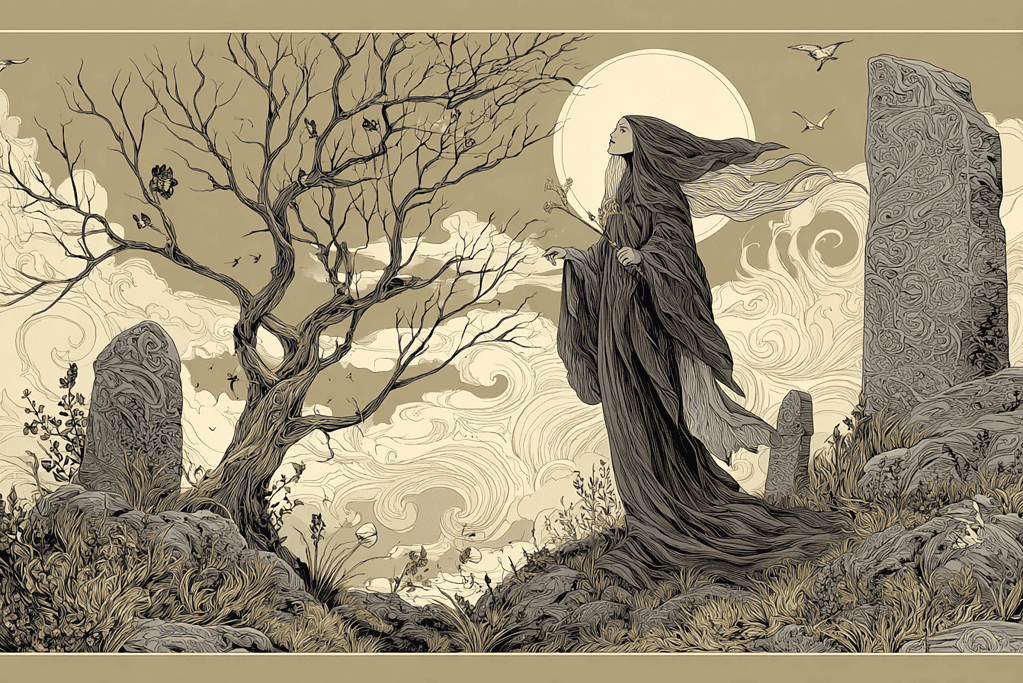
One of the most fascinating threads in European fairy folklore is the survival of an older magician-goddess figure. This powerful deity appears in traditions as different as:
(Gimbutas, 2001, p. 120)
This goddess archetype is often associated with storms, fertility, sexuality, weather, death, and regeneration, and domains later inherited by fairies, witches, or human ritual practitioners.
Unlike the modern depiction of fairies, these figures wielded magic powers and held immense sway over nature.
Over time, this magician-goddess merged into the idea of the fae, shaping traditions where fae folk could appear as beautiful seductresses, terrifying storm-callers, or wise healers.
They were not merely spirits of nature; they could influence crops, cattle, and human destiny.
This connection to goddess traditions hints at the pre-Christian foundations of the history of fairies, revealing them as echoes of a much older religious layer.
In Scandinavia, the elf (álfr) is central to both medieval literature and rural memory.
Old sources like the Elder Edda and Book of Settlements mention elves alongside gods, warriors, and shapeshifters (Kvideland & Sehmsdorf, 1988, p. 23).
Nordic fairy lore did not fade after the Viking Age, i.e., it continued well into the 19th and 20th centuries.
Rural Scandinavians believed in the Huldrefolk, or hidden folk, who lived in hills, forests, or fairy mounds.
These beings were not sweet or harmless; they were mischievous, seductive, and powerful. Their influence marked the land itself:
These beings were treated with caution, reverence, and offerings. Even in modern times, many claimed to have seen a fairy or heard the hidden folk singing under the hills.
This deep presence of elves in Scandinavian tradition makes them one of the most enduring types of fae in European history.
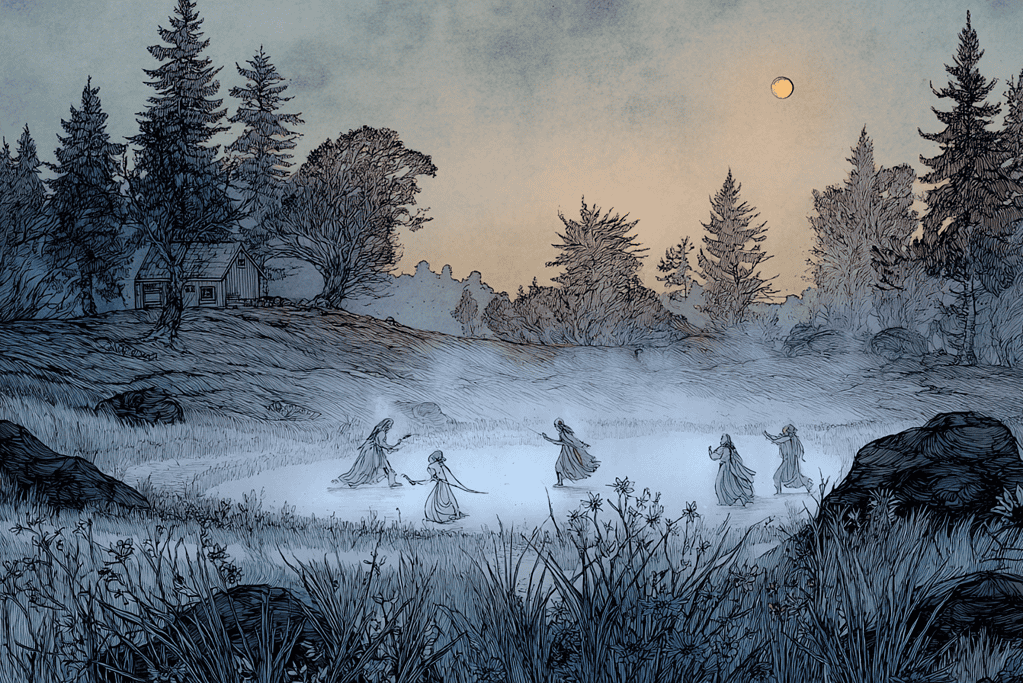
Stories of the fae in northern Europe often involve enchantment, illness, or abduction.
In Denmark and Norway, children might be lured into the moors by fairy music, as in the haunting tale of Niels who was found days later, shaken and half-mad (Kvideland & Sehmsdorf, 1988, p. 213).
Such encounters reflect the nature of the fae as unpredictable, capable of kindness or cruelty.
Illnesses labeled “elf-shot” were believed to be inflicted when humans crossed unseen boundaries, e.g. by stepping on a fairy fort, disrupting a fairy ring, or offending fair folk who guarded the hills.
To protect themselves, families relied on charms and rituals, blending Christian blessings with older faerie folklore(Kvideland & Sehmsdorf, 1988, p. 9).
This mixture of religious customs shaped a living fairy folklore where sacred and ordinary life merged seamlessly.
Scandinavian beliefs show a vivid blending of celtic mythology, Germanic ideas, and Christian rituals. Odin coexisted with elves; house spirits shared space with church blessings
. This spiritual ecosystem formed a world where people lived with one foot in the human world and one foot in fairyland.
In this worldview, the fairy realm overlapped with everyday life.
The fae were not gone after conversion, they simply shifted into new roles. Charms invoked saints and elves in the same breath.
This mixing of beliefs explains why fairies are said to punish arrogance, bless the generous, or guard the hearth.
It also explains why later Christian authorities misunderstood fairy rites as witchcraft.
This layered spirituality is one of the most compelling aspects of the history of fairies, revealing a tradition far richer than the usual modern interpretations.
In Southeastern Europe, the folklore is equally rich. According to Pócs (1999), regions like Hungary, Romania, Bulgaria, and parts of Greece preserve powerful fairy beings such as:
(Pócs, 1999, pp. 40–47)
These are not gentle sprites; many are dangerous, seductive, and lethal. Their dances can scorch the earth, induce madness to those who trespass. Like northern elves, they cause illness and misfortune.
Their beauty hides a capricious nature, and their interaction with humans reflects the mythology and folklore of pre-Christian Europe.
Just as Scandinavians feared elf-shot, communities in the Balkans turned to ritual specialists who performed appeasing dances, songs, or charms to pacify angry fairies (Pócs, 1999, pp. 24–26).
The cross-regional similarities indicate that fairies are a deep Indo-European inheritance.
Remarkably, yes. Zoran Čiča’s research shows that Croatian ritual practitioners known as vilenica (female) and vilenjak(male) were believed to be initiated by fairies themselves (Čiča, 2002, p. 31).
These traditions did not function like fairy tales, more importantly, they were ritual systems embedded in everyday life.
One of the most striking cases comes from a 1660 court record in Dubrovnik. A woman claimed to heal the sick through guidance from Tetka Vila (“Aunt Fairy”), who appeared dressed like a nun (Čiča, 2002, pp. 32–33).
This being was understood as a real spirit from the fairy realm, blending Christian shape with older fae symbolism.
These accounts suggest that belief in faeries was not metaphorical. It was a living spiritual system.
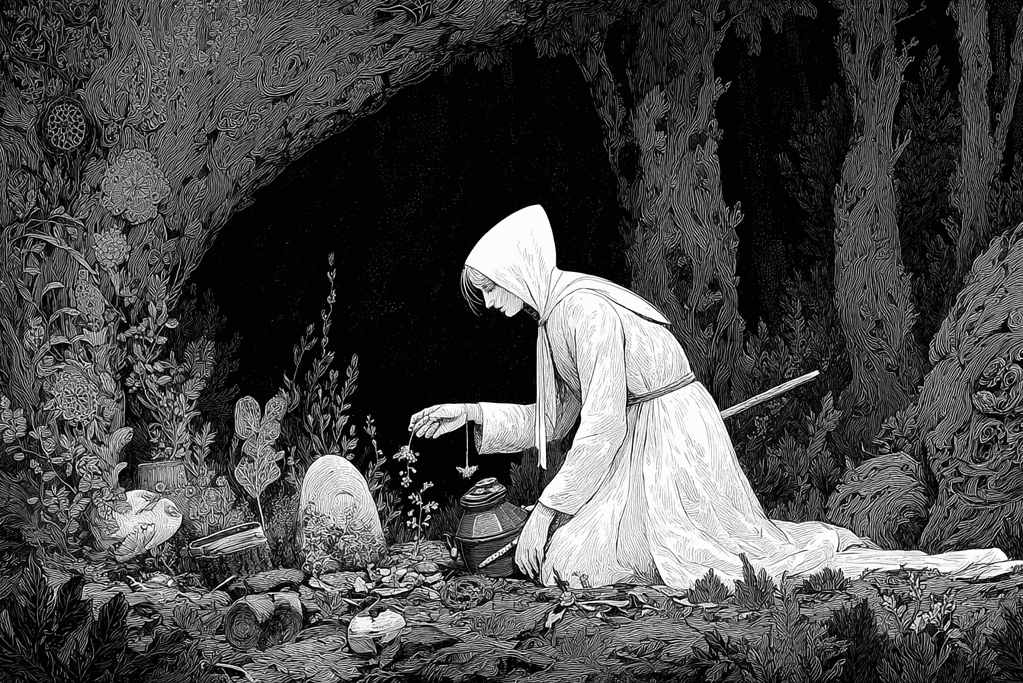
Across cultures, fairies are deeply involved in healing. Scandinavian “wise men” cured elf-shot, while Croatian fairy-initiates healed illnesses blamed on fairies (Čiča, 2002, pp. 36–37).
Fairies also caused trouble: their dances left fairy rings, their anger brought storms, and their jealousy caused changeling cases, where a fairy would steal a child and leave a diminutive, sickly replacement.
These traditions demonstrate that fairies were not simply mythological figures but active forces in community life.
Farmers left offerings to maintain harmony; healers invoked both saints and fairies; travelers avoided fairy hills and fairy forts.
Fairies served as guardians of morality, weather, fertility, and communal balance.
From Ireland to Bulgaria, circular formations in nature signaled the presence of the fairy folk.
Fairy rings, ancient burial mounds, and hollow hills were believed to be entrances to fairyland.
In Ireland and Scotland, fairy forts were fiercely protected and anyone who disturbed them risked illness or death.
In Scandinavia, hills housing elves required offerings or silence at night. In Bulgaria and Romania, scorched circles marked the dances of lethal fae.
These shared landscape beliefs show remarkable consistency across European folklore, reinforcing the idea that fairies are not regional curiosities but expressions of a pan-European mythic pattern.

From Scotland to the Carpathians, fairies show striking similarities. They dance in circles, lure the unwary, reward the kind, punish violators, and protect sacred sites.
This suggests that fairies represent something ancient, possibly a shared Indo-European mythic inheritance that survived despite vast distances.
Their traits overlap with:
These beings guard thresholds between worlds. They challenge humans to coexist with the sacred environment in which they dwell.
Fairies, in this view, are the last echoes of an old cult revering forces of nature, fertility, magic, and death.

ᛉ 100% handcrafted artisan pagan , viking, witchcraft and shamanic inspired jewelry.
ᛉ Runes, Symbolism & European Folklore
Get 20% off👇🏻

Five witches dance around a blazing bonfire beneath a citrine cabochon in this Walpurgisnacht pendant....
Happy washing day 🙃
A few rings I’ve worked on the last couple days…
Freya’s cats rule and dogs drool?
Or was that the other way around? 🙃

Garm barely shows up in the old Norse stories.
Still… he leaves a mark.
A...
Leave a comment with your result ❤️
Bavarian Folklore says that you might just cross paths with a Wolpertinger in the alpine...

🐇🌲✨
He finally stepped out of the forest…
The Wolpertinger Pendant has arrived.
Inspired by...

I don’t often sell them, but love it when I do!
Vinca symbol bracelets ❤️...

Rooted in strength + guarded by ravens

The serpent waits 🖤
(Handcrafted Jörmungandr ring made to order in my shop)

Stay warm, everyone ❤️

😑😑😑🤮

I thought I had closed the book on the Alice in Wonderland rings…
But you...

Can this be over now, please?

In case you forgot 💜

Something I’ve been thinking about lately.
If there’s one thing I would’ve done differently early...

This year, we’re not buying things just to keep up.
If you need the reminder:...

My husband is from Bavaria (southern Germany) and I originally made this Krampus pendant for...

Some of the items I’m shipping out today ❤️
Please forgive my dirty nails 😂...

A few items shipping out today 🥰

This mornings rings shipping out ❤️

A few of the rjngs I’m shipping out this morning ❤️
How do you like...

Krampus is coming 🫶🏻

Getting ready to pack up these pretties and ship to their owners ❤️

Freya, cats and pentacles. Doesn’t get any better ❤️

You all got me going crazy making all these fairytale + storybook rings.
But I’ll...

Just launched these pretties ❤️
Size 9 amethyst ring + size 7.25 green kyanite

What would you trade to learn Baba Yaga’s secrets?

It *finally* looks, feels and smells like October!
And here are some items I’m packing...

This mornings pretties getting ready to ship :)

Getting ready to pack up these pretties and ship to their owners ❤️

You bet I’m hopping on this trend 😂
Thank you @shes_sinister for the prompt!

While I welcome the seasonal darkness…it sure is going to make my morning quick videos...

Finally finished the rings I’ve been working on in my stories ❤️
I think I...

Was going to post this update to my stories but it’s too long.

“How do you know I’m mad?” said Alice.
“You must be,” said the Cat, “or...

Some of this mornings orders getting ready to ship. Those little bats are so cute...

Here is the finished ring I was working on in my stories yesterday, along with...

A few of today’s orders shipping out this morning ❤️

The two silver raven rings I was working on in my stories yesterday.
…as well...

Eeeek! I’m so happy to add these to my shop ❤️
I’ve gotten so many...

I had 6 clamshells ready to ship this morning but I dropped and lost my...

Not the story you were told.
The girl didn’t run.
The wolf didn’t win.
This...

I love these raven rings so much 🖤
This mornings pretties shipping out.
All items...

Sleek + minimal Mjölnir ring ⚒️


About the author Jacqueline Fatica


