No products in the cart.
March 10, 2026 9:43 pm

Free USA shipping on orders $35+
March 10, 2026 9:43 pm
The svartálfar, sometimes translated as “black elves” or dark elves, occupy a fascinating and debated place in Norse mythology.
Scholars have long questioned whether these mysterious beings were truly a type of elf, a kind of dwarf, or whether the distinction between these supernatural beings developed only later in medieval interpretations of Norse lore.
The world of Norse myths often presents overlapping categories of mythical creatures, where dwarves, elves, gods, and spirits share many characteristics.
In the world of Norse mythology, beings such as dwarves and elves appear in stories preserved in the Poetic Edda, the Prose Edda, and later sagas.
These texts describe a complex Norse cosmology filled with powerful supernatural beings who inhabit different realms of the Norse cosmos.
Among these are the svartálfar, who are sometimes described as subterranean beings closely connected to the famous dwarves in Norse mythology.
Understanding these beings helps illuminate broader patterns in mythology and folklore, the belief systems of the ancient Norse, and the spiritual imagination of Norse culture.

The Old Norse word álfr, meaning elf, refers to a wide range of beings in the world of the Norse.
In medieval Icelandic literature, especially in the Prose Edda, Snorri Sturluson describes two main categories of elves: the light elves (ljósálfar) and the dark elves, also known as dökkálfar.
These elves in Norse mythology represent a division between beings associated with brightness and those linked to subterranean realms.
Snorri writes that the ljósálfar dwell in Álfheimr, a radiant world associated with the god Freyr, one of the Aesir and Vanir deities of the Norse gods.
In contrast, the dökkálfar live beneath the earth, where they resemble the norse dwarvesknown for their skill in crafting magical objects (Davidson, 1990, p. 157).
This division between light and dark beings may reflect evolving interpretations of Norse mythology and folkloreduring the Christian period.
Earlier Old Norse poetry often uses the word elf more broadly, referring simply to powerful or sacred beings in Norse mythology.
The relationship between dwarves and svartalfar has long puzzled historians of Norse religion.
In Skáldskaparmál, part of the Prose Edda, the gods travel to Svartálfaheimr, the land of the svartálfar, to obtain treasures crafted by master smiths such as the sons of Ivaldi.
These craftsmen are clearly the same figures often described as dwarves in Norse mythology (Hall, 2007, p. 78).
Many scholars therefore argue that the svartálfar and dwarves may represent the same group of beings under different names.
Alaric Hall suggests that medieval scribes may have merged older traditions concerning elves and dwarves into a single category (Hall, 2007, pp. 78–79).
In this sense, dwarves and dark elves may reflect two overlapping traditions within Norse lore.
The concept of dwarves in the Eddas emphasizes their extraordinary skill. According to Norse myth, dwarven smiths created some of the most famous treasures of the gods.
These include Gungnir, Odin’s spear, and Draupnir, the magical ring associated with divine power. These objects were created by the dwarves, whose reputation for forging weapons and magical items became legendary.

In addition to their mythological presence, elves are often associated with ritual practices and social life in Vikingsocieties.
Terry Gunnell argues that the elves in Norse mythology may have played a role in ceremonial gatherings within the Norse hall, a place where political authority and spiritual beliefs intersected (Gunnell, 2001, cited in Hall, 2007, p. 79).
These traditions suggest that elves are believed to have functioned as ancestral spirits connected to families or clans.
Such beliefs appear in references to the álfar cult, where offerings were made to invisible beings connected to the land and the dead.
The presence of these spirits in everyday life highlights the significant role in Norse belief played by beings beyond the well-known Norse gods.
The world of Norse mythology was populated not only by Odin, Thor, and Loki but also by a wide array of mythical creatures inhabiting the Norse cosmos.
The association between dark elves and the underworld is strongly supported by archaeological and literary evidence.
British scholar Hilda Roderick Ellis Davidson notes that elves were often connected to burial mounds and underground spaces in Norse texts (Davidson, 1943 pp. 114–115, 120).
These locations suggest that elves are often said to inhabit places where the living encounter the presence of the dead.
Burial mounds, stones, and ancient hills served as entrances to the realm of spirits. In this sense, the svartálfar may have been understood as guardians of hidden knowledge or ancestral memory.
Davidson further emphasizes that dwarves and elves share indeed mythical qualities. These beings were neither fully divine nor fully mortal. Instead, they inhabited thresholds between worlds, an idea central to Norse cosmology (Davidson, 1990, pp. 156–158).
In his studies of Norse mythology, Professor John Lindow explains that elves in Norse mythology were sometimes invoked in poetry alongside the gods themselves (Lindow, 2001, p. 114).
This suggests that elves and dark elves were not merely minor spirits but important figures in the mythic imagination.
Dark elves are often portrayed as mysterious subterranean beings associated with craftsmanship, hidden knowledge, and the secrets of the earth. In contrast, light elves are often linked with beauty, radiance, and divine favor.
This division between bright elves and darker counterparts reflects symbolic patterns common across Indo-European traditions.
Many mythologies distinguish between luminous celestial beings and shadowy chthonic forces.
The connection between elves and the dead persisted long after the Viking Age. In folklore, elves were frequently associated with ancestral spirits and hidden peoples living within hills or stones.
Thomas Keightley observed that many fairy traditions across Europe preserved elements of earlier Norse folklore. In Icelandic belief, elves were sometimes described as the spirits of the departed (Keightley, 1900, pp. 115–120).
These traditions show how elves are also deeply embedded in cultural memory. Whether understood as guardians of the land or echoes of the ancestors, these beings continued to play a significant role in rural belief systems.
Although the svartálfar appear only occasionally in the surviving texts, their presence suggests an important place within the world of Norse mythology.
The realm known as Svartálfaheimr, sometimes called Svartalfheim, represents a subterranean world where dwarves and dark elves dwell.
The four dwarves Austri, Vestri, Norðri, and Suðri are said to hold up the sky after the giant Ymir was slain, illustrating the cosmic importance of dwarven figures in the Norse cosmos.
Figures such as Andvari, whose cursed gold appears in later sagas, further demonstrate the narrative importance of dwarfs and the dark elves.
Through these stories we see how dwarves and elves in Norse myth helped shape the mythic geography of the universe.

The legacy of elves and dwarves in Norse mythology extends far beyond medieval Scandinavia. The modern image of elves in fantasy literature owes much to these early traditions.
Writers such as Tolkien drew heavily from Norse sources, particularly the Poetic Edda, when developing the elves and dwarves of Middle-earth.
The idea that dwarves and dark elves dwell beneath mountains while brighter elves inhabit more radiant realms echoes patterns found in Norse lore.
This enduring influence of Norse mythology demonstrates how these ancient stories continue to shape modern storytelling.
The svartálfar remain among the most mysterious figures in Norse mythology. Whether interpreted as black elves, subterranean spirits, or simply another name for dwarves, they represent a category of beings tied to the hidden forces of the earth.
These beings illustrate the fluid boundaries within the world of the Norse, where elves and dwarves overlap in both myth and symbolism.
Their stories show how mythology and folklore preserved ancient ideas about the dead, the land, and the unseen powers that shape human life.
Davidson, H.R.E. (1990). Gods and Myths of Northern Europe. Penguin.
Davidson, H.R.E. (2013 [1943]). The Road to Hel: A Study of the Conception of the Dead in Old Norse Literature. Routledge.
Gunnell, T. (2001). In Hall, A. (2007). Elves in Anglo-Saxon England: Matters of Belief, Health, Gender and Identity. Boydell Press.
Hall, A. (2007). Elves in Anglo-Saxon England: Matters of Belief, Health, Gender and Identity. Boydell Press.
Keightley, T. (1900). The Fairy Mythology, Illustrative of the Romance and Superstition of Various Countries. London.
Lindow, J. (2001). Norse Mythology: A Guide to the Gods, Heroes, Rituals, and Beliefs. Oxford University Press.
Price, N., & Brink, S. (Eds.). (2008). The Viking World. Routledge.

ᛉ 100% handcrafted artisan pagan , viking, witchcraft and shamanic inspired jewelry.
ᛉ Runes, Symbolism & European Folklore
Get 20% off👇🏻
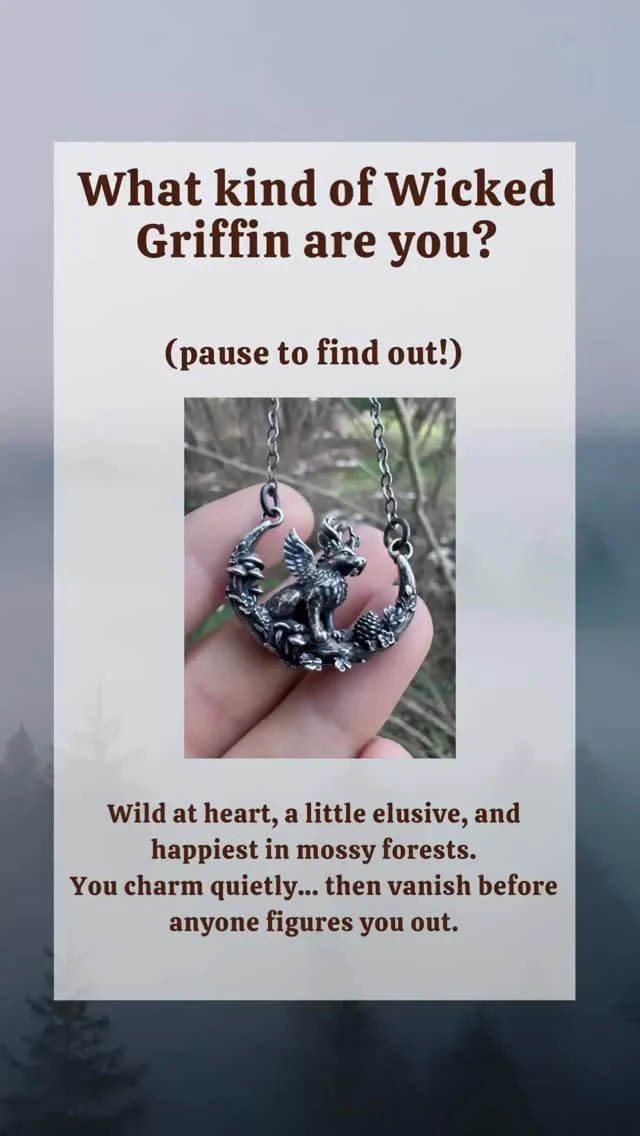
Leave a comment with your result ❤️
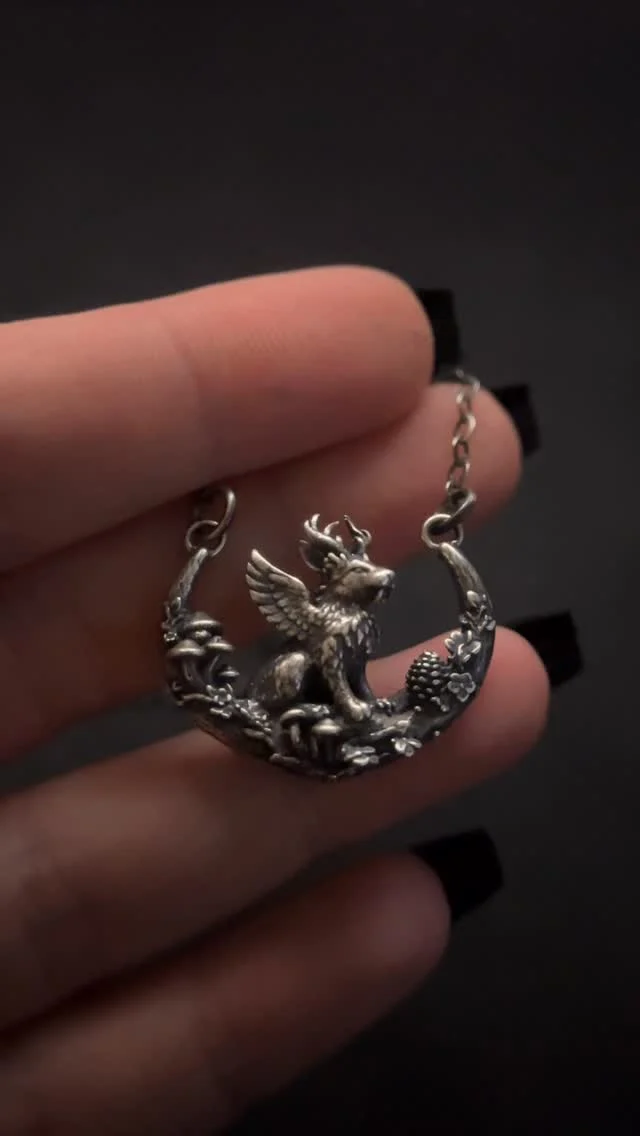
Bavarian Folklore says that you might just cross paths with a Wolpertinger in the alpine...

🐇🌲✨
He finally stepped out of the forest…
The Wolpertinger Pendant has arrived.
Inspired by...

I don’t often sell them, but love it when I do!
Vinca symbol bracelets ❤️...

Rooted in strength + guarded by ravens

The serpent waits 🖤
(Handcrafted Jörmungandr ring made to order in my shop)

Stay warm, everyone ❤️

😑😑😑🤮

I thought I had closed the book on the Alice in Wonderland rings…
But you...

Can this be over now, please?

In case you forgot 💜

Something I’ve been thinking about lately.
If there’s one thing I would’ve done differently early...

This year, we’re not buying things just to keep up.
If you need the reminder:...

My husband is from Bavaria (southern Germany) and I originally made this Krampus pendant for...

Some of the items I’m shipping out today ❤️
Please forgive my dirty nails 😂...

A few items shipping out today 🥰

This mornings rings shipping out ❤️

A few of the rjngs I’m shipping out this morning ❤️
How do you like...

Krampus is coming 🫶🏻

Getting ready to pack up these pretties and ship to their owners ❤️

Freya, cats and pentacles. Doesn’t get any better ❤️

You all got me going crazy making all these fairytale + storybook rings.
But I’ll...

Just launched these pretties ❤️
Size 9 amethyst ring + size 7.25 green kyanite

What would you trade to learn Baba Yaga’s secrets?

It *finally* looks, feels and smells like October!
And here are some items I’m packing...

This mornings pretties getting ready to ship :)

Getting ready to pack up these pretties and ship to their owners ❤️

You bet I’m hopping on this trend 😂
Thank you @shes_sinister for the prompt!

While I welcome the seasonal darkness…it sure is going to make my morning quick videos...

Finally finished the rings I’ve been working on in my stories ❤️
I think I...

Was going to post this update to my stories but it’s too long.

“How do you know I’m mad?” said Alice.
“You must be,” said the Cat, “or...

Some of this mornings orders getting ready to ship. Those little bats are so cute...

Here is the finished ring I was working on in my stories yesterday, along with...

A few of today’s orders shipping out this morning ❤️

The two silver raven rings I was working on in my stories yesterday.
…as well...

Eeeek! I’m so happy to add these to my shop ❤️
I’ve gotten so many...

I had 6 clamshells ready to ship this morning but I dropped and lost my...

Not the story you were told.
The girl didn’t run.
The wolf didn’t win.
This...

I love these raven rings so much 🖤
This mornings pretties shipping out.
All items...

Sleek + minimal Mjölnir ring ⚒️

Today’s orders getting ready to ship.
…And I finally got some time to work on...

That ant ring is so out of place 😂
Not that the mail is coming...

If you had this, which runes would you choose? Or would you accept the runes...

I love making these fun Halloween coffin pendants 🎃
All items you see are always...


About the author Jacqueline Fatica


