No products in the cart.
March 17, 2026 8:03 pm

Free USA shipping on orders $35+
March 17, 2026 8:03 pm
The familiar day of the week system that structures modern life has deep historical roots in ancient astronomy, language contact, and religious symbolism.
Many people are surprised to learn that several names of the days in English and other northern European languages are traditionally understood as being named after Norse gods.
This topic is worth examining closely, since it reveals how cultural interaction between the Roman world and early Germanic societies shaped everyday vocabulary in ways that still influence the modern calendar.
Scholars generally agree that the seven days of the week derive from the late Roman planetary week, in which each day corresponded to one of the visible celestial bodies known in antiquity.
Over time, Germanic-speaking communities adopted this system and adapted it linguistically, often substituting a local divine figure for a comparable Roman deity.
Research in historical linguistics and folklore has shown that these weekday traditions represent a complex interaction between classical cosmology, early medieval Christianity, and inherited elements of norse mythology (Falk, 2003, p. 49).
This article examines how the weekday names developed, what they reveal about religious interpretation and cultural exchange, and why they continue to matter for understanding the symbolic heritage of northern Europe.

The structured day of the week sequence familiar today developed gradually in the Roman Empire during late antiquity.
Latin writings, such as those later summarized by Bede, describe a cycle in which each day corresponded to a planetary personification representing the sun and the moon and the five known wandering stars (Bede, 1999, p. 33).
These heavenly associations were part of a broader astrological worldview that connected cosmic order with human activity.
This Roman model spread widely across Europe through administrative contact, trade, and eventually Christian missionary work.
Scholars suggest that Germanic peoples adopted the weekly cycle through cultural diffusion rather than through a single decisive event.
The resulting system shows how day names could be reshaped in a new linguistic environment while preserving the underlying cosmological framework (Falk, 2003, p. 49).
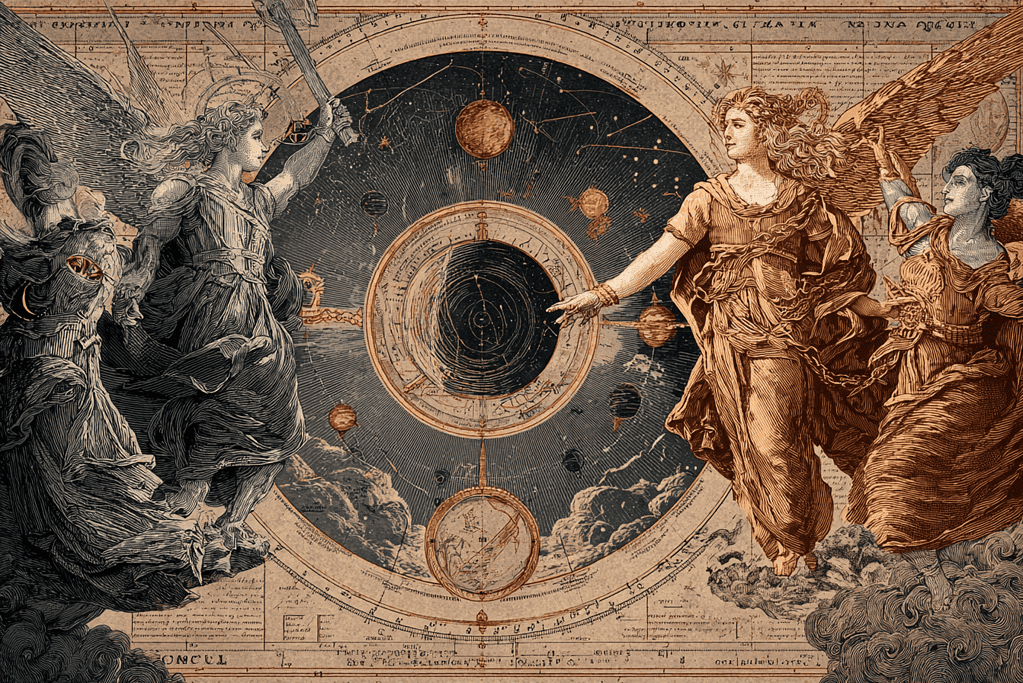
In classical Latin usage, weekday terminology referred directly to the roman gods associated with each planet.
The process by which these designations were adapted into a germanic language is often described as interpretatio, in other words, a comparative method of identifying foreign deities with local figures considered functionally similar.
This cultural translation produced many of the english name forms still used today.
Researchers note that this naming practice was not purely religious.
Instead, it was linguistic and symbolic, reflecting the prestige of Roman time-reckoning systems.
The new terminology entered early old english and related dialects, eventually becoming standard across much of northern Europe.
Research suggests that the planetary model was already well established before the Viking Age, illustrating how early medieval societies participated in broader intellectual currents (Falk, 2003, p. 49).
The first two days in the sequence illustrate how some weekday names retained direct reference to cosmic phenomena rather than to a specific deity.
Sunday derives from a phrase meaning the day of the sun, connected to solar symbolism found in many Indo-European traditions.
In some contexts, medieval writers described the sun in mythic language resembling a sun god, though clear cultic identification is difficult to prove (Ceolin, 2020, p. 42).
Monday reflects lunar associations rooted in the observation of luna and its changing phases.
Together, sunday and monday demonstrate how ancient observers structured time according to visible movements in the sky.
The relationship between the sun and moon and the ordering of the first day of the week highlights the enduring influence of cosmology on daily life (Bede, 1999, p. 33).
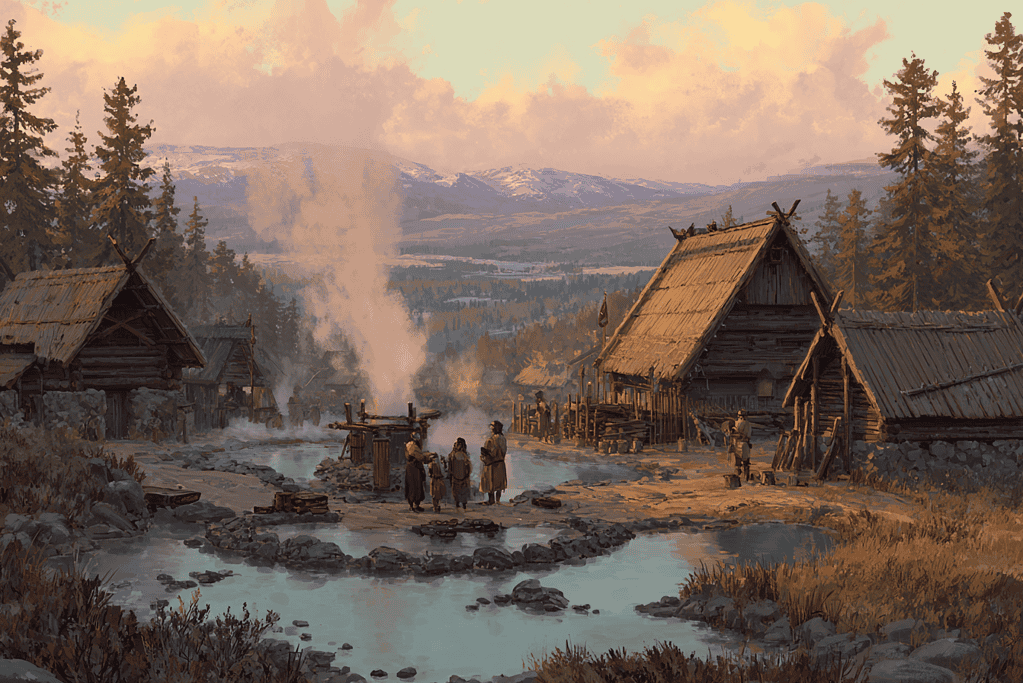
The name Tuesday represents one of the clearest examples of interpretive substitution.
The old norse form týsdagr corresponds to Latin dies Martis, the day dedicated to Mars, the classical god of war.
More importantly, Germanic tradition identified a comparable martial figure in tyr, whose name appears in early poetic and mythological sources (Simek, 1993).
In anglo-saxon dialects, this figure was known as tiw, demonstrating how phonological change shaped the development of weekday vocabulary.
Modern folkloristic research continues to treat this linguistic parallel as evidence of perceived functional equivalence between divine roles rather than as proof of shared ritual practice (Heide, 2024, p. 74).
Wednesday illustrates a more complex symbolic relationship.
The norse god odin was often compared to mercury by classical observers, a connection rooted in shared attributes such as wisdom, travel, and communication.
Again, we find a similar cultural process.
Early Germanic communities adapted the latin name dies Mercurii into forms that preserved the conceptual link while expressing it in local terminology.
In old english, the day became associated with woden, a variant of the same divine figure.
This linguistic adaptation demonstrates how mythological interpretation could shape everyday speech.
Scholars emphasize that such weekday terminology does not imply organized worship on specific days but rather reflects cultural translation within the broader norse pantheon (Falk, 2003, p. 49).
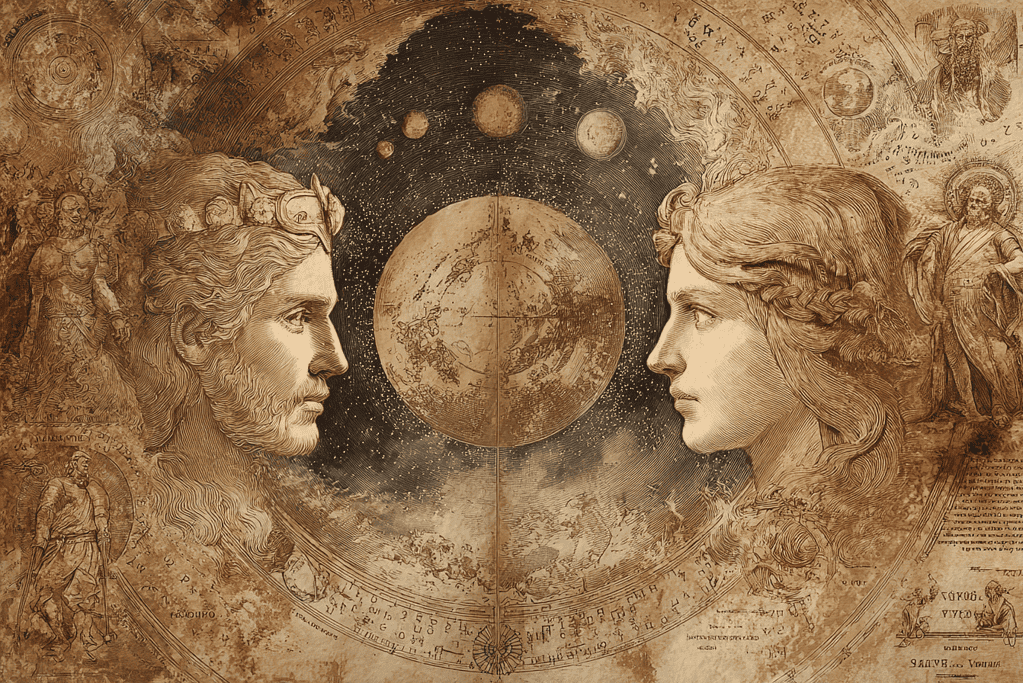
The name Thursday derives from thor’s day, a designation tied to the thunder-wielding hero-god known in some early dialects as thunor.
This association parallels the Roman dedication of the same day to jupiter, a sky deity linked with storms and authority.
Linguistic evidence shows that the Germanic substitution was deliberate and systematic rather than accidental (Simek, 1993).
In poetic narratives, Thor’s command over thunder reinforced his suitability as a germanic equivalent to Jupiter’s celestial power.
The weekday terminology thus provides indirect insight into how mythological ideas circulated across cultural boundaries.
The resulting vocabulary demonstrates how religious symbolism could be preserved in language long after its original context faded.
The origin of Friday has inspired considerable scholarly debate.
The old norse term frjádagr corresponds to the Roman dedication to venus, a figure associated with love and fertility.
Some researchers interpret this weekday as linked to frigg, the dignified household goddess, while others suggest a connection with freya, whose mythological attributes overlap with those of Venus (Simek, 1993).
This uncertainty reflects the fluid nature of mythological identities in early northern Europe. Linguistic evidence alone cannot always determine which divine figure stood behind a particular term.
The discussion nevertheless illustrates how elements of the germanic pantheon entered common speech through symbolic analogy.
Unlike the other names for the days, Saturday does not clearly preserve a translated Roman deity.
The old norse expression laugardagr means washing or bathing day and appears to reflect a customary social practice rather than a mythological dedication.
This divergence suggests that not every part of the Roman system was adopted uniformly (Falk, 2003, p. 49).
In Latin tradition, the corresponding day honored the roman god saturn, sometimes identified with the Greek figure cronus.
Some romance languages still preserve this planetary reference.
Northern European usage, by contrast, demonstrates how local cultural habits could reshape imported terminology.
Scholars occasionally note rare forms such as sataere in early words for saturday, though these never became dominant in Scandinavian speech.
With the spread of Christianity, alternative naming patterns emerged.
Medieval writers in icelandic contexts sometimes preferred neutral expressions such as miðvikudagr for Wednesday or referred to Sunday as the lord’s day.
These changes reflect the tension between inherited pagan vocabulary and evolving ecclesiastical identity (Ceolin, 2020, p. 43).
Such linguistic reform did not eliminate earlier terminology. Instead, both systems often coexisted, demonstrating the adaptability of medieval societies.
The persistence of traditional weekday vocabulary shows how deeply embedded these concepts had become in daily life.
Understanding how the days are named offers valuable insight into cultural memory.
These linguistic relics preserve traces of cosmological speculation, religious symbolism, and social interaction spanning many centuries.
They reveal how early germanic peoples participated in broader intellectual exchanges while maintaining distinctive mythological traditions.
The study of weekday terminology also highlights the enduring relationship between language and worldview.
Even in modern secular contexts, the familiar rhythm of the week carries echoes of ancient heavenly bodies, ritual observances, and mythic imagination.
By examining how these day names developed, historians and folklorists gain a clearer picture of how symbolic systems shape everyday experience.
Bede. (1999). The reckoning of time (F. Wallis, Trans.). Liverpool University Press.
Ceolin, M. (2020). The multiple facets of time: Reckoning, representing, and understanding time in medieval Iceland(Doctoral dissertation, University of Iceland).
Falk, M. (2003). Days of the week in the languages of Western Europe. Onomastica Canadiana, 85, 43–57.
Heide, E. (2024). Týr and Viðarr: Equinox, wolves and Old Norse celestial traditions. Arv: Nordic Yearbook of Folklore, 80, 74–111.
Old English Newsletter. (2009). The year’s work in Old English studies 2007. Old English Newsletter, 42(1–2).
Simek, R. (1993). Dictionary of Northern mythology. D. S. Brewer.

ᛉ 100% handcrafted artisan pagan , viking, witchcraft and shamanic inspired jewelry.
ᛉ Runes, Symbolism & European Folklore
Get 20% off👇🏻

Five witches dance around a blazing bonfire beneath a citrine cabochon in this Walpurgisnacht pendant....

Happy washing day 🙃
A few rings I’ve worked on the last couple days…
Freya’s cats rule and dogs drool?
Or was that the other way around? 🙃

Garm barely shows up in the old Norse stories.
Still… he leaves a mark.
A...

Leave a comment with your result ❤️
Bavarian Folklore says that you might just cross paths with a Wolpertinger in the alpine...

🐇🌲✨
He finally stepped out of the forest…
The Wolpertinger Pendant has arrived.
Inspired by...

I don’t often sell them, but love it when I do!
Vinca symbol bracelets ❤️...

Rooted in strength + guarded by ravens

The serpent waits 🖤
(Handcrafted Jörmungandr ring made to order in my shop)

Stay warm, everyone ❤️

😑😑😑🤮

I thought I had closed the book on the Alice in Wonderland rings…
But you...

Can this be over now, please?

In case you forgot 💜

Something I’ve been thinking about lately.
If there’s one thing I would’ve done differently early...

This year, we’re not buying things just to keep up.
If you need the reminder:...

My husband is from Bavaria (southern Germany) and I originally made this Krampus pendant for...

Some of the items I’m shipping out today ❤️
Please forgive my dirty nails 😂...

A few items shipping out today 🥰

This mornings rings shipping out ❤️

A few of the rjngs I’m shipping out this morning ❤️
How do you like...

Krampus is coming 🫶🏻

Getting ready to pack up these pretties and ship to their owners ❤️

Freya, cats and pentacles. Doesn’t get any better ❤️

You all got me going crazy making all these fairytale + storybook rings.
But I’ll...

Just launched these pretties ❤️
Size 9 amethyst ring + size 7.25 green kyanite

What would you trade to learn Baba Yaga’s secrets?

It *finally* looks, feels and smells like October!
And here are some items I’m packing...

This mornings pretties getting ready to ship :)

Getting ready to pack up these pretties and ship to their owners ❤️

You bet I’m hopping on this trend 😂
Thank you @shes_sinister for the prompt!

While I welcome the seasonal darkness…it sure is going to make my morning quick videos...

Finally finished the rings I’ve been working on in my stories ❤️
I think I...

Was going to post this update to my stories but it’s too long.

“How do you know I’m mad?” said Alice.
“You must be,” said the Cat, “or...

Some of this mornings orders getting ready to ship. Those little bats are so cute...

Here is the finished ring I was working on in my stories yesterday, along with...

A few of today’s orders shipping out this morning ❤️

The two silver raven rings I was working on in my stories yesterday.
…as well...

Eeeek! I’m so happy to add these to my shop ❤️
I’ve gotten so many...

I had 6 clamshells ready to ship this morning but I dropped and lost my...

Not the story you were told.
The girl didn’t run.
The wolf didn’t win.
This...

I love these raven rings so much 🖤
This mornings pretties shipping out.
All items...

Sleek + minimal Mjölnir ring ⚒️


About the author Jacqueline Fatica


