No products in the cart.
April 12, 2026 9:26 pm

Free USA shipping on orders $35+
April 12, 2026 9:26 pm
Celtic mythology contains a rich world of animals, supernatural beings, and legendary creatures that appear throughout medieval literature and later Irish folklore.
Many of these figures are preserved in early texts such as the Táin Bó Cúailnge, the Mabinogion, the Lebor Gabála Érenn, and the Metrical Dindshenchas.
These sources reveal how the ancient Celts understood the natural world as deeply intertwined with the supernatural.
Animals in Celtic mythology were not merely decorative elements in storytelling.
They often functioned as agents of fate, companions of heroes, manifestations of divine power, or creatures that connected the human world with the mysterious Otherworld.
Alongside these mythological animals, Irish folklore preserved a wide array of supernatural beings such as the banshee, the púca, and the dullahan, which became some of the most recognizable Irish mythological creatures.
This article explores both animals found in medieval Celtic mythology and the legendary creatures of later Irish folklore, drawing on primary sources and modern scholarship to understand their role in Irish culture and Celtic myth.
When scholars examine Celtic mythology, they quickly discover that animals play an essential role within mythological narratives.
Medieval Irish literature often portrays animals as supernatural beings or sacred creatures connected to divine forces.
In these stories, animals are capable of shaping events, guiding heroes, or acting as powerful beasts that embody natural and supernatural power.
Miranda Aldhouse-Green has emphasized that animals were central to Celtic religion and symbolism and that mythological traditions across Celtic culture frequently portrayed animals as mediators between the human world and the divine realm (Aldhouse-Green, 1992).
These creatures were not simply part of the landscape but often served as companions of gods or symbols of sacred authority.
Many of the most famous animals of Celtic myth appear in Irish mythology and Welsh mythology.
These include the boar, the hound, sacred birds associated with the Morrígan, and powerful cattle whose presence drives the narrative of the Táin Bó Cúailnge.
These animals reveal how ancient Irish thought connected mythology with the rhythms of nature and the supernatural world.

In the worldview of the ancient Celts, animals were closely linked to spiritual power and divine symbolism.
Archaeological evidence and literary sources suggest that animals were associated with Celtic gods and goddesses and often represented specific aspects of nature, warfare, fertility, or sovereignty.
Modern scholarship on Celtic culture frequently emphasizes the religious significance of animals in both ritual and mythological traditions.
Miranda Green has argued that Celtic religious imagery often depicts animals alongside deities, indicating that they functioned as sacred companions or symbolic representations of divine attributes (Green, 1986).
This connection between animals and supernatural power also appears in medieval literature.
Stories preserved in Irish myths frequently portray animals as magical beings capable of crossing between worlds.
In this sense, animals function as bridges between humanity and the Otherworld, reinforcing the deeply spiritual relationship between people and nature within ancient Celtic culture.
Among the most powerful animals in Celtic mythology is the boar, a creature closely associated with courage and warrior identity.
The boar appears in numerous mythological stories as a dangerous beast whose hunt becomes a heroic challenge for warriors.
In Welsh mythology, the famous boar Twrch Trwyth appears in the tale of Culhwch and Olwen, preserved in the Mabinogion.
The pursuit of this beast forms one of the central episodes of the story and requires the cooperation of many heroes and magical animals (Ford, 1977).
The boar’s importance reflects the cultural values of the ancient Celtic world.
Hunting a powerful beast symbolized bravery and prestige, and the boar therefore became an enduring symbol within Celtic myth and folklore.
Its presence in both Welsh mythology and Irish tales demonstrates how widely this animal was revered throughout the Celtic world.
The hound is another animal that plays a significant role in Irish mythology.
Perhaps the most famous example appears in the Ulster Cycle, where the hero Cú Chulainn gains his name after killing a fierce guard dog and agreeing to take its place as protector of the household.
This story reveals the deep symbolic relationship between warriors and hounds within Celtic mythology.
The hound represents loyalty, strength, and the protective role of the hero within society. Such symbolism appears frequently in Irish myths and in archaeological representations of Celtic culture.
Supernatural hounds also appear in Welsh mythology. In the tale of Pwyll from the Mabinogion, the hero encounters magical hunting dogs belonging to the ruler of the Otherworld.
These animals are described with striking colors that mark them as supernatural beings (Ford, 1977).
Through such stories, the hound becomes both a real animal and a mythological creature connected to the Otherworld.

Birds occupy a special place within Celtic mythology and often appear in connection with prophecy and warfare.
In Irish mythology, the goddess Morrígan frequently takes the form of a raven or crow, appearing on battlefields as a supernatural presence.
Scholars have interpreted this transformation as a symbol of fate and destruction in war (Mac Cana, 1970).
The appearance of such birds in Irish myths often signals the turning point of a battle or the death of a hero.
Bird imagery also appears in Welsh mythology, where magical birds can enchant listeners with supernatural music.
These birds illustrate how animals in Celtic mythology were often associated with powerful supernatural forces.
The fairy folk are among the most recognizable beings in Irish folklore.
These supernatural beings are believed to dwell within burial mounds known as the sidhe, which were traditionally seen as gateways to the Otherworld.
According to medieval Irish mythology, the Tuatha Dé Danann retreated into these mounds after losing their dominion over Ireland (Macalister, 1938–1956).
Over time, these divine beings evolved in Irish folklore into the fairy folk known throughout Ireland and Scotland.
Stories about fairies appear widely in Irish tales and folk tales.
Many traditions warn against disturbing fairy mounds or disrespecting these supernatural beings, as doing so could bring bad fortune upon an Irish family.
One of the most famous figures in Irish folklore is the banshee, a female spirit whose mournful cry announces impending doom.
In many traditions, the banshee appears before the death of a member of a particular Irish family.
The banshee belongs to a broader tradition of supernatural beings associated with death and fate in Irish mythology.
Scholars have noted that her role may preserve echoes of earlier mythological beliefs concerning death spirits and ancestral guardians (Ó hÓgáin, 2006).
Descriptions of the banshee vary widely in Irish folklore. She may appear as a beautiful woman, an old hag, or a sorrowful female spirit whose wailing echoes through the night.

Among the most mischievous creatures in Irish folklore is the púca, a shapeshifting being capable of appearing as various animals.
In many Irish tales the púca appears as a black horse or goat and interacts unpredictably with humans.
The púca belongs to a class of supernatural tricksters that frequently appear in Celtic folklore.
These creatures may help or hinder travelers, reflecting the unpredictable nature of supernatural beings within Irish culture.
The stories surrounding the púca illustrate the enduring presence of supernatural beings within the imagination of Irish people and demonstrate how folklore preserved older mythological ideas in later traditions.
Irish folklore also preserves stories about terrifying creatures associated with death and danger.
One of the most famous is the dullahan, a headless horseman who rides through the night carrying a severed head.
Another figure from Irish folklore is the abhartach, sometimes interpreted in modern discussions as an Irish vampire.
In traditional stories, this malevolent being returns from the grave and threatens the living (Ó hÓgáin, 2006).
The dearg due appears in Irish tales as another dangerous supernatural being.
These creatures illustrate how Irish folklore preserved fears surrounding death, supernatural punishment, and the dangers of disturbing the dead.
The coastal traditions of Ireland and Scotland contain numerous legends about supernatural sea creatures. Among the most famous are the selkies, creatures capable of transforming between seal and human form.
In Irish folklore, a similar being known as the merrow appears as a mermaid-like creature inhabiting the sea.
These stories reflect the maritime environment of Ireland and the deep relationship between coastal communities and the ocean.
Scottish folklore includes another famous water spirit known as the kelpie, a dangerous supernatural being that often appears as a black horse near rivers or lakes.
These creatures illustrate the shared mythological traditions that developed across Ireland and Scotland.
Aldhouse-Green, M. (1992). Animals in Celtic life and myth. Routledge.
Ford, P. K. (1977). The Mabinogi and other medieval Welsh tales. University of California Press.
Green, M. (1986). The gods of the Celts. Alan Sutton.
Mac Cana, P. (1970). Celtic mythology. Hamlyn.
Macalister, R. A. S. (1938–1956). Lebor Gabála Érenn: The book of the taking of Ireland (Vols. 1–5). Irish Texts Society.
Ó hÓgáin, D. (2006). The lore of Ireland: An encyclopaedia of myth, legend and romance. Boydell Press.

ᛉ 100% handcrafted artisan pagan , viking, witchcraft and shamanic inspired jewelry.
ᛉ Runes, Symbolism & European Folklore
Get 20% off👇🏻

Five witches dance around a blazing bonfire beneath a citrine cabochon in this Walpurgisnacht pendant....
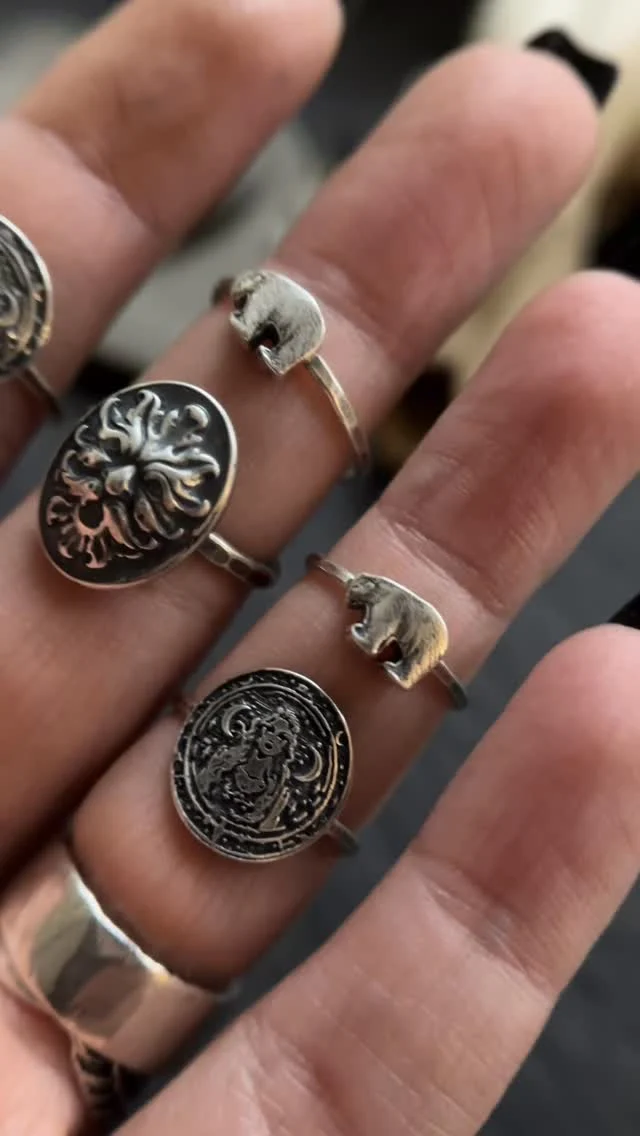
Happy washing day 🙃
A few rings I’ve worked on the last couple days…
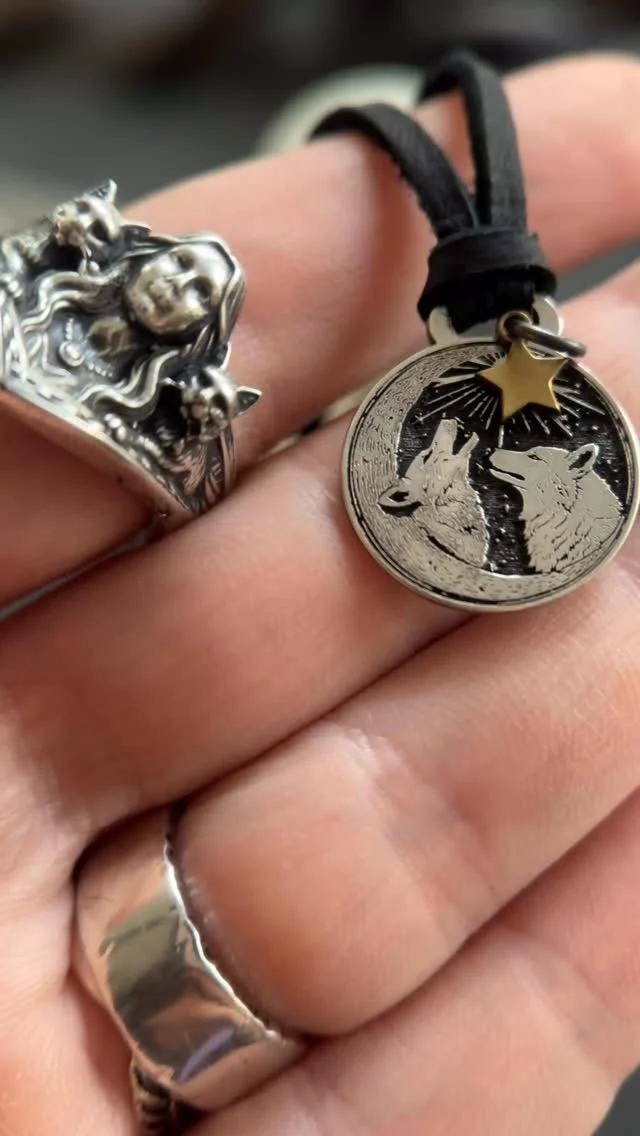
Freya’s cats rule and dogs drool?
Or was that the other way around? 🙃

Garm barely shows up in the old Norse stories.
Still… he leaves a mark.
A...
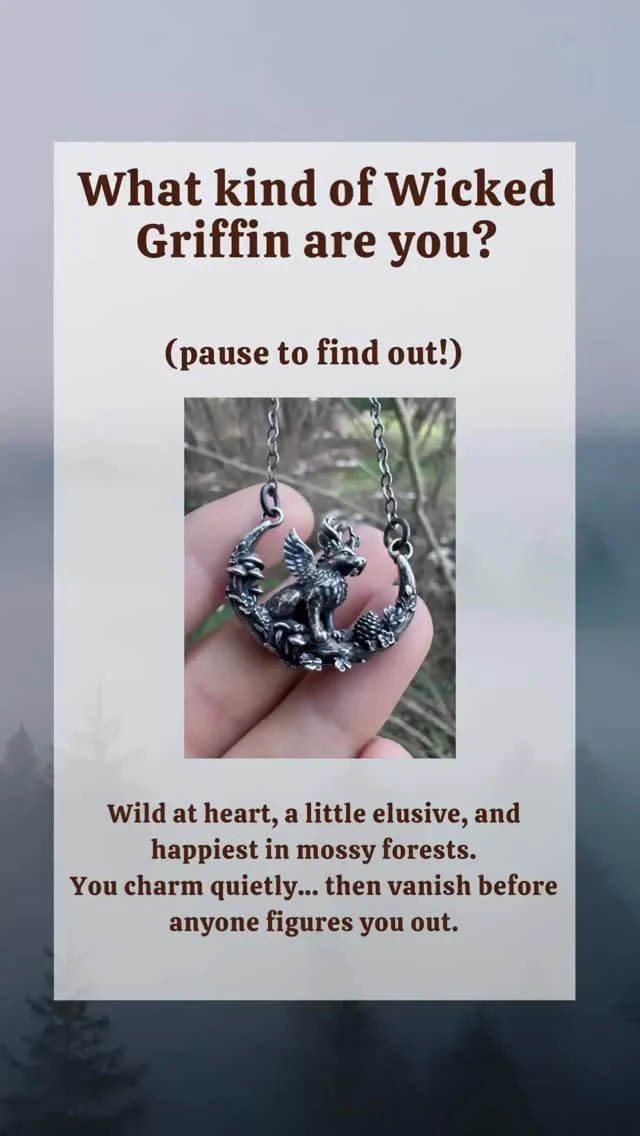
Leave a comment with your result ❤️
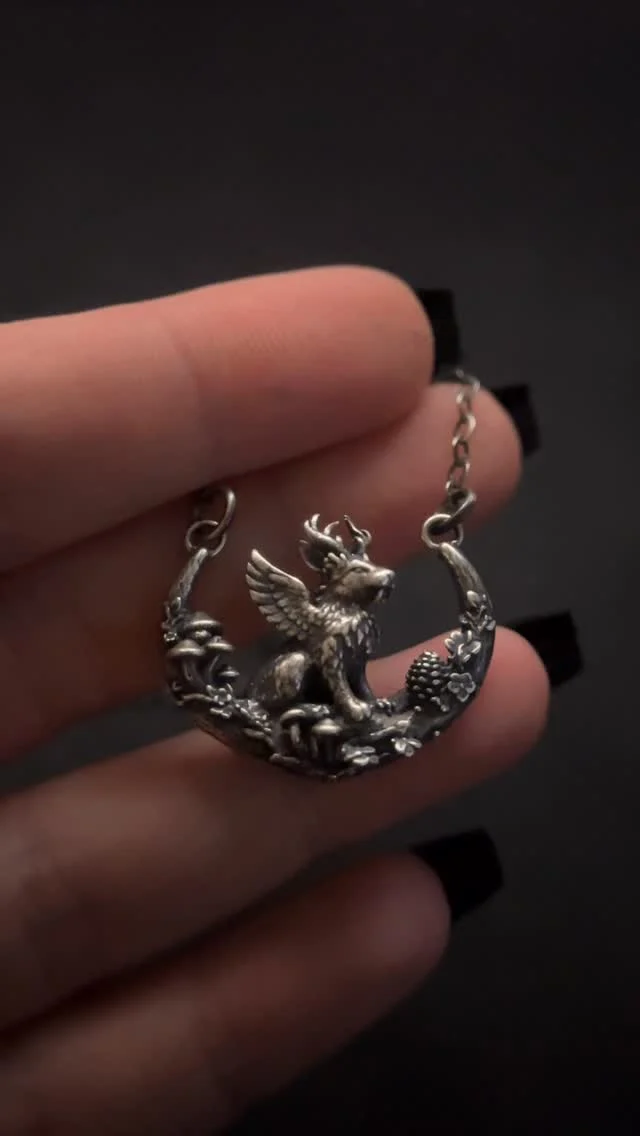
Bavarian Folklore says that you might just cross paths with a Wolpertinger in the alpine...

🐇🌲✨
He finally stepped out of the forest…
The Wolpertinger Pendant has arrived.
Inspired by...

I don’t often sell them, but love it when I do!
Vinca symbol bracelets ❤️...

Rooted in strength + guarded by ravens

The serpent waits 🖤
(Handcrafted Jörmungandr ring made to order in my shop)

Stay warm, everyone ❤️

😑😑😑🤮

I thought I had closed the book on the Alice in Wonderland rings…
But you...

Can this be over now, please?

In case you forgot 💜

Something I’ve been thinking about lately.
If there’s one thing I would’ve done differently early...

This year, we’re not buying things just to keep up.
If you need the reminder:...

My husband is from Bavaria (southern Germany) and I originally made this Krampus pendant for...

Some of the items I’m shipping out today ❤️
Please forgive my dirty nails 😂...

A few items shipping out today 🥰

This mornings rings shipping out ❤️

A few of the rjngs I’m shipping out this morning ❤️
How do you like...

Krampus is coming 🫶🏻

Getting ready to pack up these pretties and ship to their owners ❤️

Freya, cats and pentacles. Doesn’t get any better ❤️

You all got me going crazy making all these fairytale + storybook rings.
But I’ll...

Just launched these pretties ❤️
Size 9 amethyst ring + size 7.25 green kyanite

What would you trade to learn Baba Yaga’s secrets?

It *finally* looks, feels and smells like October!
And here are some items I’m packing...

This mornings pretties getting ready to ship :)

Getting ready to pack up these pretties and ship to their owners ❤️

You bet I’m hopping on this trend 😂
Thank you @shes_sinister for the prompt!

While I welcome the seasonal darkness…it sure is going to make my morning quick videos...

Finally finished the rings I’ve been working on in my stories ❤️
I think I...

Was going to post this update to my stories but it’s too long.

“How do you know I’m mad?” said Alice.
“You must be,” said the Cat, “or...

Some of this mornings orders getting ready to ship. Those little bats are so cute...

Here is the finished ring I was working on in my stories yesterday, along with...

A few of today’s orders shipping out this morning ❤️

The two silver raven rings I was working on in my stories yesterday.
…as well...

Eeeek! I’m so happy to add these to my shop ❤️
I’ve gotten so many...

I had 6 clamshells ready to ship this morning but I dropped and lost my...

Not the story you were told.
The girl didn’t run.
The wolf didn’t win.
This...

I love these raven rings so much 🖤
This mornings pretties shipping out.
All items...

Sleek + minimal Mjölnir ring ⚒️


About the author Jacqueline Fatica


