No products in the cart.
December 15, 2025 2:44 pm

Free USA shipping on orders $35+
December 15, 2025 2:44 pm
The Morrígan stands among the most complex figures in Celtic mythology. She appears as a goddess of war, prophecy, sovereignty, and death, yet she refuses any narrow definition.
This article examines the Morrígan through early Irish texts and careful scholarship, tracing her name, functions, and literary appearances.
Readers will gain a grounded understanding of who the Morrígan is, how she operates within Irish mythology, and why modern simplifications fail to capture the depth of this ancient Irish goddess.
The Morrígan is an ancient Irish goddess whose presence permeates early Irish mythology. She belongs among the Tuatha Dé Danann, the divine people who inhabit the mythic landscape of Ireland.
As a goddess, the Morrígan does not govern a single domain. She shapes war and fate, oversees sovereignty, and moves freely between life and death.
Her actions reveal a deity deeply embedded in the structure of society and land rather than a distant abstraction (Clark, 1987, pp. 223 to 224).
The Morrígan appears in Irish texts as an active force. She intervenes in battles, foretells death, and binds kingship to rightful rule.
This goddess acts rather than symbolizes. Her presence on the battlefield or at liminal moments reveals the mechanics of power within Celtic culture.
Such complexity explains why the Morrígan remains resistant to modern labels like fertility goddess or war goddess alone (Tymoczko, 1985, pp. 22 to 23).

The etymology of the Morrígan has long attracted scholarly debate. Earlier interpretations favored the translation Great Queen, drawing from the Old Irish mór meaning great.
Rosalind Clark demonstrates that this reading reflects later glossing rather than original meaning (Clark, 1987, p. 224). Linguistic evidence suggests a darker origin.
Clark links Morrígan to terms associated with night terrors and phantoms, drawing parallels with Old High German mara and related nightmare spirits.
The Morrígan emerges as the Phantom Queen, a being associated with dread, death, and liminality (Clark, 1987, pp. 224 to 225).
This etymology supports her role as a goddess who presides over transitions rather than stable states. The term mór appears once in this discussion only to clarify its limits within the name Morrígan.
The idea of the Morrígan as a triple goddess persists in modern writing, yet early Irish sources present a more fluid picture.
The Morrígan often appears alongside Badb and Macha, with Nemain entering certain traditions. These figures do not function as fixed individuals but as overlapping aspects of the goddess (Clark, 1987, pp. 226 to 227).
Maria Tymoczko explains that Celtic goddesses embody unity and division simultaneously. This triple aspect does not resemble later schematic models.
Instead, it reflects a worldview comfortable with contradiction and multiplicity (Tymoczko, 1985, pp. 22 to 24).
The Morrígan operates as a goddess whose power manifests through several names without dissolving into separate deities.
Irish mythology preserves the Morrígan primarily through narrative rather than theological exposition.
She appears in saga literature, poetry, and battle accounts embedded within Irish texts. These sources portray a goddess who shifts shape and role according to narrative need (Clark, 1987, p. 227).
In the Ulster tradition, the Morrígan emerges as an omen, a prophet, and a participant. Her presence never serves decoration.
Each appearance signals impending transformation. This method of portrayal reveals how Irish mythology encodes divine function through action rather than doctrine.
Sovereignty forms a core aspect of the goddess Morrígan. Early Irish kingship rested upon harmony between ruler and land.
The Morrígan functions as a sovereignty goddess who sanctions rule through victory and fertility tied to cattle and territory (Clark, 1987, pp. 228 to 229).
Crowe’s nineteenth century survey preserves valuable material linking the Morrígan with Anu and land abundance, though modern scholarship approaches these claims cautiously (Crowe, 1869, pp. 315 to 317).
The Morrígan emerges as a goddess of sovereignty whose favor determines political legitimacy.

The Morrígan is frequently labeled a war goddess, yet her role extends beyond violence. She governs war as a process tied to fate, prophecy, and social order.
On the battlefield she appears as a crow or raven, shrieking and foretelling slaughter (Clark, 1987, pp. 225 to 226).
This goddess of battle chooses who will die in battle. Her cries unsettle warriors and shape outcomes.
She acts as a death goddess and a goddess of war simultaneously, reflecting the inseparability of combat and mortality in Irish pagan tradition.
The relationship between the Morrígan and Cú Chulainn forms one of the most intricate threads in Irish mythology.
She approaches him in various forms, offering aid, desire, and warning. He rejects her repeatedly, setting their conflict in motion (Clark, 1987, pp. 231 to 234).
As washer at the ford, the Morrígan foretells his doom. She embodies war and fate intertwined. Her actions guide Cú Chulainn to his final battle.
This narrative demonstrates how the Morrígan functions as an aspect of the goddess who enforces destiny rather than mere vengeance.
During the Second Battle of Mag Tuired, the Morrígan appears as a figure of prophecy and magical intervention.
She mates with the Dagda before Samhain, securing victory for the Tuatha Dé Danann against the Fomorians (Clark, 1987, pp. 229 to 230).
After the final battle, the Morrígan delivers a prophetic chant describing the fate of the world.
This moment confirms her authority over war and fate within Irish texts.
Her role here establishes her as a goddess in her own right rather than a subsidiary figure among the Tuatha Dé.

The Morrígan appears in the form of a crow or raven, feeding upon the slain.
Chatman traces this imagery through later folklore, connecting battlefield ravens with the Morrígan as a goddess of death (Chatman, 1963, pp. 183 to 184).
Early Irish sources describe the heads of the defeated as offerings to Badb or Nemain, reinforcing her association with death and prophecy (Crowe, 1869, pp. 319 to 320).
This symbolism persists across centuries, showing continuity in how the Morrígan is associated with death and fate.

Modern pagan and modern wicca traditions often reinterpret the Morrígan as a fertility goddess or triple goddess aligned with later frameworks.
Scholarly evidence suggests caution. The Morrígan resists reduction to moral archetypes or singular functions (Tymoczko, 1985, pp. 34 to 35).
The ancient Irish goddess emerges from Irish texts as a complex deity whose power governs war and sovereignty, life and death, prophecy and land.
Modern interpretations reveal contemporary needs more than ancient belief systems.
Clark, R. (1987). Aspects of the Morrígan in early Irish literature. Irish University Review, 17(2), 223 to 236.
Crowe, J. O’B. (1869). Religious beliefs of the pagan Irish. Journal of the Historical and Archaeological Association of Ireland, Third Series, 1(2), 307 to 334.
Chatman, V. V., III. (1963). The Three Ravens explicated. Midwest Folklore, 13(3), 177 to 186.
Tymoczko, M. (1985). Unity and duality: A theoretical perspective on the ambivalence of Celtic goddesses. Proceedings of the Harvard Celtic Colloquium, 5, 22 to 37.

ᛉ 100% handcrafted artisan pagan , viking, witchcraft and shamanic inspired jewelry.
ᛉ Runes, Symbolism & European Folklore
Get 20% off👇🏻

Five witches dance around a blazing bonfire beneath a citrine cabochon in this Walpurgisnacht pendant....
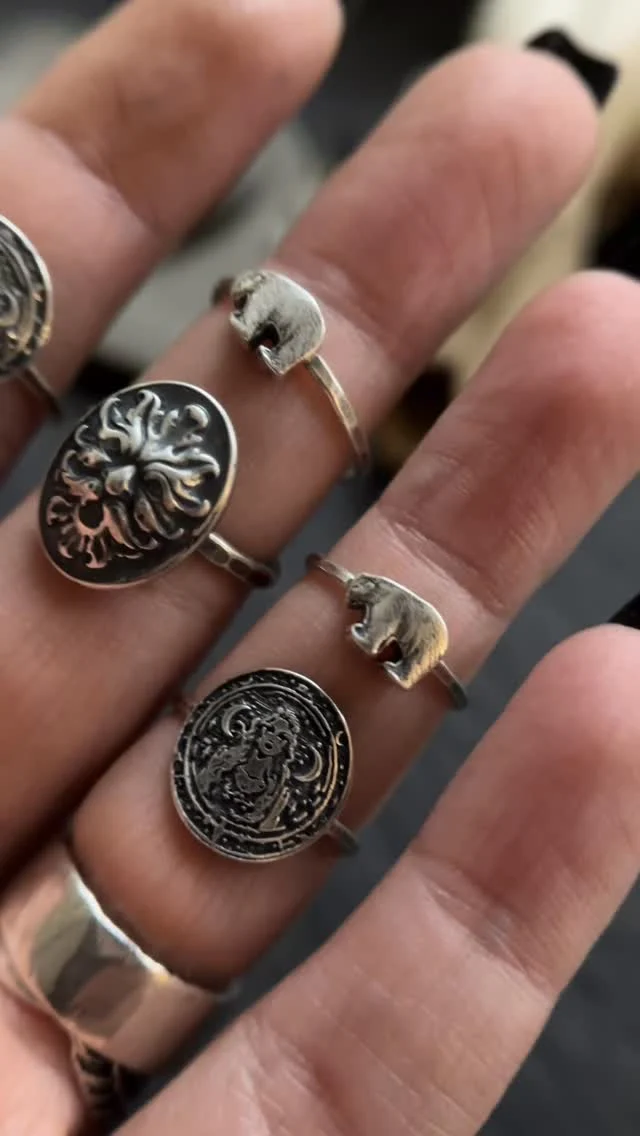
Happy washing day 🙃
A few rings I’ve worked on the last couple days…
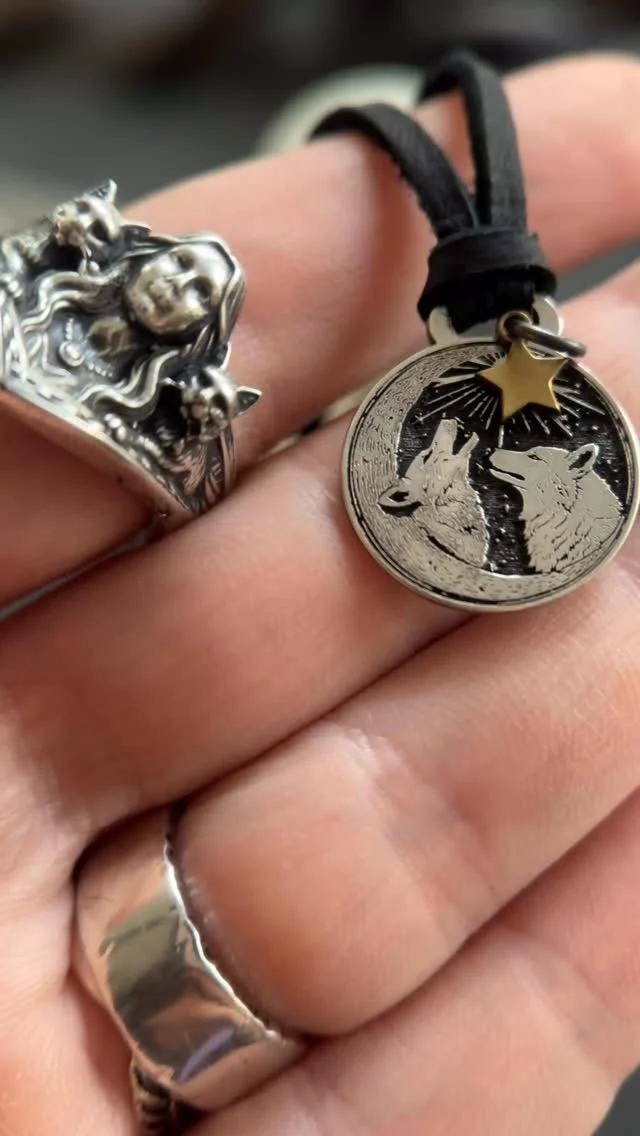
Freya’s cats rule and dogs drool?
Or was that the other way around? 🙃

Garm barely shows up in the old Norse stories.
Still… he leaves a mark.
A...
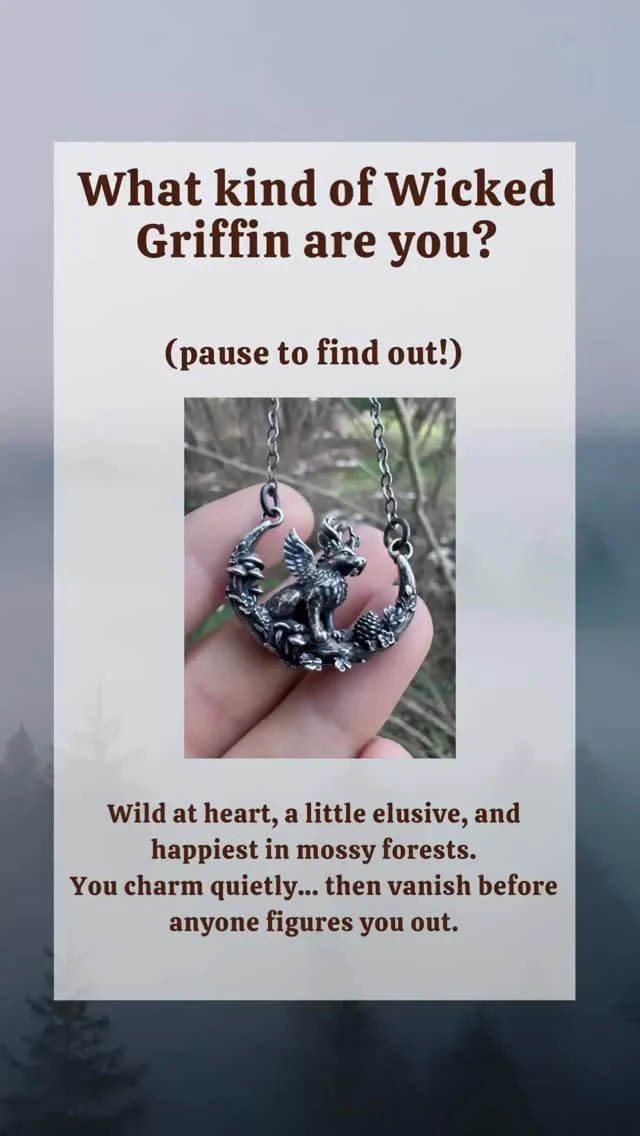
Leave a comment with your result ❤️
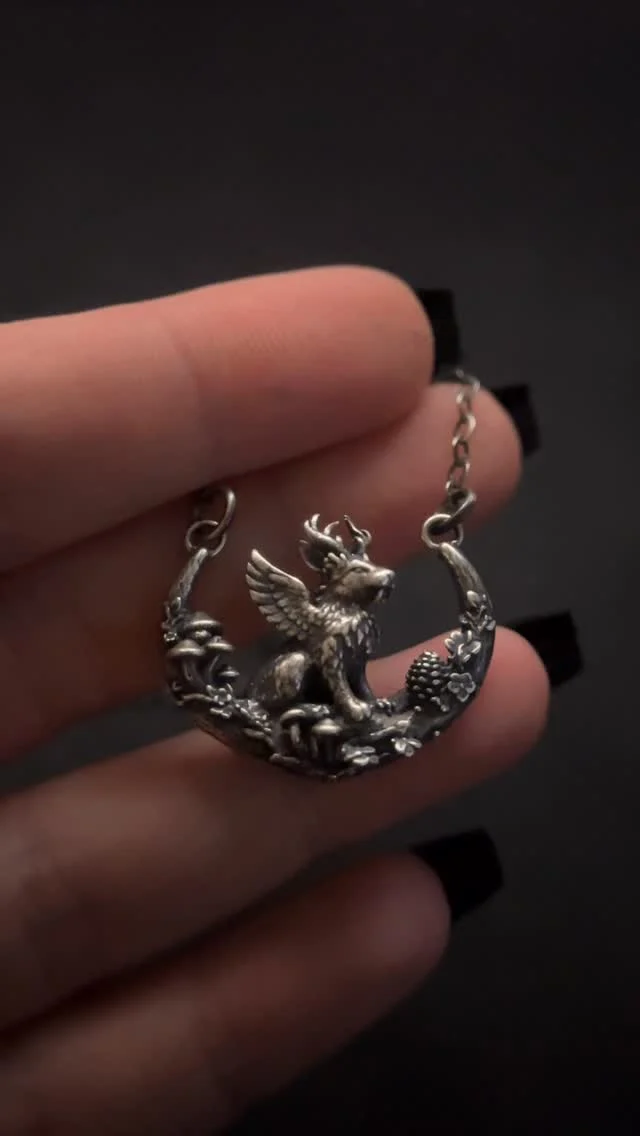
Bavarian Folklore says that you might just cross paths with a Wolpertinger in the alpine...

🐇🌲✨
He finally stepped out of the forest…
The Wolpertinger Pendant has arrived.
Inspired by...

I don’t often sell them, but love it when I do!
Vinca symbol bracelets ❤️...

Rooted in strength + guarded by ravens

The serpent waits 🖤
(Handcrafted Jörmungandr ring made to order in my shop)

Stay warm, everyone ❤️

😑😑😑🤮

I thought I had closed the book on the Alice in Wonderland rings…
But you...

Can this be over now, please?

In case you forgot 💜

Something I’ve been thinking about lately.
If there’s one thing I would’ve done differently early...

This year, we’re not buying things just to keep up.
If you need the reminder:...

My husband is from Bavaria (southern Germany) and I originally made this Krampus pendant for...

Some of the items I’m shipping out today ❤️
Please forgive my dirty nails 😂...

A few items shipping out today 🥰

This mornings rings shipping out ❤️

A few of the rjngs I’m shipping out this morning ❤️
How do you like...

Krampus is coming 🫶🏻

Getting ready to pack up these pretties and ship to their owners ❤️

Freya, cats and pentacles. Doesn’t get any better ❤️

You all got me going crazy making all these fairytale + storybook rings.
But I’ll...

Just launched these pretties ❤️
Size 9 amethyst ring + size 7.25 green kyanite

What would you trade to learn Baba Yaga’s secrets?

It *finally* looks, feels and smells like October!
And here are some items I’m packing...

This mornings pretties getting ready to ship :)

Getting ready to pack up these pretties and ship to their owners ❤️

You bet I’m hopping on this trend 😂
Thank you @shes_sinister for the prompt!

While I welcome the seasonal darkness…it sure is going to make my morning quick videos...

Finally finished the rings I’ve been working on in my stories ❤️
I think I...

Was going to post this update to my stories but it’s too long.

“How do you know I’m mad?” said Alice.
“You must be,” said the Cat, “or...

Some of this mornings orders getting ready to ship. Those little bats are so cute...

Here is the finished ring I was working on in my stories yesterday, along with...

A few of today’s orders shipping out this morning ❤️

The two silver raven rings I was working on in my stories yesterday.
…as well...

Eeeek! I’m so happy to add these to my shop ❤️
I’ve gotten so many...

I had 6 clamshells ready to ship this morning but I dropped and lost my...

Not the story you were told.
The girl didn’t run.
The wolf didn’t win.
This...

I love these raven rings so much 🖤
This mornings pretties shipping out.
All items...

Sleek + minimal Mjölnir ring ⚒️


About the author Jacqueline Fatica


