Váli Son of Odin

Váli is a son of Odin and a brother to Baldur and Thor. His role and function is primarily associated with the death of Baldur and his seeking for revenge by killing Höðr. What is the myth of Váli? He…

Norse mythology, a cornerstone of Scandinavian heritage, is a rich tapestry of tales and legends that have inspired countless generations. Originating from the Northern Germanic tribes, these myths were orally passed down before being eventually recorded in manuscripts like the Poetic Edda and the Prose Edda. Today, they remain a testament to the beliefs, values, and imagination of the Vikings and their predecessors.
At the heart of Norse mythology are the gods and goddesses who reside in Asgard, one of the Nine Realms connected by the cosmic tree, Yggdrasil. Chief among them is Odin, the Allfather, a god of war, wisdom, and poetry. Accompanying him are other notable deities such as Thor, the thunder god wielding the mighty Mjölnir; Freyja, the goddess of love and fertility; and Loki, the mischievous trickster whose antics often lead to both turmoil and resolution.
Beyond the gods, Norse myths are populated with a myriad of other beings: from the valiant Valkyries, who choose slain warriors to join Odin in Valhalla, to the fearsome giants of Jotunheim, often at odds with the gods. There are elves, dwarves, and spirits, each playing a unique role in the vast narrative landscape of Norse lore.
The tales of Norse mythology are not just about individual characters but also revolve around grand sagas that encompass themes of creation, destruction, and rebirth. The story of the world’s creation, where the first beings emerged from the chasm of Ginnungagap, sets the stage for a series of epic events. These culminate in Ragnarok, the prophesied end of the world, where gods, giants, and heroes engage in a final battle, leading to a rebirth and a new world order.
One of the most enchanting aspects of Norse myths is their intertwining with real-world history and geography. The Vikings, renowned for their exploration and conquests, carried these tales with them, leaving traces of their beliefs across Europe, Asia, and even North America. Rune stones scattered across Scandinavia, ancient burial sites, and artifacts all bear witness to the profound impact of these myths on Viking culture and identity.
In today’s digital age, the allure of Norse mythology remains undiminished. Modern literature, cinema, and art continue to draw inspiration from these ancient tales. From J.R.R. Tolkien’s Middle-Earth to Marvel’s portrayal of Thor and Loki, the influence of Norse myths is evident in contemporary culture, attesting to their timeless appeal.
For those seeking to delve deeper into this fascinating world, Norse mythology offers a treasure trove of insights. It provides a window into the mindset of the ancient Norse people, their understanding of the cosmos, their moral compass, and their artistic expression. Each tale, whether it’s of heroic quests, divine mischief, or cosmic events, is a piece of a larger puzzle that paints a picture of a vibrant, dynamic, and deeply spiritual civilization.
In conclusion, Norse mythology is more than just a collection of myths and legends. It’s a reflection of human nature, aspirations, fears, and hopes. It’s a testament to the power of storytelling and the indelible mark it leaves on the annals of history. Whether you’re a scholar, a history enthusiast, or someone simply captivated by epic tales, Norse mythology beckons with the promise of adventure, wisdom, and a deep connection to the past. Dive in and let the sagas of the North guide you through an unforgettable journey.
Váli is a son of Odin and a brother to Baldur and Thor. His role and function is primarily associated with the death of Baldur and his seeking for revenge by killing Höðr. What is the myth of Váli? He…

Heimdallr / Heimdall possesses the Gjallarhorn, a horn that may be reflective of drinking and ceremonial horns that were used in religious rites among the Germanic people (e.g., Simek, 2007). In the Poetic Edda, Heimdallr / Heimdall is mentioned in…

Njörðr / Njord belongs to the tribe of the Vanir and is perhaps best known as being the father of Freya. Njörðr / Njord is mentioned in the various local sites across Scandinavia and in both Eddas. Is Njord the…

In Norse Mythology, the worlds that are ‘below’, or underneath the world-tree Yggdrasil, are under the rule of Hel, who resides in Helheimr (- ‘realm of the dead, underworld’). Hel is attested and mentioned in various Old Norse and Icelandic…

Freyr the origins and history Like Thor, Freyr was associated with a plentiful annual harvest. The name Freyr stems from the same Proto-Germanic word as Freya, meaning ‘Lord’. Freyr is attested in many sources, including Runic inscriptions, the Prose and…

Tyr is also known as Ziu in Old High German and derives possibly from an older deity, the reconstructed Tiwaz, meaning ‘the God’ (Jan de Vries, 1962; Altnordisches Etymologisches Wörterbuch (1977). Roman historian Tacitus said in ‘Germania’ that Mars is…

Who is the Thor? The Norse God Thor is especially associated with acreage, fertile harvests and as such, can be considered to be an agricultural deity. Known for his hammer Mjölnir, his appearance and force were associated with thunder, lightning…

What was Loki the god of? Regarding Loki in pre-christian mythologies, cultural hero can appear in many shapes and forms. They can be deceivers, tricksters, shapeshifters. They can take on the forces of creation and destruction and personify them (e.g.,…

The Norse God Víðarr | Vidar is mostly associated with the event of Ragnarök and the battle between the Aesir under the rule of Odin, and fire Jötnar giants. Both sides are slain and only a few will survive. Víðarr…

Baldur, The Norse God is the son of Odin and his wife Frigg and derives from the Proto-Germanic Balðraz, which means ‘hero’ and ‘to shine’. Many aspects of Norse mythology have celestial aspects, i.e., they are projected skywards. This is…


ᛉ 100% handcrafted artisan pagan, Viking, witchcraft and shamanic inspired jewelry.nᛉ Runes, symbolism & European folklore

Some pretties shipping out this morning 💜
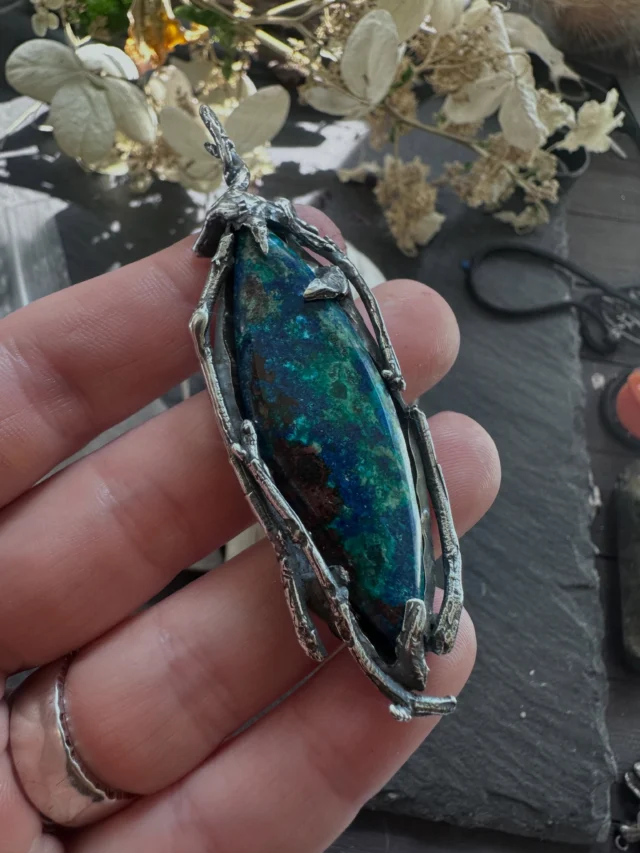
I finally made a piece just for myself ❤️
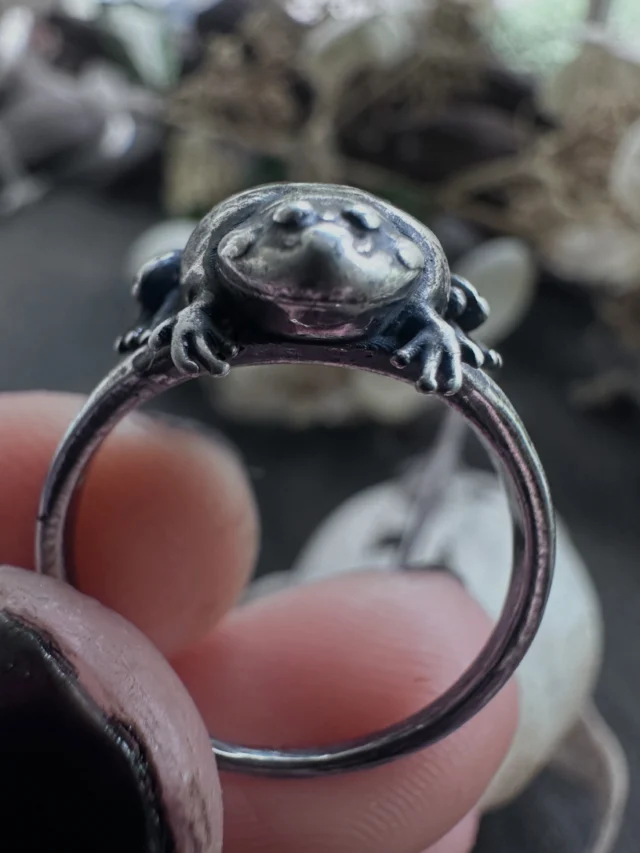
A little familiar for those of us too irresponsible to keep a real one alive...
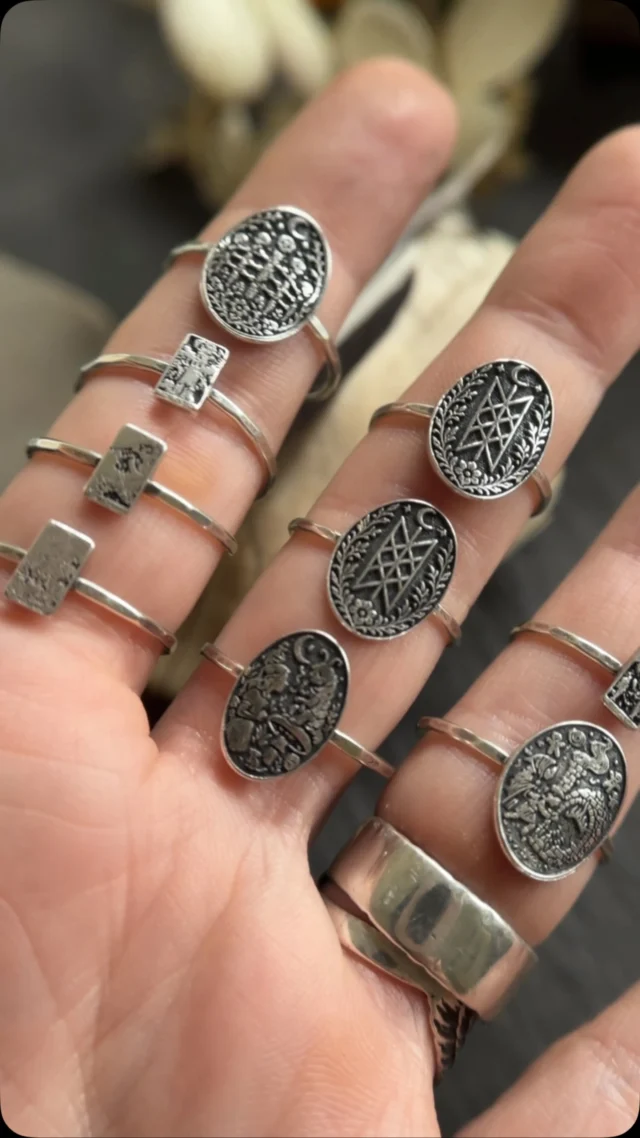
A few of this mornings pretties shipping out ❤️

I set the gems! I should be getting this up on the website soon 😊...

I’m so excited to see how those one of a kind gemstone rings will turn...

Just some pretties I’m shipping out this morning ❤️

Hi, I’m Jackie and I make stuff 😂❤️🙃

Shh… the mandrake is live 🌿

New Mandrake pendants coming soon ❤️

Etsy reinstated my Medusa Ring and SHEIN took down all the listings I reported 🙌🏻...

🚨 To report copyright infringement on SHEIN, email: us_legal@sheingroup.com
Subject line: Takedown Request
SHEIN sellers...

RIP to one of my best friends in this life ❤️
Shanna, you were the...

The original Rapunzel story wasn't sweet. A girl locked in a tower, a witch who...

Cernunnos sits cross-legged in the forest, antlers reaching toward the sky like branches. He is...

Just some pretties shipping this morning ❤️

Just some pretties shipping this morning ❤️

This morning’s little gathering before they head off to their owners. ✨
Gemstone rings, rune...

I swear he thinks my hair is a nest 😂🤷🏻♀️
…though I can’t blame him,...

This morning’s orders are heading out to their new owners, and somebody is clearly getting...

This is what went out of my studio today.
Real orders. Real pieces. Real myth-haunted...

The Vegvisir was meant to be carried, not displayed. A wayfinding symbol the Icelanders believed...

Jörmungandr. The Midgard Serpent.
Thrown into the ocean by Odin, it grew so enormous that...

This morning’s orders are packed and heading out to their new homes. 🖤
A little...

A few pieces heading out this morning 🖤
A Walpurgisnacht pendant, a Wolpertinger pendant, and...

The Norse didn't believe in a fixed destiny. They believed in the Wyrd. 🕸️
Wyrd...

Packing up this morning’s little pile of magic before it heads out into the world....

Deep in the birch forests of Eastern Europe, there stands a hut that walks on...

Odin didn't stumble into wisdom. He suffered for it. 🌑
He hung himself from Yggdrasil...

In Scandinavian folklore, trolls weren't the cute creatures you see in kids' movies. They were...

Deep in the birch forests of Eastern Europe, there's a house that walks on chicken...

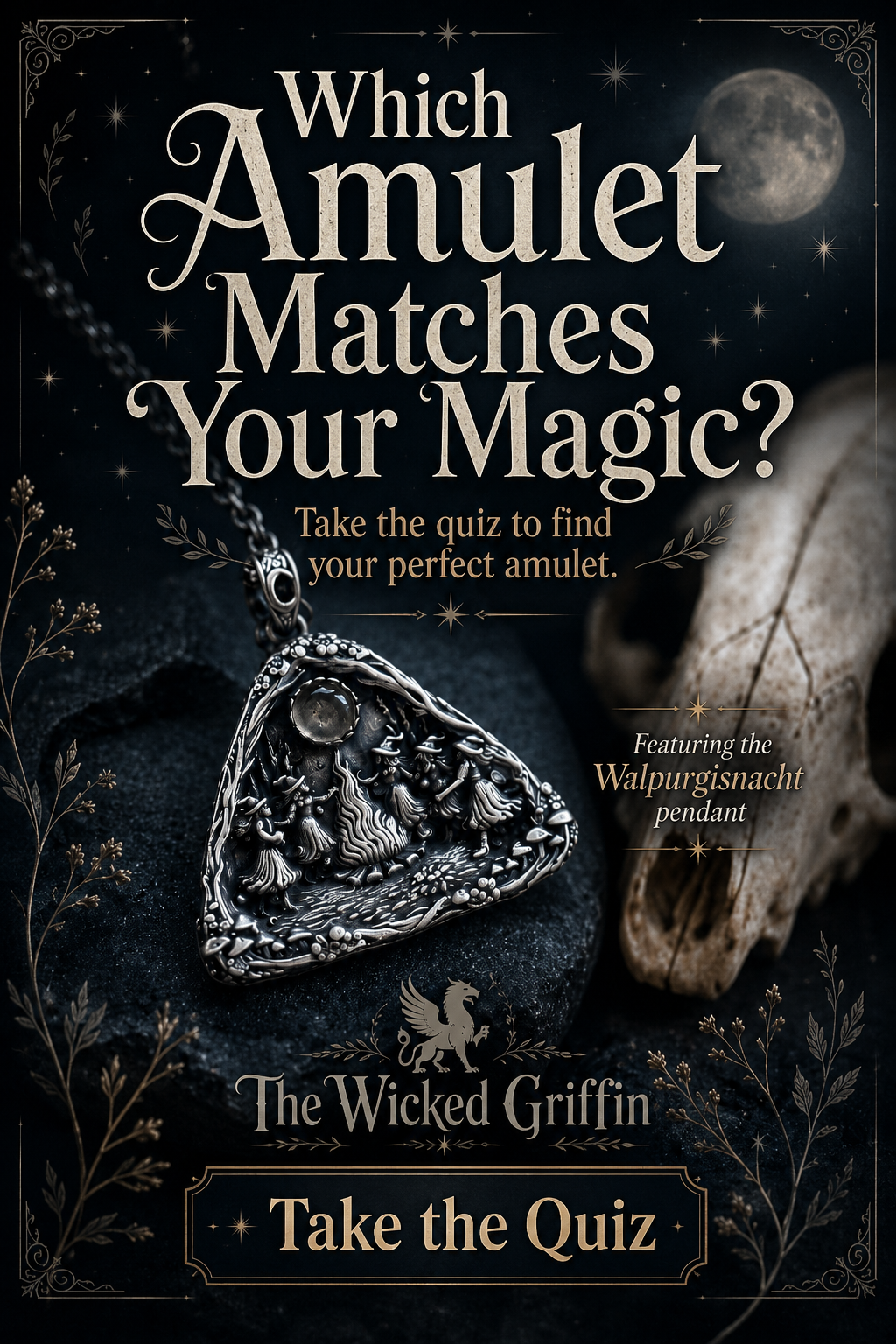
Which amulet matches your magic? ✨
I made a little quiz to pair you with...

🌙 Keeper of secrets, veil of night, guide me through the hidden rite.
Items shown...

New Moon in Taurus tomorrow. 🌑
Taurus is the sign of patience, craft, and building...

Saturday is the New Moon, a time for setting intentions. And there’s no better way...

There's no assembly line. No mass production. Just me at my bench, handcrafting to order...

A few of this mornings order before I pack them up to ship ❤️
Which...

Protection has always been woven into my work. ⚡
The Helm of Awe (Aegishjalmur) was...

Have you ever heard of the Wolpertinger? 🦌
Deep in the forests of Bavaria, there...

Walpurgisnacht has changed so much over the centuries.
What began as a night of caution,...

I’m loving how much you all love my new Walpurgisnacht pendant ❤️

Five witches dance around a blazing bonfire beneath a citrine cabochon in this Walpurgisnacht pendant....

Happy washing day 🙃
A few rings I’ve worked on the last couple days…

Freya’s cats rule and dogs drool?
Or was that the other way around? 🙃

Garm barely shows up in the old Norse stories.
Still… he leaves a mark.
A...

Leave a comment with your result ❤️

Bavarian Folklore says that you might just cross paths with a Wolpertinger in the alpine...

🐇🌲✨
He finally stepped out of the forest…
The Wolpertinger Pendant has arrived.
Inspired by...