No products in the cart.
March 15, 2026 8:23 pm

Free USA shipping on orders $35+
March 15, 2026 8:23 pm
The figure of Búri in Norse mythology belongs to the earliest stage of the mythic creation narrative and thus to the birth of the gods themselves.
Although this ancient norse god appears only briefly in medieval literature, his presence marks the beginning of the divine genealogy that leads to Odin and the ruling deities of the Norse world.
By examining the literary sources and scholarly interpretations, we can understand why Búri, his son Borr, and the ancestry they establish remain central to the structure of mythological thought.
This article explains the evidence carefully, drawing on academic research and primary texts to illuminate the origins of the gods of Norse mythology.
In the earliest layers of the norse creation story, myth introduces a mysterious ancestral being whose presence defines the beginning of divine order.
Búri appears as the first fully humanlike god to emerge within the mythic sequence.
The medieval narrative explains that Búri is described as strong, beautiful, and complete in bodily form, a sign that structured existence is beginning to take shape within the cosmos (Sturluson, 1995, p. 11).
The story of Búri demonstrates how early mythic traditions rely on ancestry to explain authority.
However, rather than portraying him as a warrior or lawgiver, the sources present him as a progenitor, a foundational father whose existence allows later divine figures to emerge.
Scholars often note that this kind of genealogical role marks the transition from the primeval world to the recognizable norse pantheon.
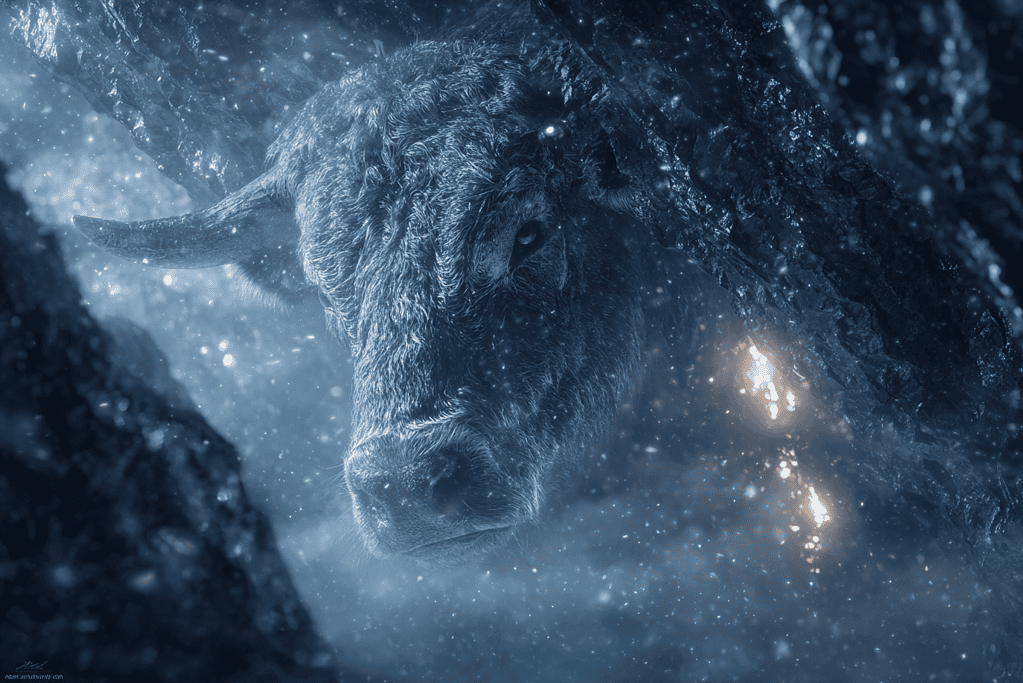
The norse creation myth unfolds in the vast primordial void known as Ginnungagap, where extremes of heat and cold meet. In other words, polar opposites create the world.
From the icy region of Niflheim and the fiery realm of Muspelheim, the earliest beings come into existence.
Among them is the giant Ymir, whose presence represents chaotic vitality. Alongside him appears the nurturing cow named Auðhumla, who sustains herself by licking frost from the stones (Sturluson, 1995, p. 10).
According to the norse creation, the gradual formation of Búri occurs through this act of nourishment.
The primordial cow Audhumla licks the salty rime-stones, and over time she reveals the shape of a man.
The myth explains that hair appears first, then the head, and finally the entire body. This scene of emergence from the ice reflects the idea that order and identity develop step by step within the mythic universe.
The narrative of genealogy quickly follows the appearance of Búri.
The text states that Búri had a son, named Borr, and through this relationship the later divine figures enter the story.
Borr marries Bestla, described in tradition as the daughter of a giant, and from their union are born three sons who were gods: Odin, Vili, and Vé (Sturluson, 1995, p. 11).
This relationship establishes that Búri is the grandfather of Odin, not his father. The distinction is important in scholarly discussions of mythic lineage.
By situating god Odin within this ancestry, the tradition emphasizes continuity and legitimacy in the development of divine authority.
The later achievements of Odin and his brothers gain meaning because they arise from an established divine lineage.
The connection between Búri and Borr represents the first generational step in the mythic history of the gods.
As the father of Borr, Búri anchors the ancestral chain that eventually leads to the rulers of heaven and earth.
The sources do not describe dramatic deeds performed by him. Instead, they highlight the importance of descent and inheritance.
This emphasis on genealogy reflects the structure of many myth traditions.
The presence of a progenitor explains how power and identity pass from one generation to another.
Medieval poetic fragments preserved in Skáldskaparmál even use expressions such as descendant of Buri as part of learned poetic language, demonstrating that his role as ancestor was widely recognized and acknowledged (Sturluson, 1998, p. 5).
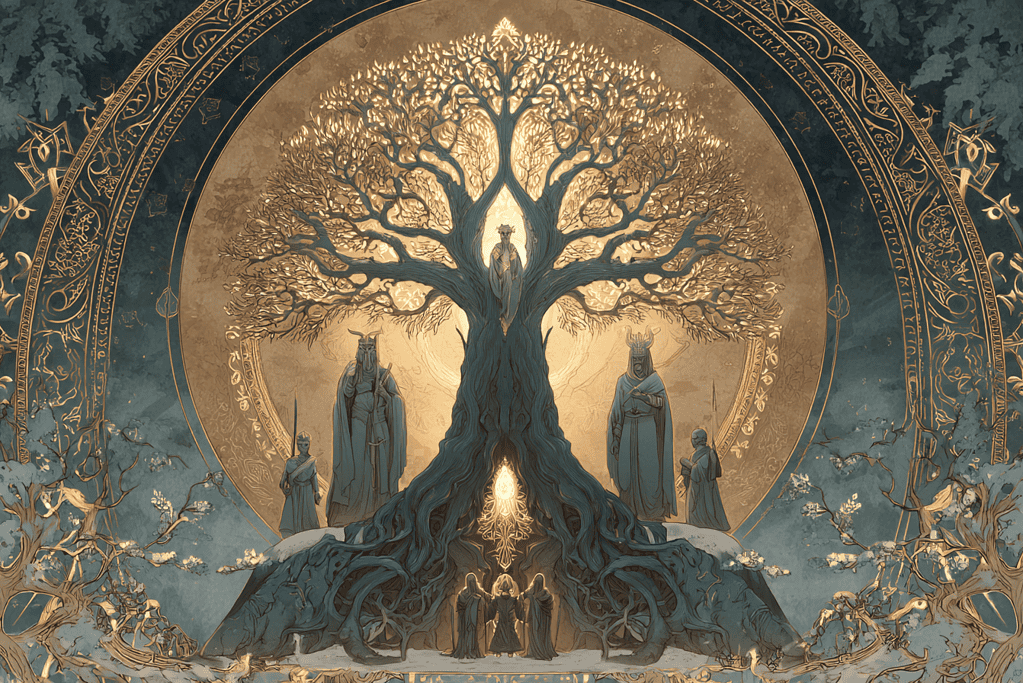
Scholars such as Professor Rudolf Simek describe Búri as the earliest known ancestor of the Æsir gods.
His significance lies in marking the beginning of the divine lineage, rather than in participating directly in mythic adventures (Simek, 1993, p. 49).
In this sense, Buri is often viewed as a structural figure whose presence allows the narrative to move forward.
The idea that mythic history begins with Buri helps explain how the later pantheon develops.
By tracing authority back to a single origin, the tradition provides a framework for understanding the relationships among the gods.
This genealogical structure plays a crucial role in shaping the way myth presents cosmic order throughout the Norse pantheon and cosmology.
The episode in which Búri emerged from the ice is one of the most vivid scenes in the norse creation myth.
The narrative explains that the cow gradually revealed his form by licking the frozen stones.
The slow progression from hidden matter to visible being conveys a sense of transformation and anticipation.
It also suggests that the universe itself is forming through a sequence of careful stages.
Scholars often interpret this imagery as reflecting the environmental context of the Old Norse world.
The presence of frost, silence, and elemental forces creates an atmosphere in which life appears fragile yet powerful.
The myth communicates that identity and structure arise from conditions that initially seem inhospitable.
In the norse creation story, the giant Ymir and the nurturing cow represent contrasting aspects of existence.
On the other hand, Ymir embodies raw generative force, while the cow provides sustenance and stability.
More importantly, however, the appearance of Búri within this context illustrates how myth constructs a bridge between chaos and order.
Later in the narrative, the three gods born from the line of Borr reshape the world after the death of Ymir.
This transformation becomes possible only because the genealogical framework beginning with Búri has already been established.
The myth thus links ancestry to the creation of the world in a profound and symbolic manner.
Modern scholarship emphasizes that Búri does not feature in extensive narrative cycles. Unlike figures such as Odin, he appears briefly and without personal exploits.
Turville-Petre notes that early divine figures sometimes serve primarily as markers of origin rather than as characters in elaborate stories (Turville-Petre, 1964, pp. 276–277).
This limited presence makes the figure in Norse mythology particularly intriguing.
His importance lies not in action but in the fact that he played a crucial role in establishing continuity.
Through his existence, the myth provides a clear explanation for how divine authority is transmitted.

The principal account of God Buri appears in the Prose Edda, a work written by the Icelandic author Snorri Sturluson in the thirteenth century.
The section known as Gylfaginning recounts the early stages of the norse creation, introducing Búri as the first anthropomorphic divine being. The same tradition is echoed in poetic references preserved in earlier skaldic verse (Sturluson, 1998, p. 5).
Scholars such as Margaret Clunies Ross stress that these texts reflect a period in which myth was being organized and interpreted for new audiences.
This is of course a general problem that philologists deal with when it comes to interpreting the Eddas and Icelandic sagas.
As a result, the presentation of Búri must be understood within the context of literary preservation rather than direct evidence of pre-Christian cult practice (Clunies Ross, 1994, pp. 30–31).
The story of Buri continues to attract attention because it reveals how myth constructs beginnings.
By placing a quiet ancestral figure at the dawn of cosmic history, the tradition emphasizes the power of lineage and continuity.
In modern interpretations and adaptations, this early god sometimes symbolizes the idea that identity grows from deep roots.
Through careful study of gods and their stories, scholars gain insight into how ancient communities imagined the origins of existence.
The presence of Búri, standing at the threshold of mythic time, reminds readers that the foundations of belief are often established through subtle narrative gestures rather than dramatic events.
Clunies Ross, M. (1994). Prolonged echoes: Old Norse myths in medieval Northern society (Vol. 1). Odense University Press.
Lindow, J. (2001). Norse mythology: A guide to gods, heroes, rituals, and beliefs. Oxford University Press.
Simek, R. (1993). Dictionary of Northern mythology (A. Hall, Trans.). D. S. Brewer.
Sturluson, S. (1995). Edda: Prologue and Gylfaginning (A. Faulkes, Ed. & Trans.). Viking Society for Northern Research.
Sturluson, S. (1998). Edda: Skáldskaparmál (A. Faulkes, Ed. & Trans.) (Vol. 1). Viking Society for Northern Research.
Turville-Petre, E. O. G. (1964). Myth and religion of the North: The religion of ancient Scandinavia. Weidenfeld & Nicolson.

ᛉ 100% handcrafted artisan pagan , viking, witchcraft and shamanic inspired jewelry.
ᛉ Runes, Symbolism & European Folklore
Get 20% off👇🏻
Happy washing day 🙃
A few rings I’ve worked on the last couple days…
Freya’s cats rule and dogs drool?
Or was that the other way around? 🙃

Garm barely shows up in the old Norse stories.
Still… he leaves a mark.
A...
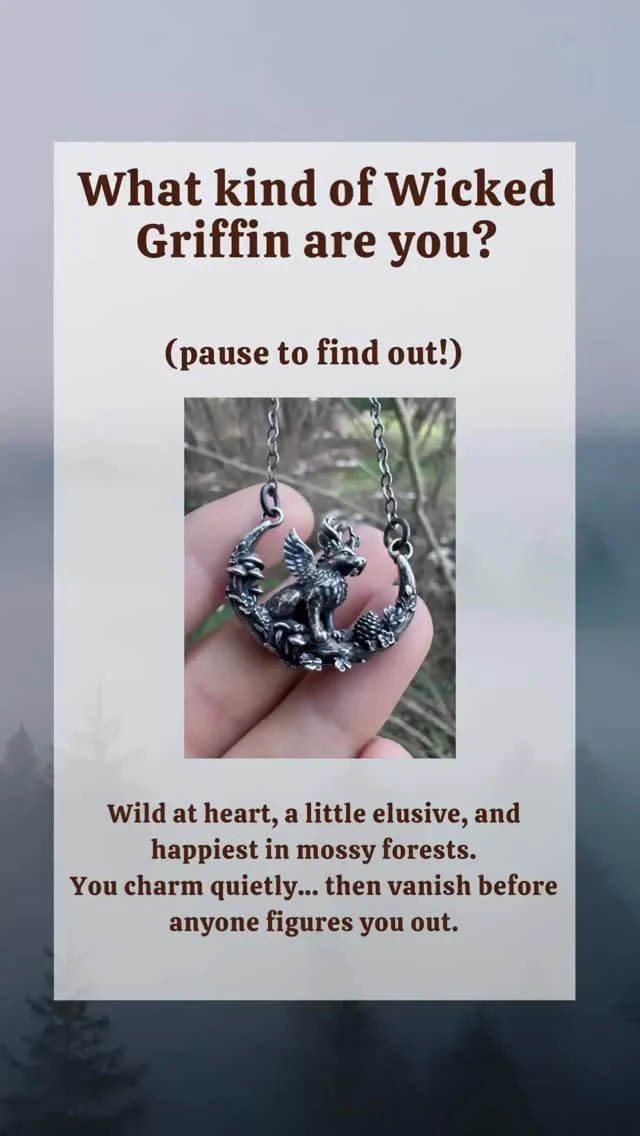
Leave a comment with your result ❤️
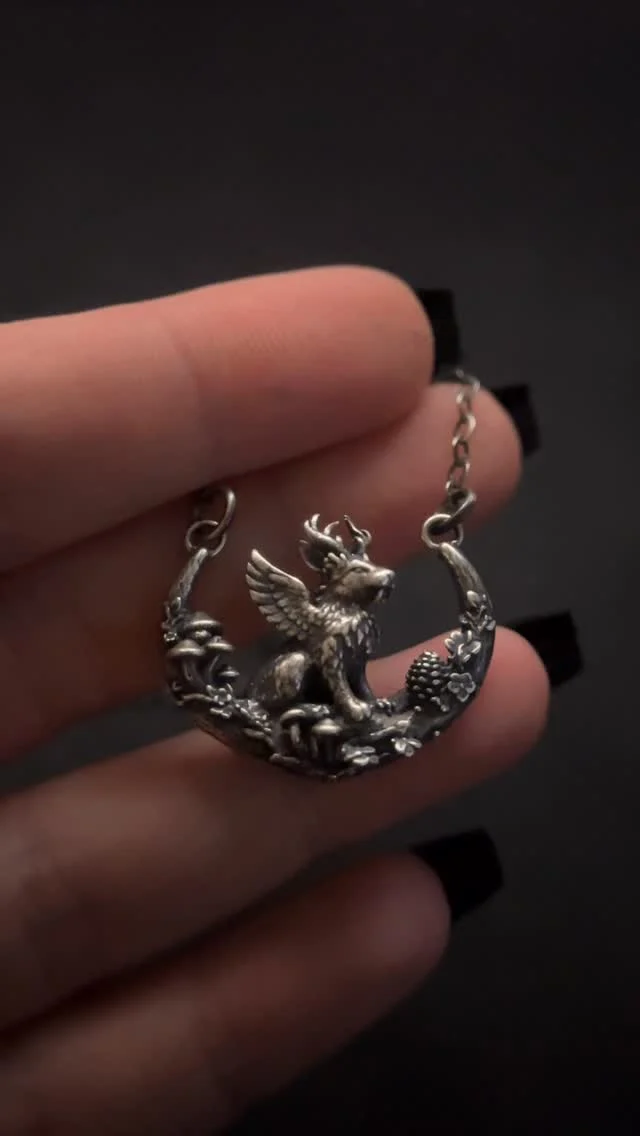
Bavarian Folklore says that you might just cross paths with a Wolpertinger in the alpine...

🐇🌲✨
He finally stepped out of the forest…
The Wolpertinger Pendant has arrived.
Inspired by...

I don’t often sell them, but love it when I do!
Vinca symbol bracelets ❤️...

Rooted in strength + guarded by ravens

The serpent waits 🖤
(Handcrafted Jörmungandr ring made to order in my shop)

Stay warm, everyone ❤️

😑😑😑🤮

I thought I had closed the book on the Alice in Wonderland rings…
But you...

Can this be over now, please?

In case you forgot 💜

Something I’ve been thinking about lately.
If there’s one thing I would’ve done differently early...

This year, we’re not buying things just to keep up.
If you need the reminder:...

My husband is from Bavaria (southern Germany) and I originally made this Krampus pendant for...

Some of the items I’m shipping out today ❤️
Please forgive my dirty nails 😂...

A few items shipping out today 🥰

This mornings rings shipping out ❤️

A few of the rjngs I’m shipping out this morning ❤️
How do you like...

Krampus is coming 🫶🏻

Getting ready to pack up these pretties and ship to their owners ❤️

Freya, cats and pentacles. Doesn’t get any better ❤️

You all got me going crazy making all these fairytale + storybook rings.
But I’ll...

Just launched these pretties ❤️
Size 9 amethyst ring + size 7.25 green kyanite

What would you trade to learn Baba Yaga’s secrets?

It *finally* looks, feels and smells like October!
And here are some items I’m packing...

This mornings pretties getting ready to ship :)

Getting ready to pack up these pretties and ship to their owners ❤️

You bet I’m hopping on this trend 😂
Thank you @shes_sinister for the prompt!

While I welcome the seasonal darkness…it sure is going to make my morning quick videos...

Finally finished the rings I’ve been working on in my stories ❤️
I think I...

Was going to post this update to my stories but it’s too long.

“How do you know I’m mad?” said Alice.
“You must be,” said the Cat, “or...

Some of this mornings orders getting ready to ship. Those little bats are so cute...

Here is the finished ring I was working on in my stories yesterday, along with...

A few of today’s orders shipping out this morning ❤️

The two silver raven rings I was working on in my stories yesterday.
…as well...

Eeeek! I’m so happy to add these to my shop ❤️
I’ve gotten so many...

I had 6 clamshells ready to ship this morning but I dropped and lost my...

Not the story you were told.
The girl didn’t run.
The wolf didn’t win.
This...

I love these raven rings so much 🖤
This mornings pretties shipping out.
All items...

Sleek + minimal Mjölnir ring ⚒️

Today’s orders getting ready to ship.
…And I finally got some time to work on...


About the author Jacqueline Fatica


