No products in the cart.
December 4, 2025 1:23 pm

Free USA shipping on orders $35+
December 4, 2025 1:23 pm
Apollo and Dionysus stand as two pillars of divine contrast in ancient Greek thought. They are embodying light and dark, reason and ecstasy, form and formlessness.
This article explores their respective cults and myths, not through later philosophical reinterpretations, but by tracing their roots in Classical Greek sources and rituals.
The relationship between these two gods opens a window into the deeper rhythm of ancient spirituality and art.
Apollo was the god of light, prophecy, music, and healing, often associated with clarity, harmony, and measured form.
Dionysus, by contrast, was the god of wine, ecstasy, transformation, and ritual madness.
Though both were sons of Zeus, their personalities, worship, and mythic cycles contrasted dramatically.
Apollo represented rationality and control. Dionysus embodied the ecstatic dissolution of boundaries.
They were not simply opposites. They were cosmic counterweights.
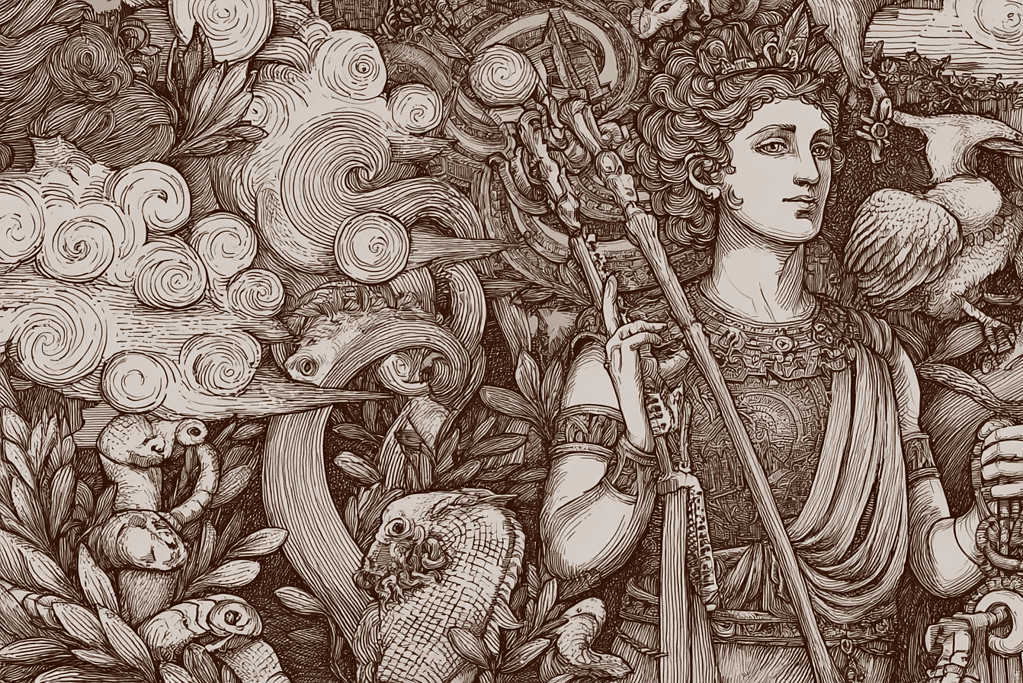
Apollo’s myths center on order, punishment, purification, and prophecy.
He slays Python at Delphi, takes over the oracle, and institutes seasonal rites of purification.
Dionysus’ stories tell of wandering, resistance, madness, and triumphant return.
Indeed, he drives women into ecstatic frenzy, overthrows kings, and is often welcomed only after being misunderstood.
Apollo’s cult emphasized order: temples, hymns, clean rites. Dionysus’ rites were nocturnal, secretive, and ecstatic.
They were featuring maenads, masks, wine, and much more.
At Delphi, the sanctuary of Apollo, Dionysus was honored for three winter months when Apollo “departed”.
This seasonal alternation expressed a sacred rhythm: Apollo ruled from spring through fall; Dionysus took over in winter.
This dual presence created a unique theological structure: the rational and the ecstatic sharing one holy site.
It wasn’t opposition so much as succession and balance.
Athenian drama, especially tragedy, was performed at festivals in Dionysus’ honor.
The god of masks and transformation was patron of the genre.
Aeschylus and Sophocles shaped their plays to reflect suffering, hubris, catharsis. All of these are key Dionysian motifs.
The chorus, dithyramb, and wine-processions (komoi) embedded tragedy in ritual. Dionysus wasn’t a topic of the plays. He was their spirit.
The Homeric Hymn to Dionysus (7th–6th c. BCE) recounts his capture by pirates, his miraculous transformation, and the fear he inspires.
Vines sprout, wine flows, sailors turn into dolphins. Here, we see divine power as untamable, joyful, and horrifying.
Apollo’s hymns emphasize his authority, healing, and the establishment of law through prophecy.
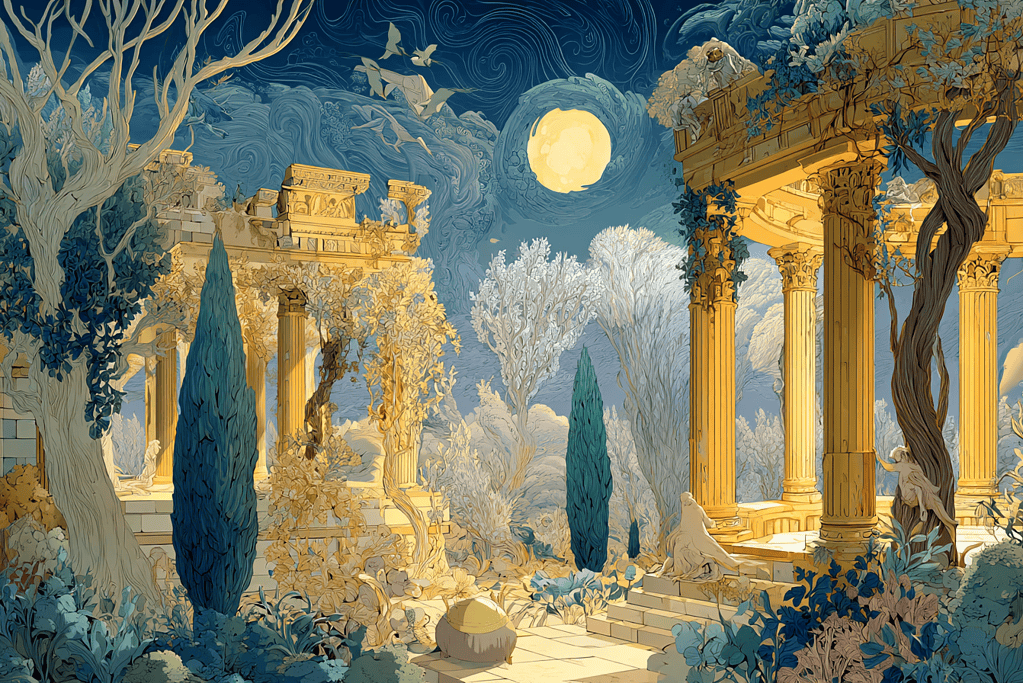
Apollo’s rites emphasized purification: laurel, hymns, clear waters, fire.
His priests and priestesses observed strict rituals and seasonal schedules.
Dionysus’ rites were unpredictable. They were held in mountains or forests, and often involved women (maenads) leaving their households for ecstatic communion.
This structured the sacred world into day and night, logic and frenzy.
Music was central to both gods. Apollo played the lyre, however, always calm, ordered, celestial.
Dionysus inspired aulos-playing and was quite different from Apollo’s. Wailing, breathy, frenzied. One god favored harmony, the other rhythm and improvisation.
In Dionysian ritual, madness was divine: a mode of liberation. Possession by the god could mean transformation, vision, or destruction.

Apollo and Dionysus symbolized polar instincts in Greek psychology: clarity and chaos, form and dissolution.
Greek thinkers, playwrights, and cult leaders saw them not as enemies but necessary dualities.
Even in mystery cults and orphic traditions, both were honored as part of the soul’s full journey—from individuation (Apollo) to ecstatic loss of self (Dionysus).
Apollo appears youthful, idealized, beardless. Dionysus shifts over time, from older and bearded to effeminate and long-haired.
Vase paintings show Apollo in measured poses, lyre in hand. Dionysus appears with satyrs, maenads, wine, and wild animals.
Delphi honored Apollo with monumental temples. Dionysus received torchlight dances and mountain rites.
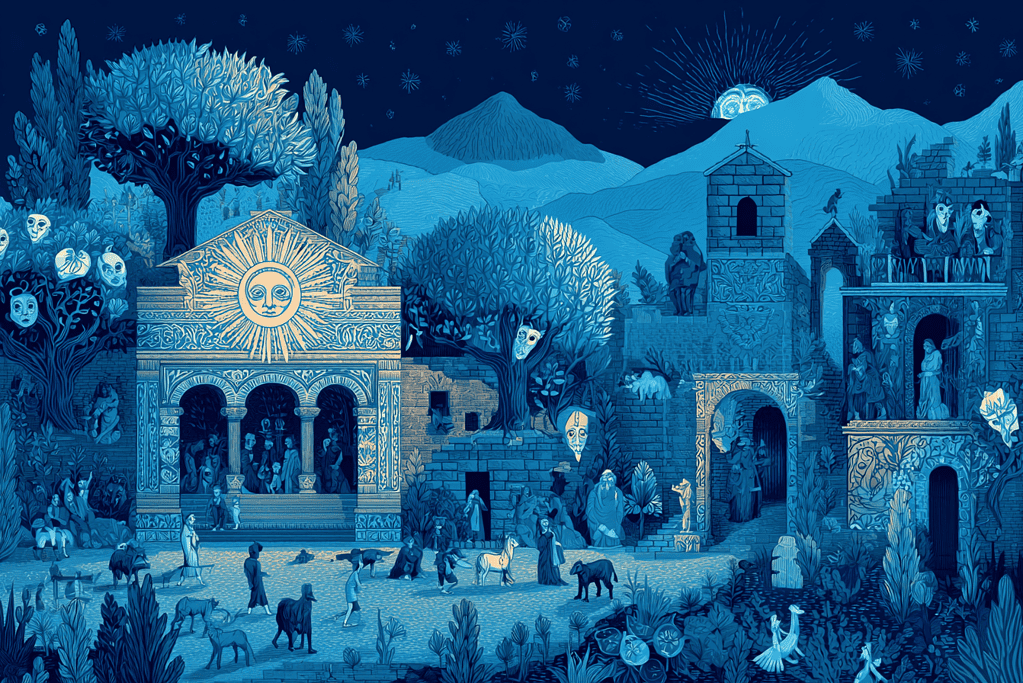
These two gods model a tension many still feel: between order and freedom, form and instinct, clarity and creativity.
They provide an ancient vocabulary for understanding dual aspects of the human spirit.
In Classical myth, this wasn’t something to resolve, it was a mystery to live through.
Their worship shaped the sacred imagination of the Greeks for centuries.
Burkert, W. (1985). Greek religion: Archaic and classical (J. Raffan, Trans.). Harvard University Press.
Detienne, M. (1996). Dionysos at Large (A. Nevill, Trans.). Harvard University Press.
Graf, F. (1987). Greek mythology: An introduction. Johns Hopkins University Press.
Larson, J. (2007). Ancient Greek cults: A guide. Routledge.
Parker, R. (2005). Polytheism and society at Athens. Oxford University Press.
Seaford, R. (2006). Dionysos. Routledge.
Sourvinou-Inwood, C. (2003). Tragedy and Athenian religion. Lexington Books.
Vernant, J.-P., & Vidal-Naquet, P. (1990). Myth and tragedy in ancient Greece (J. Lloyd, Trans.). Zone Books.
Zaidman, L. B., & Pantel, P. S. (1992). Religion in the ancient Greek city. Cambridge University Press.

ᛉ 100% handcrafted artisan pagan , viking, witchcraft and shamanic inspired jewelry.
ᛉ Runes, Symbolism & European Folklore
Get 20% off👇🏻

Five witches dance around a blazing bonfire beneath a citrine cabochon in this Walpurgisnacht pendant....
Happy washing day 🙃
A few rings I’ve worked on the last couple days…
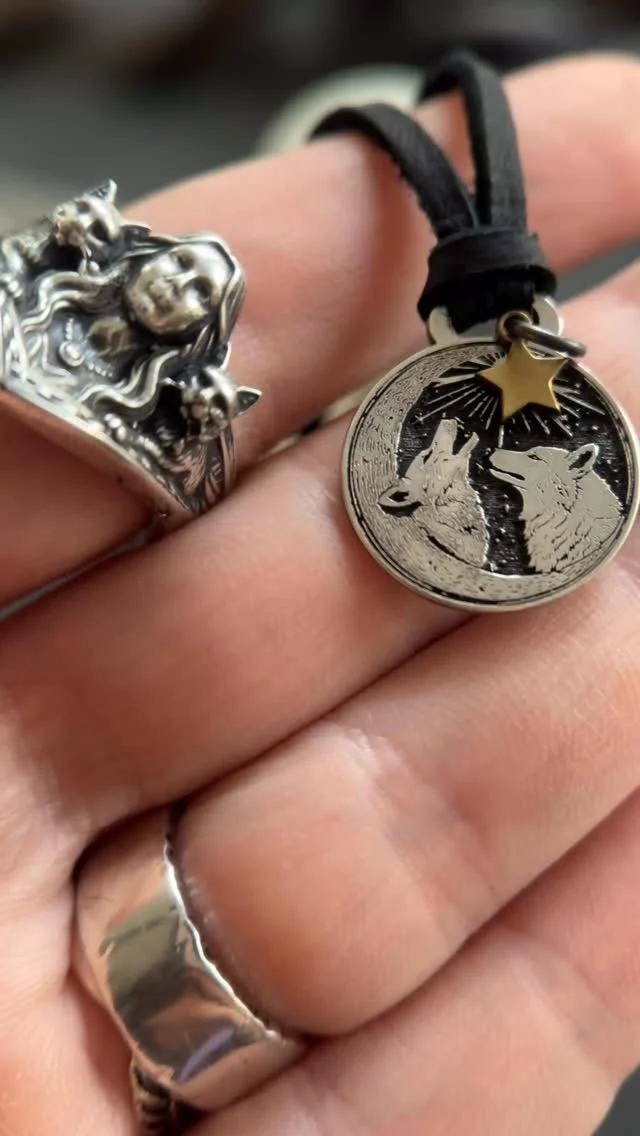
Freya’s cats rule and dogs drool?
Or was that the other way around? 🙃

Garm barely shows up in the old Norse stories.
Still… he leaves a mark.
A...
Leave a comment with your result ❤️
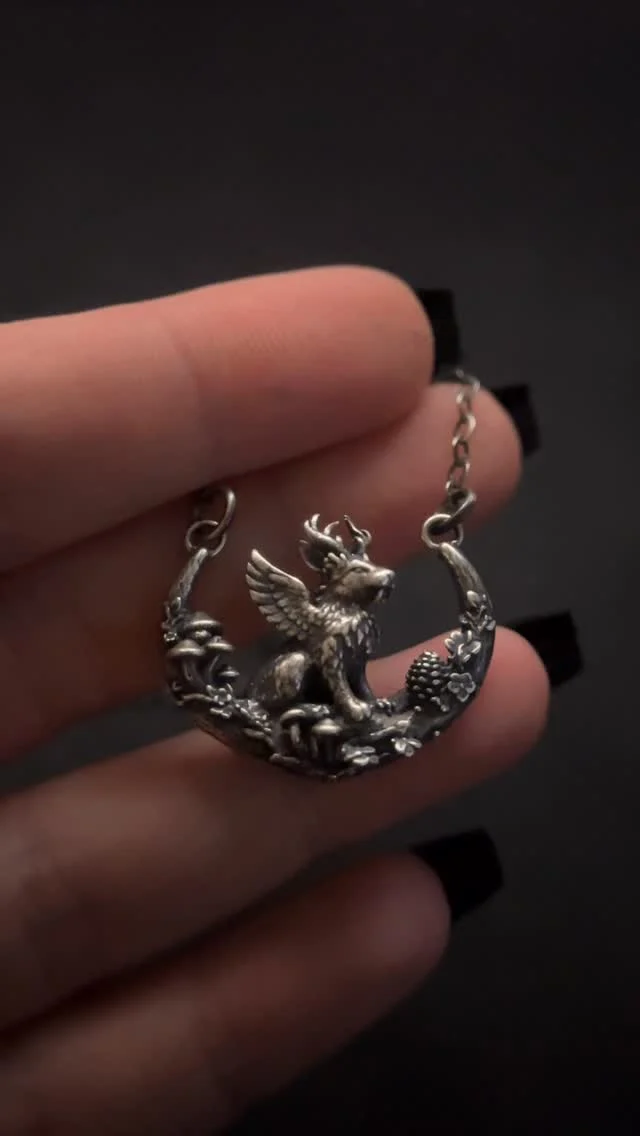
Bavarian Folklore says that you might just cross paths with a Wolpertinger in the alpine...

🐇🌲✨
He finally stepped out of the forest…
The Wolpertinger Pendant has arrived.
Inspired by...

I don’t often sell them, but love it when I do!
Vinca symbol bracelets ❤️...

Rooted in strength + guarded by ravens

The serpent waits 🖤
(Handcrafted Jörmungandr ring made to order in my shop)

Stay warm, everyone ❤️

😑😑😑🤮

I thought I had closed the book on the Alice in Wonderland rings…
But you...

Can this be over now, please?

In case you forgot 💜

Something I’ve been thinking about lately.
If there’s one thing I would’ve done differently early...

This year, we’re not buying things just to keep up.
If you need the reminder:...

My husband is from Bavaria (southern Germany) and I originally made this Krampus pendant for...

Some of the items I’m shipping out today ❤️
Please forgive my dirty nails 😂...

A few items shipping out today 🥰

This mornings rings shipping out ❤️

A few of the rjngs I’m shipping out this morning ❤️
How do you like...

Krampus is coming 🫶🏻

Getting ready to pack up these pretties and ship to their owners ❤️

Freya, cats and pentacles. Doesn’t get any better ❤️

You all got me going crazy making all these fairytale + storybook rings.
But I’ll...

Just launched these pretties ❤️
Size 9 amethyst ring + size 7.25 green kyanite

What would you trade to learn Baba Yaga’s secrets?

It *finally* looks, feels and smells like October!
And here are some items I’m packing...

This mornings pretties getting ready to ship :)

Getting ready to pack up these pretties and ship to their owners ❤️

You bet I’m hopping on this trend 😂
Thank you @shes_sinister for the prompt!

While I welcome the seasonal darkness…it sure is going to make my morning quick videos...

Finally finished the rings I’ve been working on in my stories ❤️
I think I...

Was going to post this update to my stories but it’s too long.

“How do you know I’m mad?” said Alice.
“You must be,” said the Cat, “or...

Some of this mornings orders getting ready to ship. Those little bats are so cute...

Here is the finished ring I was working on in my stories yesterday, along with...

A few of today’s orders shipping out this morning ❤️

The two silver raven rings I was working on in my stories yesterday.
…as well...

Eeeek! I’m so happy to add these to my shop ❤️
I’ve gotten so many...

I had 6 clamshells ready to ship this morning but I dropped and lost my...

Not the story you were told.
The girl didn’t run.
The wolf didn’t win.
This...

I love these raven rings so much 🖤
This mornings pretties shipping out.
All items...

Sleek + minimal Mjölnir ring ⚒️


About the author Jacqueline Fatica


