No products in the cart.
January 26, 2026 2:47 pm

Free USA shipping on orders $35+
January 26, 2026 2:47 pm
Animism has long intrigued anthropologists and scholars of religion, not least because of its association with the earliest expressions of human spirituality.
This article explores how animism was first framed by Sir Edward Tylor in the nineteenth century and how contemporary anthropologists like Nurit Bird-David and Tim Ingold have reinterpreted it.
If you’ve ever wondered how people once understood the world as alive with spirits, or how this worldview continues to shape indigenous belief systems, this is a topic worth exploring.
Animism is a belief system in which natural phenomena, landscapes, and even inanimate objects are perceived as animated or person-like.
Traditionally, it was framed as the belief that spiritual beings inhabit all things.
The term animism was coined by Sir Edward Tylor, who defined it as “the belief in spiritual beings” and considered it the foundation of all religious thought (Tylor, 1871, p. 260).
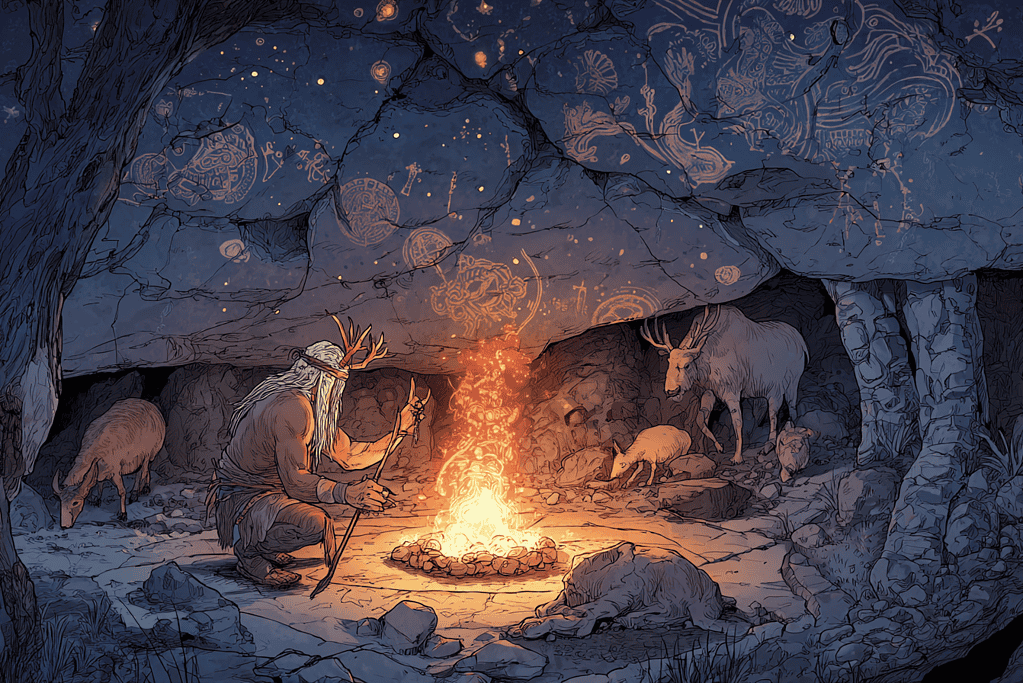
Tylor’s groundbreaking work Primitive Culture (1871) argued that animism was the earliest form of religion practiced by humanity.
For him, religion began not with temples or sacred texts but with a belief in spirits present in nature and inanimate matter.
He considered animism a “primitive culture” but a foundational step in the development of more complex religious systems (Tylor, 1871, pp. 258–265).
Tylor proposed that animism stemmed from early human attempts to understand dreams, death, and consciousness.
Observing life and death, early humans inferred the presence of a spirit or soul that could leave the body.
Over time, this notion was extended to animals, plants, and objects.
Tylor viewed this as a rational, if simplistic, explanation for natural processes, forming the “minimum definition of religion” (Tylor, 1871, p. 258).
Modern anthropology challenges Tylor’s assumption that animism is a stage of intellectual development superseded by science or monotheistic religion.
Scholars argue that Tylor viewed animists as inferior, overlooking the sophistication of their worldviews.
As Nurit Bird-David explains, Tylor treated animism as a belief about spirits rather than a way of being in the world (Bird-David, 1999, p. S69).
Contemporary scholars like Bird-David and Graham Harvey advocate for the “new animism,” a shift away from belief-centered definitions.
The new animism treats animism as a relational practice and worldview where humans engage with the world as composed of other persons, i.e., human and non-human alike.
This move redefines animism as a system of beliefs grounded in mutual responsiveness and respect (Harvey, 2005, pp. 17–21).

Anthropologists such as Tim Ingold frame animism within the framework of relational ontology.
He argues that animism is not about attributing spirits to things but about relating to the environment as a mesh of interrelated beings (Ingold, 2000, p. 97).
This understanding of animism resonates with indigenous peoples’ own descriptions of their spiritual practices, particularly in Oceania and the circumpolar North, where everything in the world is considered to have agency (Bird-David, 1999, pp. S68–S71).
Relational ontology is the idea that personhood arises through relationships rather than being a static attribute.
In animist healing and belief-systems, inanimate objects like stones or rivers may be understood as persons because of the ways humans interact with them.
According to Bird-David, animists do not believe everything has a spirit but that everything participates in a web of relational personhood (Bird-David, 1999, p. S73).
Tylor assumed animists ascribed life to inanimate objects out of intellectual error.
Yet ethnographic studies have shown that animist beliefs and practices involve deeper engagements, for example circumpolar bear-ceremonialism.
For example, shamans in indigenous Siberian communities interact with stones and rivers not as passive things, but as co-participants in spiritual practice (Ingold, 2000, p. 55).
The term animism encompasses a practice of respect, communication, and reciprocal care. This is not simple superstition.
Animistic beliefs are alive among many indigenous communities, from the Amazon to Southeast Asia.
Religious traditions such as Shinto in Japan retain animistic elements, as they venerate kami (spirits) residing in natural features like trees and waterfalls.
Even in globalized societies, people increasingly turn to animism-inspired philosophies that see the world as alive and interconnected (Harvey, 2006, p. 9).

Animism challenges dominant religious frameworks by presenting an alternative view of sacredness.
It emphasizes relationality, mutuality, and embeddedness in the natural world.
For students and scholars of religion, understanding animism expands our appreciation of how humans conceptualize the divine and the spiritual, especially outside the bounds of monotheistic or scriptural traditions.
Bird-David, N. (1999). “Animism” Revisited: Personhood, Environment, and Relational Epistemology. Current Anthropology, 40(S1), S67–S91.
Harvey, G. (2005). Animism: Respecting the Living World. Columbia University Press.
Harvey, G. (2006). Readings in Indigenous Religions. Continuum.
Ingold, T. (2000). The Perception of the Environment: Essays on Livelihood, Dwelling and Skill. Routledge.
Tylor, E. B. (1871). Primitive Culture: Researches into the Development of Mythology, Philosophy, Religion, Art, and Custom (Vol. 1). John Murray.

ᛉ 100% handcrafted artisan pagan , viking, witchcraft and shamanic inspired jewelry.
ᛉ Runes, Symbolism & European Folklore
Get 20% off👇🏻

Five witches dance around a blazing bonfire beneath a citrine cabochon in this Walpurgisnacht pendant....
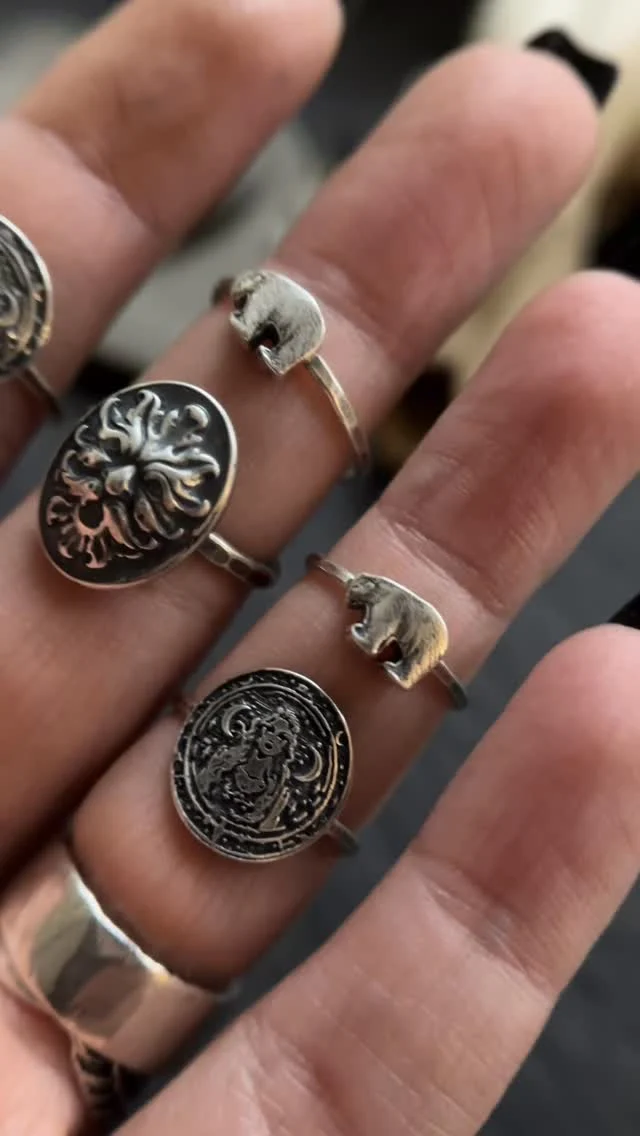
Happy washing day 🙃
A few rings I’ve worked on the last couple days…
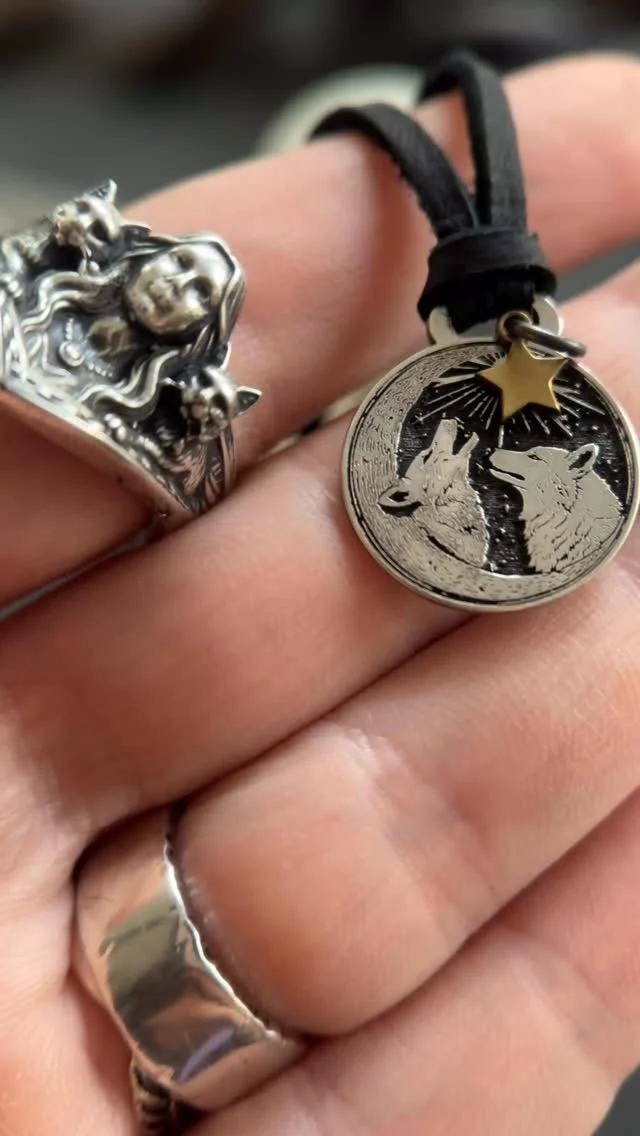
Freya’s cats rule and dogs drool?
Or was that the other way around? 🙃

Garm barely shows up in the old Norse stories.
Still… he leaves a mark.
A...
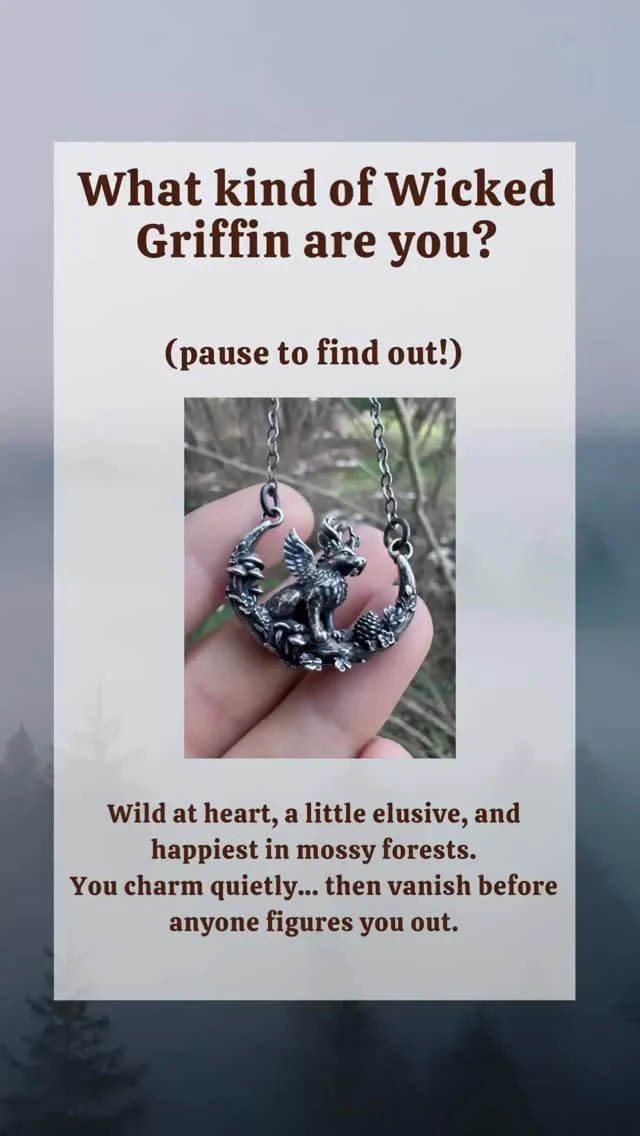
Leave a comment with your result ❤️
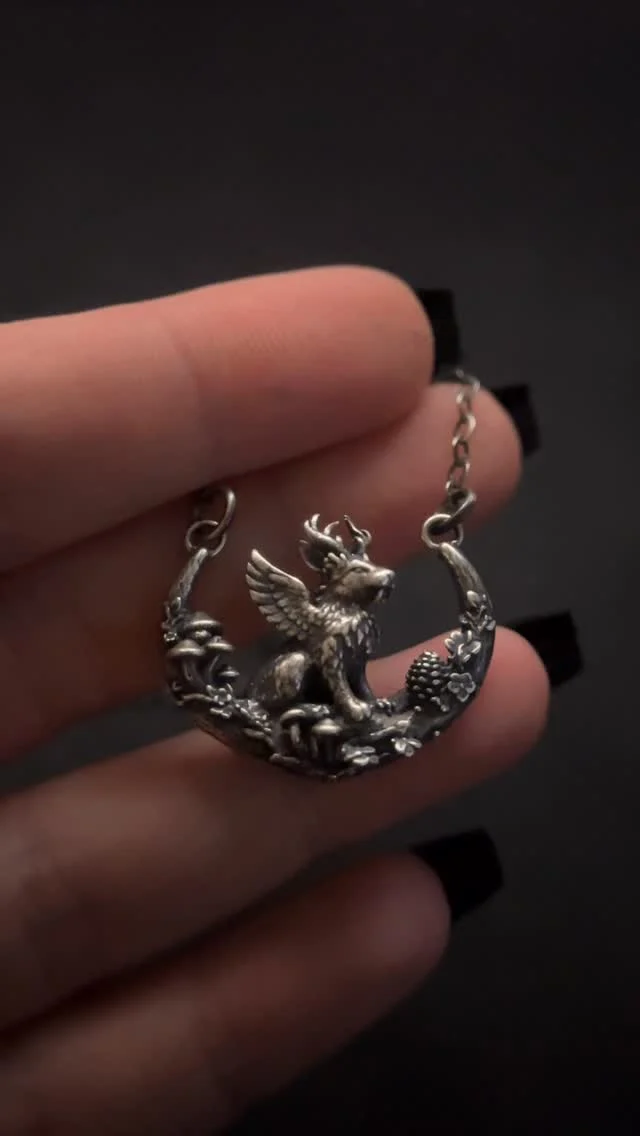
Bavarian Folklore says that you might just cross paths with a Wolpertinger in the alpine...

🐇🌲✨
He finally stepped out of the forest…
The Wolpertinger Pendant has arrived.
Inspired by...

I don’t often sell them, but love it when I do!
Vinca symbol bracelets ❤️...

Rooted in strength + guarded by ravens

The serpent waits 🖤
(Handcrafted Jörmungandr ring made to order in my shop)

Stay warm, everyone ❤️

😑😑😑🤮

I thought I had closed the book on the Alice in Wonderland rings…
But you...

Can this be over now, please?

In case you forgot 💜

Something I’ve been thinking about lately.
If there’s one thing I would’ve done differently early...

This year, we’re not buying things just to keep up.
If you need the reminder:...

My husband is from Bavaria (southern Germany) and I originally made this Krampus pendant for...

Some of the items I’m shipping out today ❤️
Please forgive my dirty nails 😂...

A few items shipping out today 🥰

This mornings rings shipping out ❤️

A few of the rjngs I’m shipping out this morning ❤️
How do you like...

Krampus is coming 🫶🏻

Getting ready to pack up these pretties and ship to their owners ❤️

Freya, cats and pentacles. Doesn’t get any better ❤️

You all got me going crazy making all these fairytale + storybook rings.
But I’ll...

Just launched these pretties ❤️
Size 9 amethyst ring + size 7.25 green kyanite

What would you trade to learn Baba Yaga’s secrets?

It *finally* looks, feels and smells like October!
And here are some items I’m packing...

This mornings pretties getting ready to ship :)

Getting ready to pack up these pretties and ship to their owners ❤️

You bet I’m hopping on this trend 😂
Thank you @shes_sinister for the prompt!

While I welcome the seasonal darkness…it sure is going to make my morning quick videos...

Finally finished the rings I’ve been working on in my stories ❤️
I think I...

Was going to post this update to my stories but it’s too long.

“How do you know I’m mad?” said Alice.
“You must be,” said the Cat, “or...

Some of this mornings orders getting ready to ship. Those little bats are so cute...

Here is the finished ring I was working on in my stories yesterday, along with...

A few of today’s orders shipping out this morning ❤️

The two silver raven rings I was working on in my stories yesterday.
…as well...

Eeeek! I’m so happy to add these to my shop ❤️
I’ve gotten so many...

I had 6 clamshells ready to ship this morning but I dropped and lost my...

Not the story you were told.
The girl didn’t run.
The wolf didn’t win.
This...

I love these raven rings so much 🖤
This mornings pretties shipping out.
All items...

Sleek + minimal Mjölnir ring ⚒️


About the author Jacqueline Fatica


